Pioneer Information
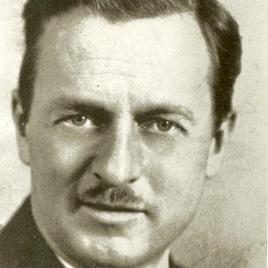
Born in Delevan, Wisconsin, into modest circumstances, Sturtevant studied horticulture at the University of Southern California, Southern Branch (now UCLA), graduating in 1921. After European travel, he gained construction and horticultural experience in working for landscape architect Florence Yoch and California native-plant specialist Theodore Payne, respectively, before working with Charles Adams; A. E. Hansen; and the firm of Cook, Hall & Cornell. From 1922 to 1923, he completed coursework from at the Graduate School of Landscape Architecture and City Planning, Harvard University, before returning to Cook, Hall and Cornell (1924–1925). Several stints followed at the offices of Stiles and Van Kleek (St. Petersburg, FL, 1925–1926), Fletcher Steele (Boston, 1926–1927); and Gardner, Gardner & Fischer (Los Angeles, 1927–1928). In 1928, Sturtevant established his own practice in Seattle, producing a master plan for the Normandy Park Subdivision (Bebb and Gould,1928–1929) and a new rose garden for Robert and Jennie Butchart’s estate in Victoria, BC (1928–1933).
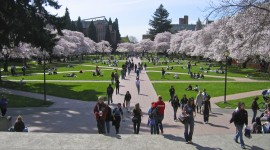
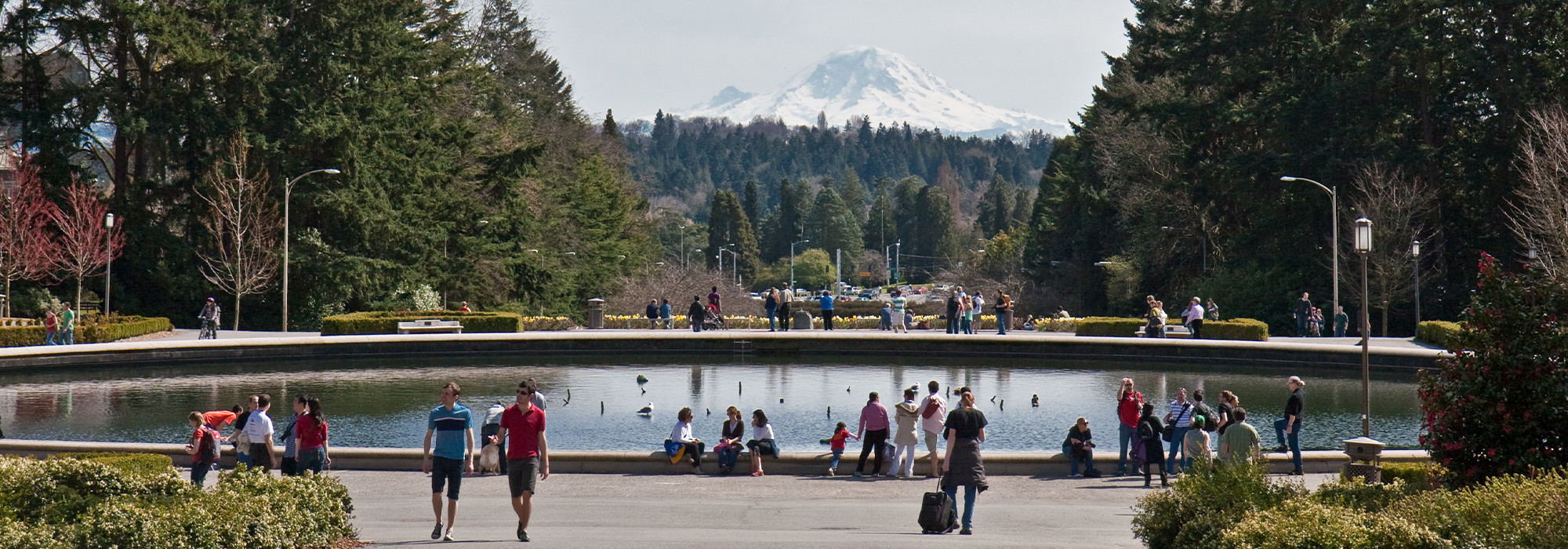
At architect Carl Gould’s recommendation, Sturtevant was named, in 1931, as the University of Washington’s first landscape architect, a position he held for eight years. Directing nearly 900 Works Progress Administration laborers, he revitalized the historic Rainier Vista and Drumheller Fountain (Olmsted Brothers, 1906–1907), among other areas. Simultaneously, he became principal landscape architect and planner of Principia College, Elsah, Illinois, for its new campus situated on a Mississippi River bluff on Lucy Semple Ames’s former estate, Notchcliff. With architect Bernard Maybeck, Sturtevant authored a master plan and continued several projects associated with that college until 1969.
His versatility extended to residential landscape design, largely in Seattle, including the Arnold Dessau House, The Highlands (1937–1939) and additional gardens for Norcliffe (1943–1945), a site that Olmsted Brothers had originally designed in 1914. During World War II, he served in the US Army Air Corps as a major, eventually rising to the rank of lieutenant colonel. Forming a partnership with Edwin Grohs, they generated landscape designs for Yesler Terrace (1941), the nation’s first integrated public housing project. Sturtevant also laid out military airfields in the South, and, postwar, the Portland, Oregon, airport (1945–1948). Further large-scale planning included master plans for the Hawaiian village of Hana on the eastern end of the island of Maui (1947–1949) and American University, Beirut (1961–1962). Sturtevant died at the Christian Science Sanitorium in San Francisco in 1971 at the age of 71.