


Nomination Deadline, June 12 —Landslide 2026: Erasing American History
As we commemorate one of the greatest moments in our nation’s history—the 250th anniversary of the signing of the Declaration of Independence—we are also witnessing the erasure of cultural resources that reflect and interpret facets of our shared history. Consequently, in 2026 The Cultural Landscape Foundation (TCLF) is dedicating its annual thematic Landslide report and exhibition to the subject of “Erasing American History.”
Erasure, specifically targeting cultural landscapes, is due to multiple causes ranging from development projects that claim to require a blank canvas to deliberate acts emblematic of the mindset that “history is written by the winners.” This runs counter to the very idea of a cultural landscape as a palimpsest, the layers of which can serve as a text that tells about us much about ourselves. Landscapes reflect our cultural values, traditions, and history through their use, built features, and settlement patterns; they range from gardens and plazas to entire neighborhoods, regions, and expansive rural areas.
TCLF’s efforts to make threatened sites visible includes significant African American cultural landscapes, such as burial grounds, neighborhoods, gardens, and public landscapes. In fact, the interest in telling a fuller story engenders a feeling that landscape architect Randy Hester identifies as spatial nostalgia—“the charged scene, personally symbolic and perhaps sacred, [that] can bring tears of joy or sadness to our eyes for an entire lifetime.” Unfortunately, it would appear that the threat of erasure is again on the rise. Recently, the federal government has taken steps to affect how history is conveyed and interpreted at National Park sites: in Philadelphia, signs regarding enslavement have been removed at the President’s House at Independence Hall National Park; signage at World War II-era Japanese American confinement sites are being altered; a rainbow flag at the Stonewall National Memorial, the first national park site dedicated to LGBTQ history, was recently removed; and others.
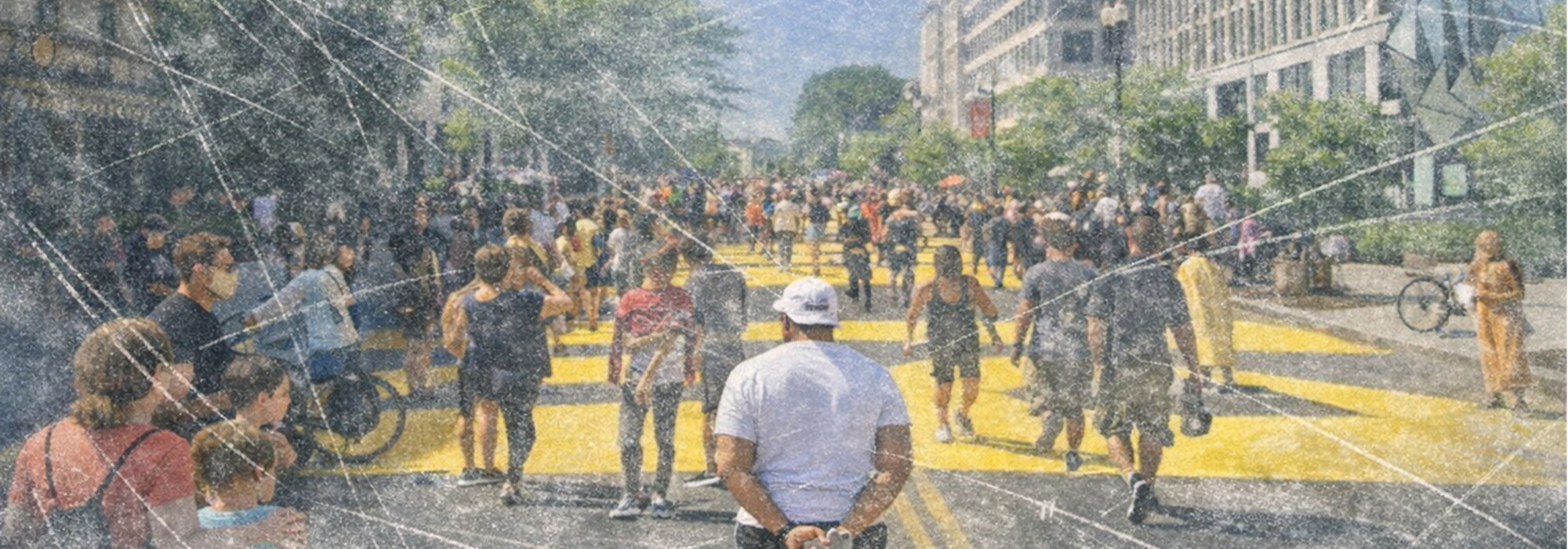
Another recent example is the bulldozing of Black Lives Matter Plaza in Washington, D.C. The plaza’s surgical insertion on a two-block stretch of 16th Street, N.W. immediately north of the White House and Lafayette Square (part of President’s Park), began in June 2020 amid nationwide protests about the killing of George Floyd in Minneapolis. In a press release on October 28, 2021, Washington, D.C. Mayor Muriel Bowser announced the completion of Black Lives Matter Plaza and that it was a “permanent installation.”
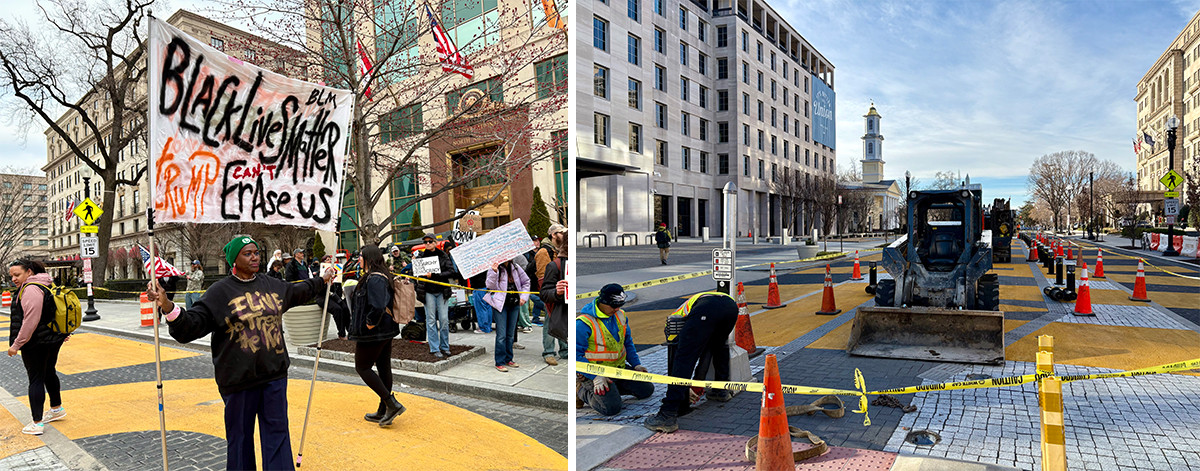
In early March 2025, following threats by President Trump and Congress of a federal take-over of the city and loss of federal funding, Mayor Bowser announced the plaza would be erased. On X she stated: “The mural inspired millions of people and helped our city through a painful period, but now we can’t afford to be distracted by meaningless congressional interference.” That “permanent installation” is now the subject of spatial nostalgia.
TCLF is seeking nominations for Landslide 2026: Erasing American History; click here for the nomination form. Nominations are due June 12, 2026.