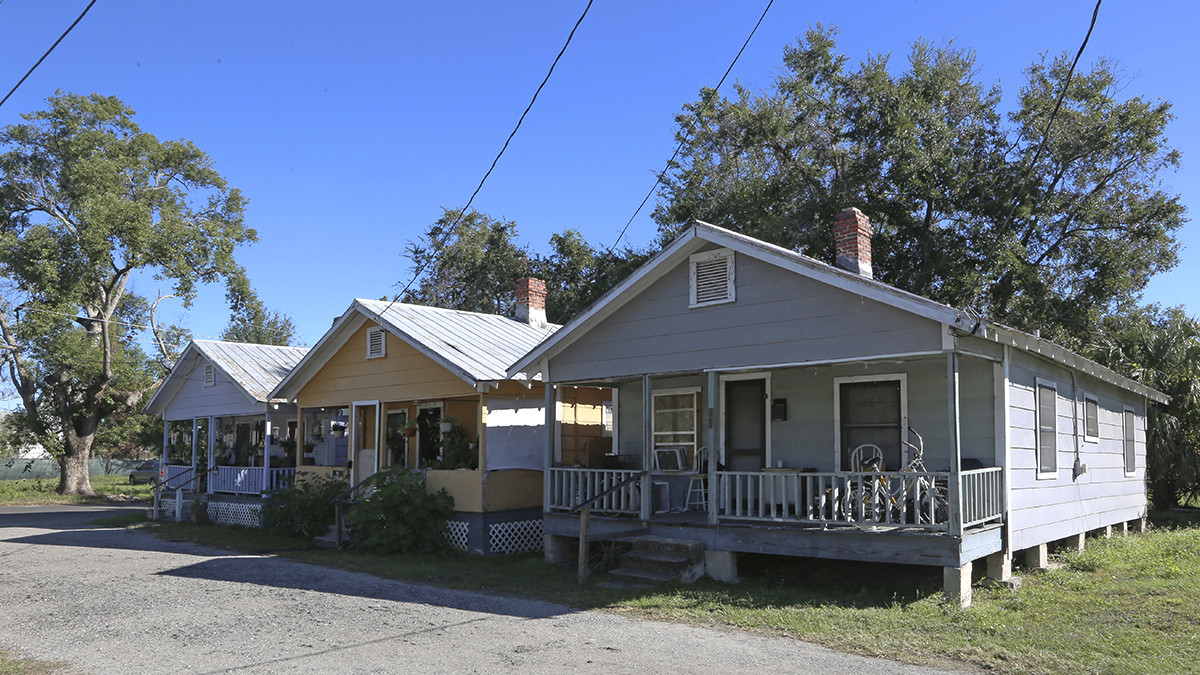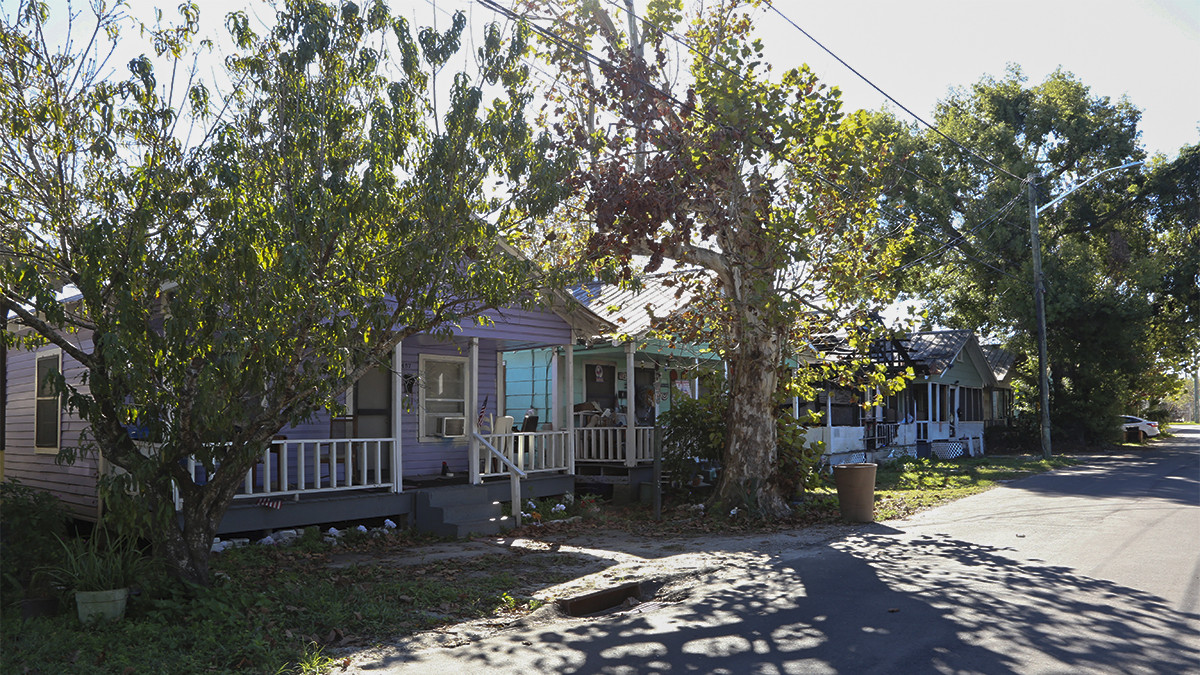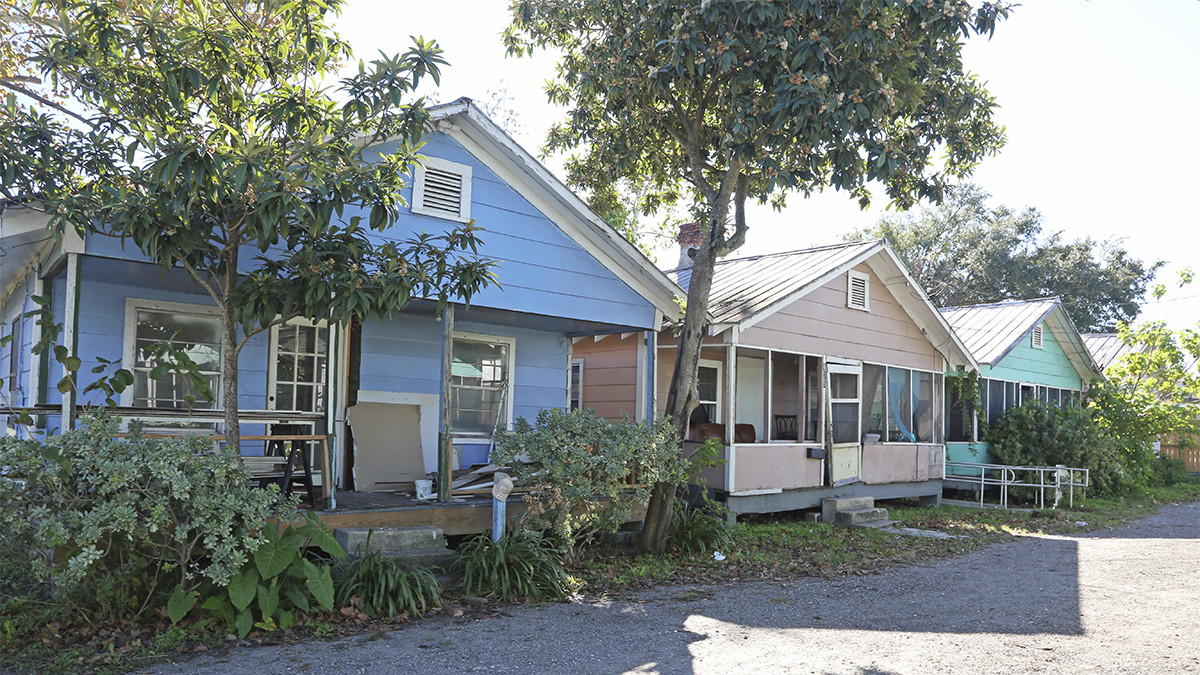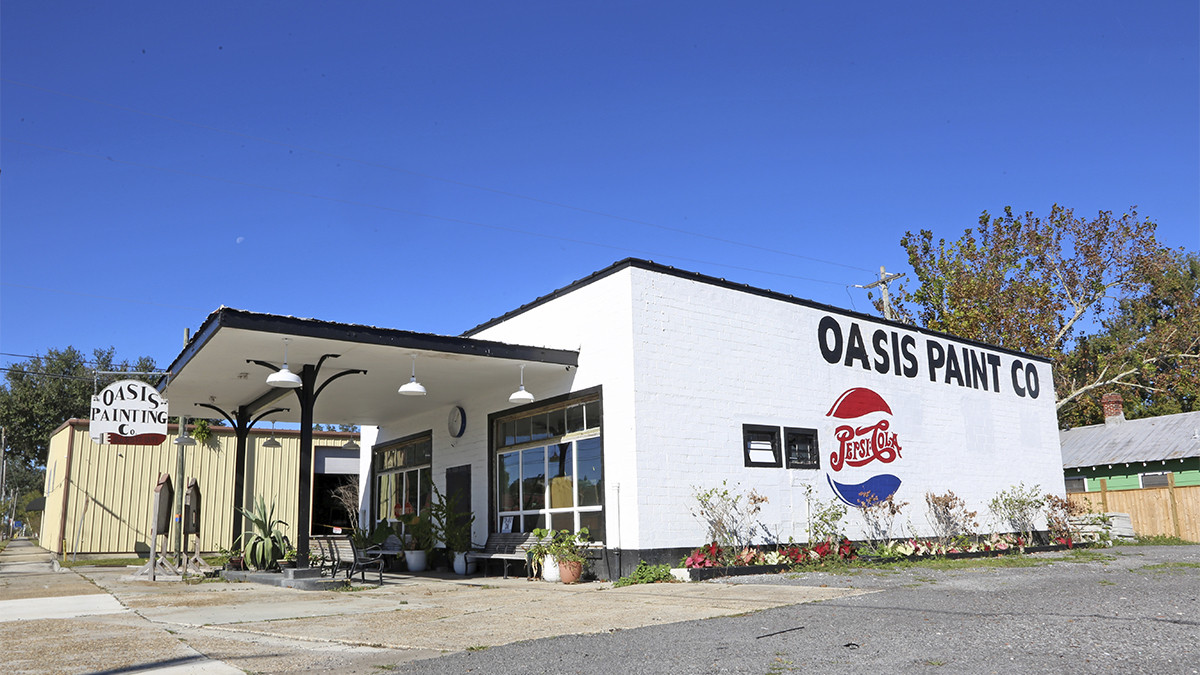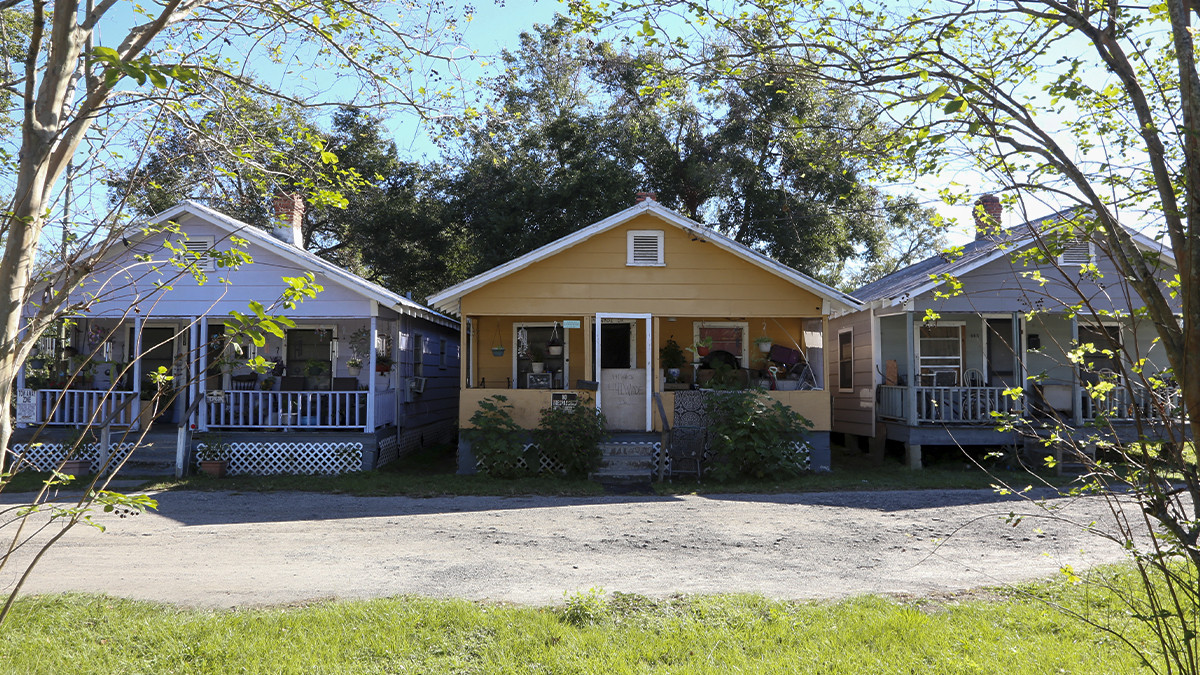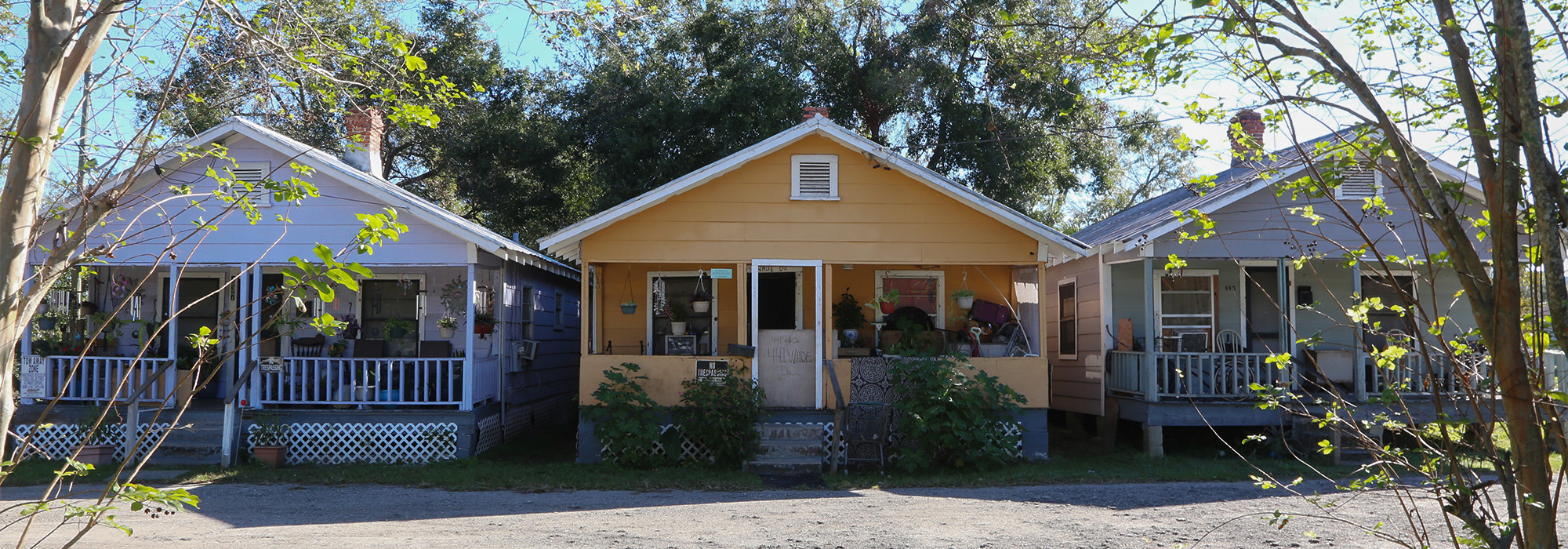
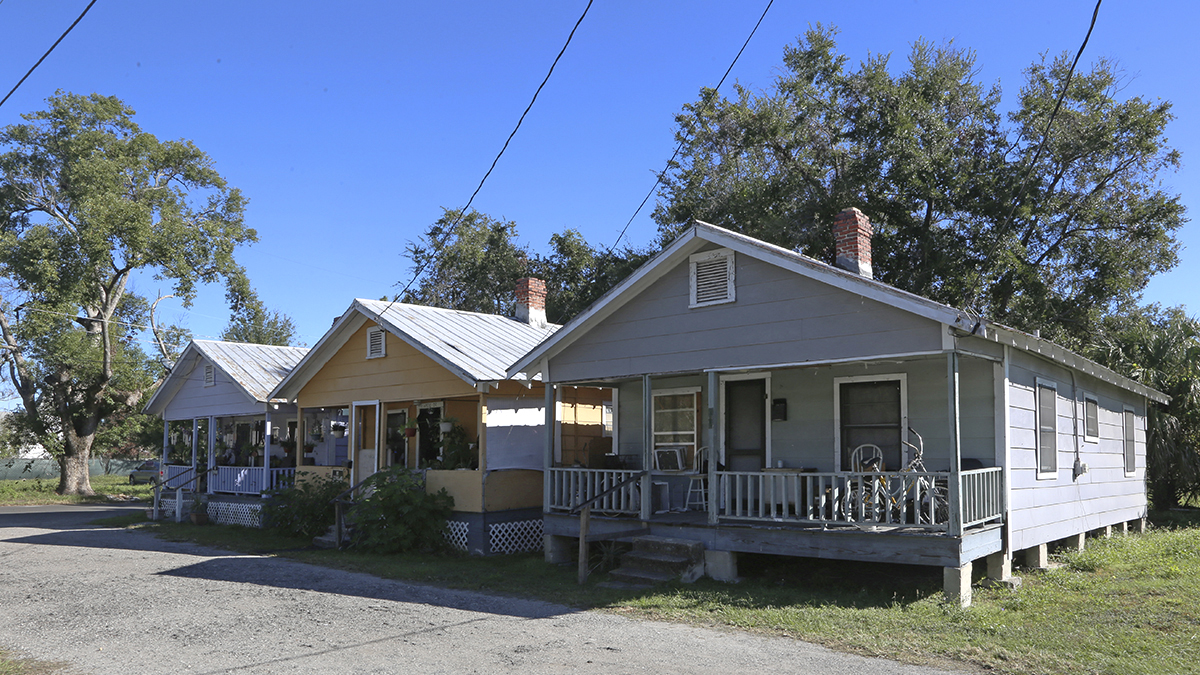
Situated southwest of downtown Jacksonville, this collection of bungalows stands on a parcel once part of the 800-acre Dell’s Bluff Plantation (1801). In 1875 developer and Confederate veteran Miles Price platted a twenty-block section of the former plantation to build rental homes for newly emancipated African Americans, calling it West Lewisville. On approximately one acre, in 1925 Francis Porcher L’Engle, Sr., planned the court of 29 bungalows, spaced four feet apart, and an adjacent service station. They were situated in three rows: eight faced west toward Goodwin Street, and another eight behind—along the private dirt lane of Wade Drive—faced a further row of thirteen.
Encouraged by the open front porches and proximity of the homes, the bungalow court became a thriving community for African Americans, many of whom were Gullah Geechee, into the mid-twentieth century. Residents operated businesses out of their homes and hosted communal crab boils and fish fries along Wade Drive. In the 1950s and 1960s the construction of Interstates 10 and 95 razed much of the surrounding neighborhoods, and environmental pollution from a nearby incinerator and abattoir led to the court’s decline. Additionally, five bungalows were destroyed by fire—two in 1951 and three in 2001.
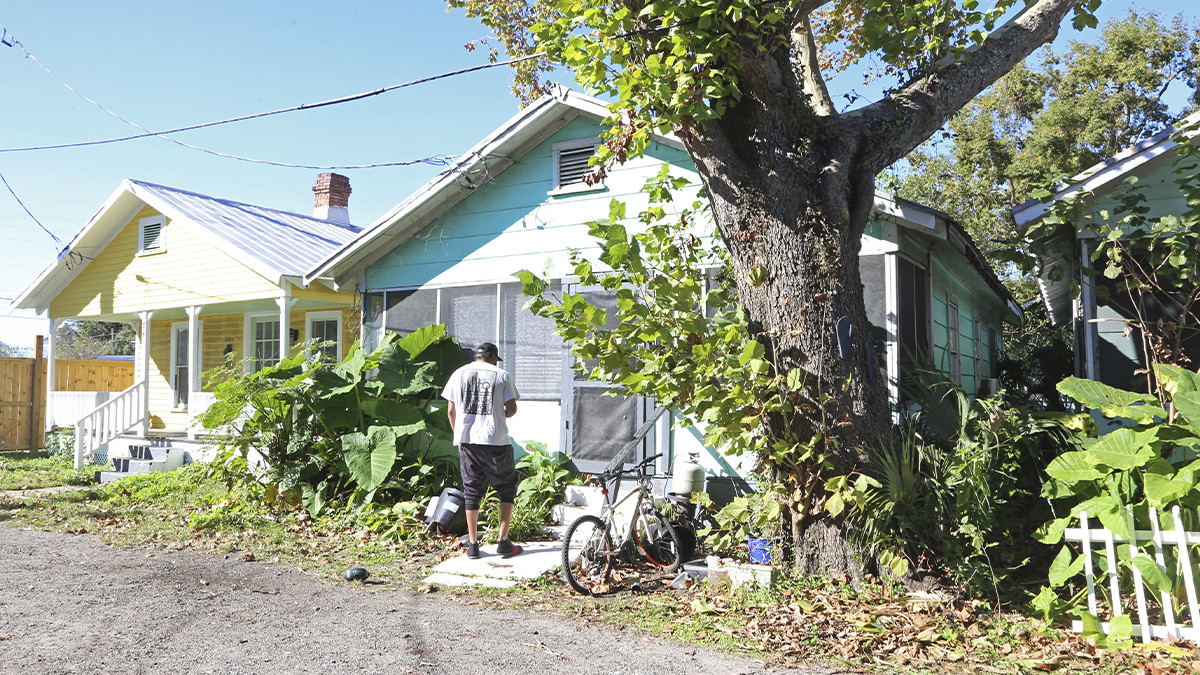
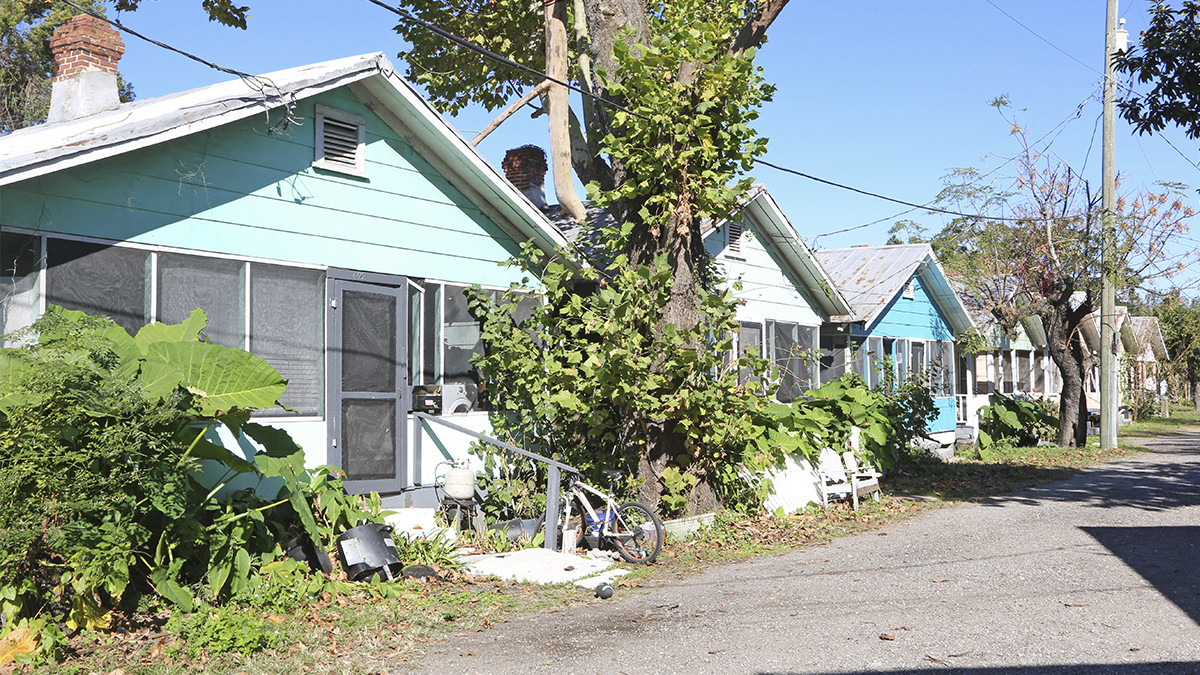
Today, the court contains 24 one-story, wood-frame, vernacular bungalows. Similar in design, they sit atop concrete blocks and have central stairs leading to the front door. Full-width front porches, shaded by gabled roofs, face minimal front yards set close to the street. Lawns fill lots where the burned buildings once stood. Deciduous shade and palm trees partially line Wade Drive and Goodwin Street; flowering shrubs are planted in front of several bungalows. The current owner is attempting to restore the original character of the court. This building group is one of only two early-twentieth century bungalow courts remaining in Jacksonville and it is one of the last historically African American courts remaining in Florida.