From “auspicious success” to complete rubble—the untimely demise of Ned Smyth’s "Upper Room"
This one slipped under the radar.
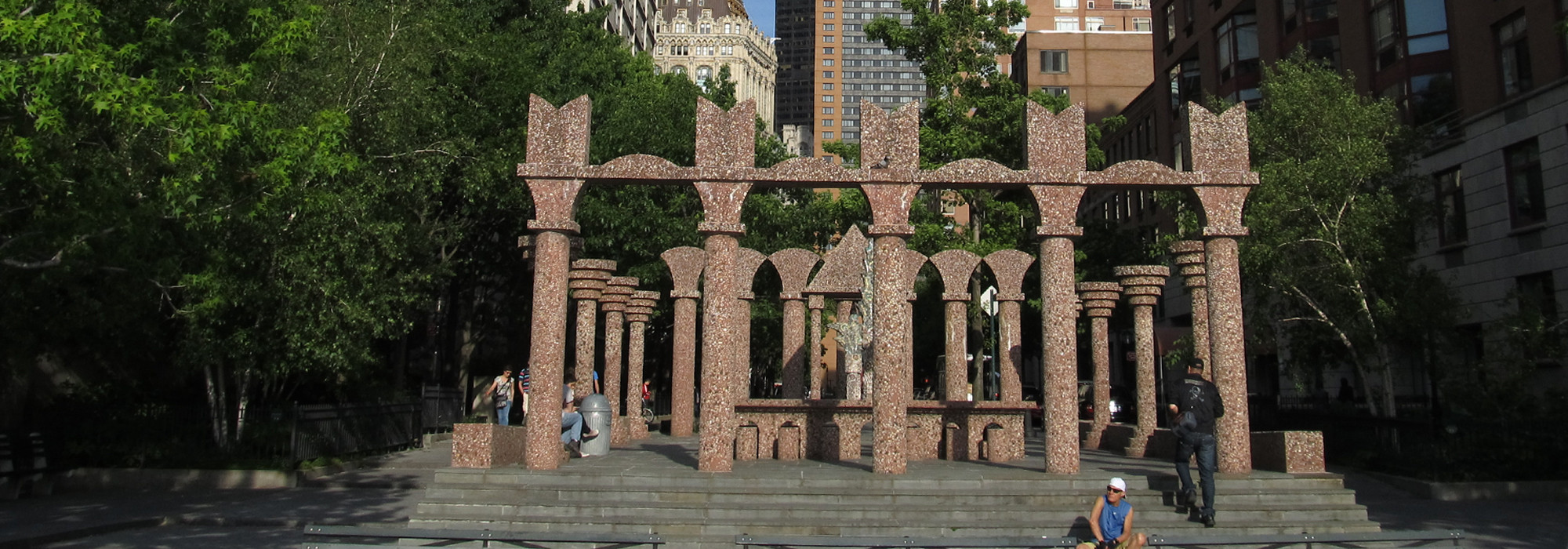
Upper Room by artist Ned Smyth, was installed in 1987 as the first site-specific work public art commissioned for Battery Park City, the 92-acre, mixed-use community on the Hudson River at the southwestern tip of Manhattan that was built on landfill created from dredging New York Harbor and the excavation of the World Trade Center site. At 8:00 AM on November 12, 2025, however, jackhammers began pulverizing the installation.
Upper Room, which was appraised for $1.5 million in 2019, was razed to make way for components of a coastal flood barrier management system, and is the latest victim of the multi-year long, resiliency efforts of the Battery Park City Authority (BPCA) to protect Battery Park City and lower Manhattan from climate-change related urban flooding—a project spurred by flooding caused by Hurricane Sandy in 2012. It comes on the heels of the demolition of Wagner Park, designed by landscape architect Laurie Olin and architects Machado and Silvetti Associates, considered a postmodern masterpiece. A new Wagner Park opened this past September.
As reported in The New York Times in 1987, Upper Room “is 77 feet long, 40 feet wide and made of cast concrete inlaid with mosaic glass. With five columns on one end, four along each side, and seven closest to the river, it suggests a courtyard or roofless temple. ... The columns contain references to Egyptian, Greek, Byzantine and medieval architecture. The art critic Nancy Princenthal wrote in Art in America magazine that the title of the work was inspired by Hinduism. ... The mosaic glass enhances the sense of openness and spirituality, and at the same time builds into the work an element of Oriental opulence. In addition, the tops of the columns near the river are forked, like the cloven hoof identified with the devil.”
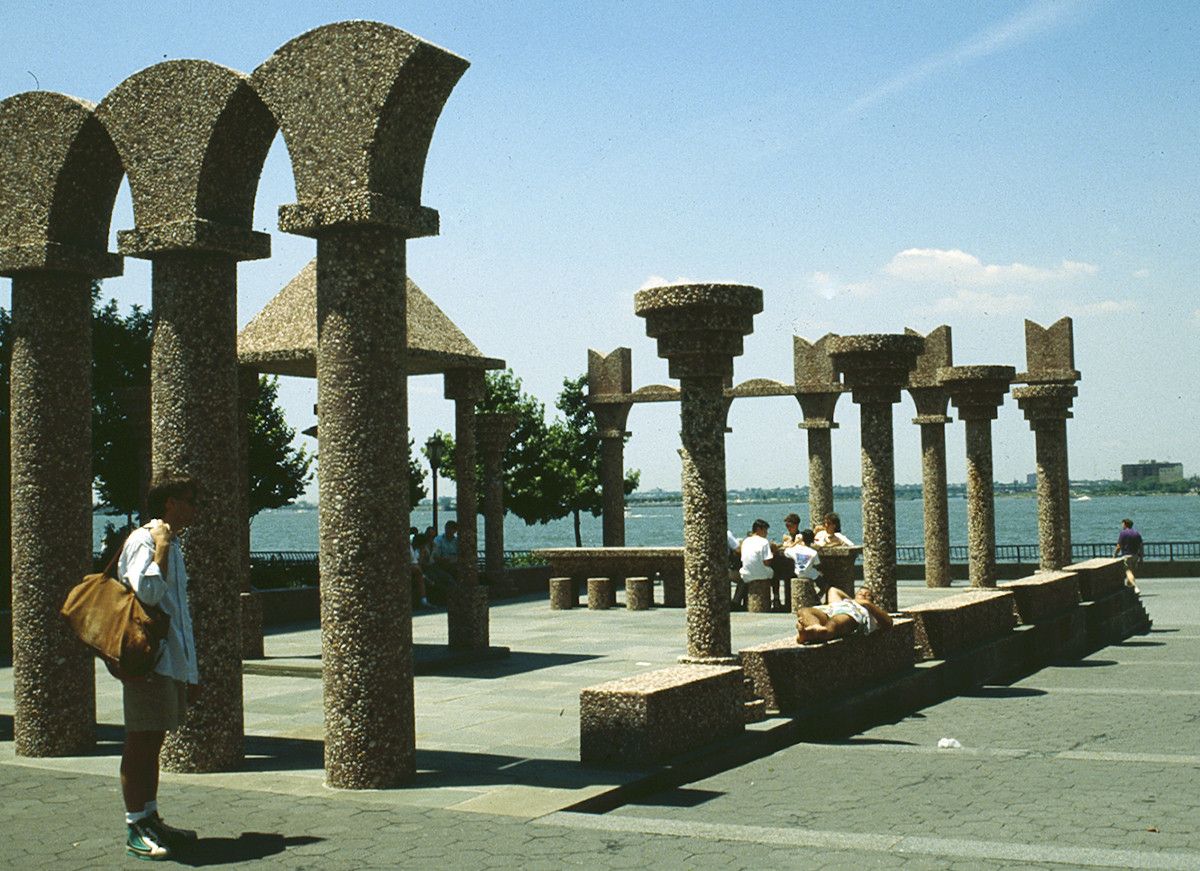
More recently, The Broadsheet offered this characterization: “The colonnaded, open-air peristyle was a giddy pastiche of cultural references, visual allusions, and architectural styles ranging from Hindu to Christian to Mesoamerican, and became the venue for events as disparate as toddlers’ birthday parties and executive business meetings, in the process weaving itself into the fabric of the community.”
The New York Post interviewed the artist: “'Why couldn’t it be moved?’ Smyth, 77, wondered, saying he questioned why it couldn’t be relocated to the art gardens on Governors Island or in the open meadows along the West Side Highway.”
Battery Park City is under state control and not subject to reviews by New York City’s Landmarks Preservation Commission and similar agencies. Officials from the BPCA say that the local Community Board One and the artist were notified of the proposed demolition a year ago. However, there appears to have been little discernable public review and input.
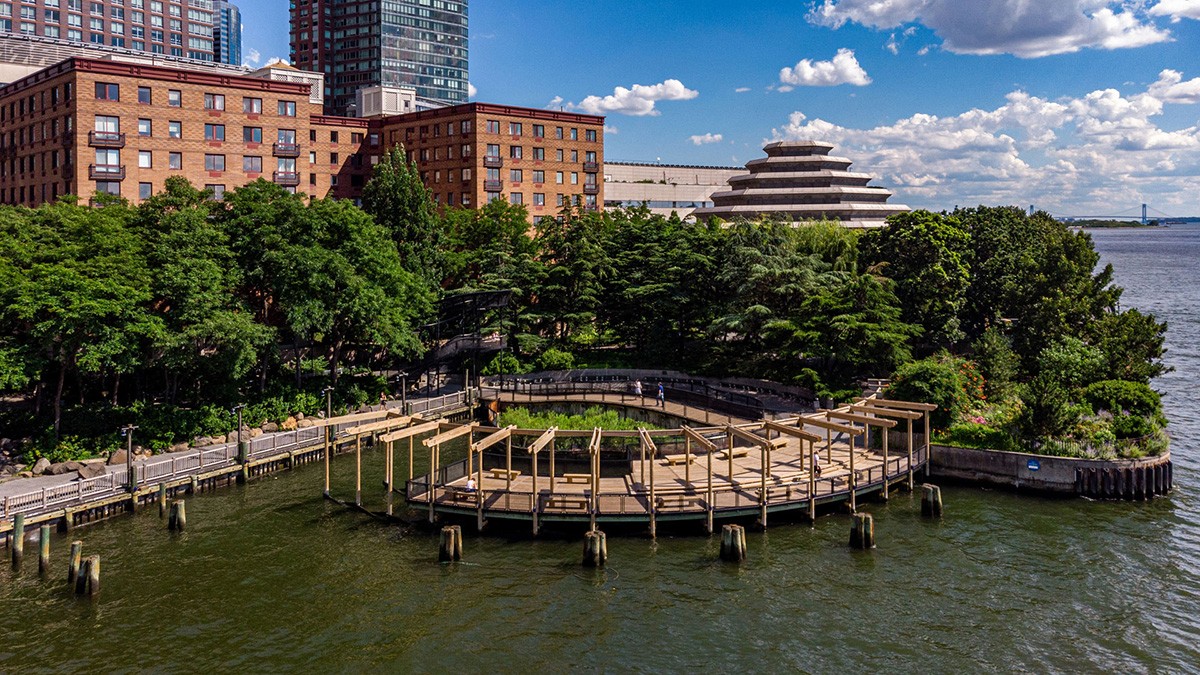
The demolition of Upper Room raises the following concerns: a) how could this happen with seemingly little notice; b) what alternatives to demolition were considered; and c) what will become of the remaining public art commissioned for Battery Park City including works by Scott Burton, Tom Otterness, Martin Puryear, and many others? For example, Mary Miss' South Cove, an important work in the collection, was designated as at-risk in The Cultural Landscape Foundation's digital report and exhibition Landslide 2020: Women Take the Lead. A recent article in ARTnews notes the installation is “the only commissioned public artwork slated to be demolished” as part of the resiliency efforts. We’ll see. The ultimate decision making seems to rest with Raju Mann, President & CEO at BPCA since 2023.
The 1987 New York Times article called Upper Room an “auspicious success.” The article also stated: “As much as any public art project in recent memory, the fine-arts program [created in 1983] of the Battery Park City Authority has been perceived as a model. ... The kind of sculpture that will emerge from this project is seen by many as the public sculpture of the future. ... It will be collaborative and functional: the public will be able to sit, rest and perhaps play on it.”
The article closed on an upbeat note about the future of the art program and finished: “Whatever happens will be watched.”
Oh, yes it will be.
Related Content
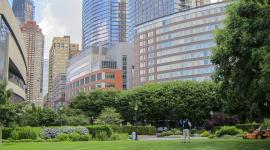
Battery Park City
New York, NY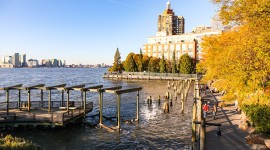
South Cove
New York, NY