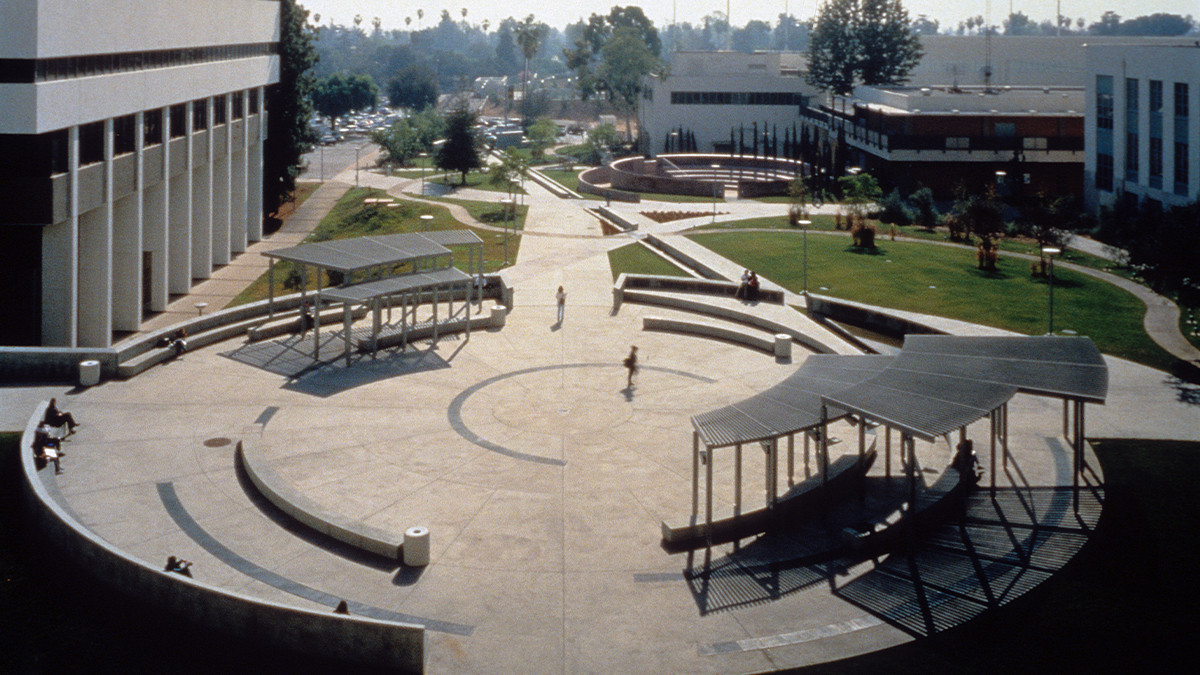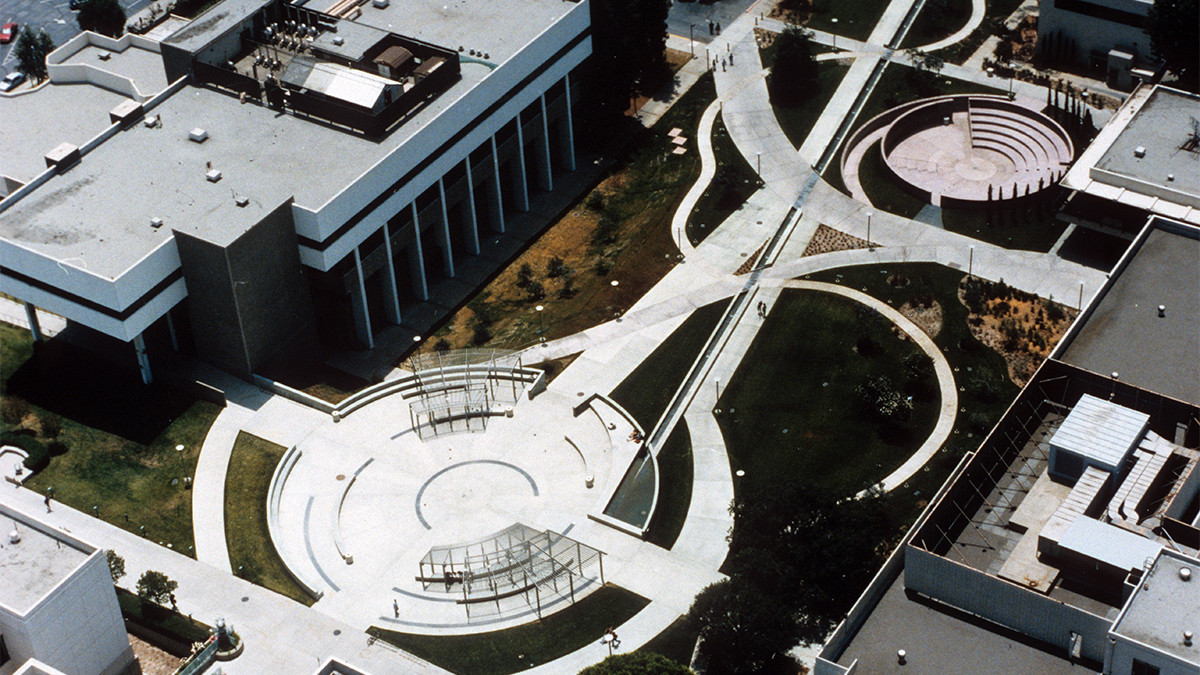
Situated between academic buildings and the Shatford Library on the Pasadena City College campus, this approximately two-acre rectilinear sculpture garden was designed by artist Jody Pinto in the mid-1990s following a design competition. Replacing a parking lot, it was conceived as an “open, flexible stage” to reflect “the best elements of growth of learning,” while fostering student collaboration. Intended to host permanent and temporary sculptures, it was completed in 1999; the project team included landscape architect Rick Abelson and architects Maris Peika of Stewart/Romberger & Associates, and Michael Morris.
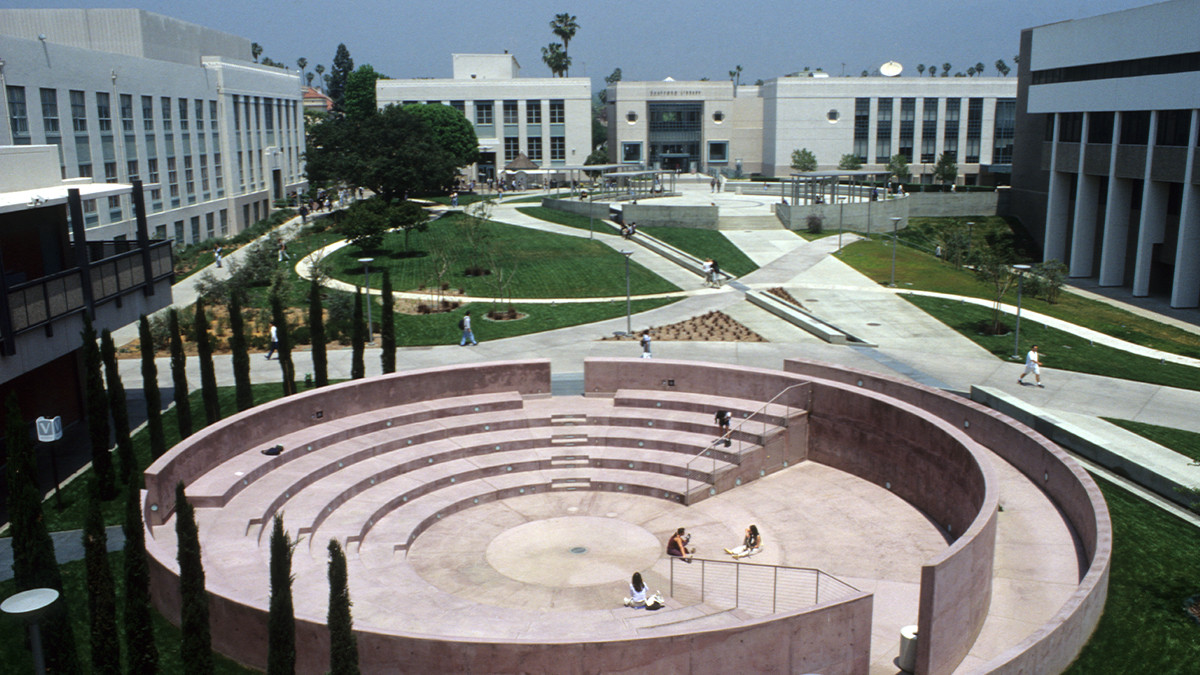
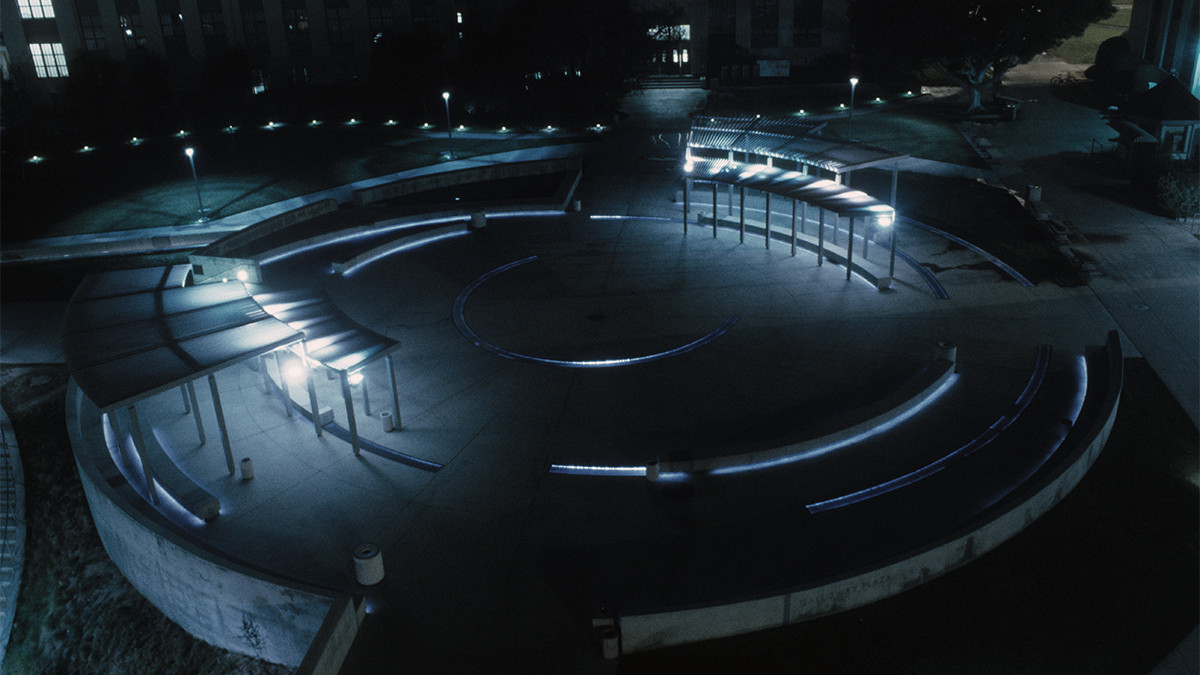
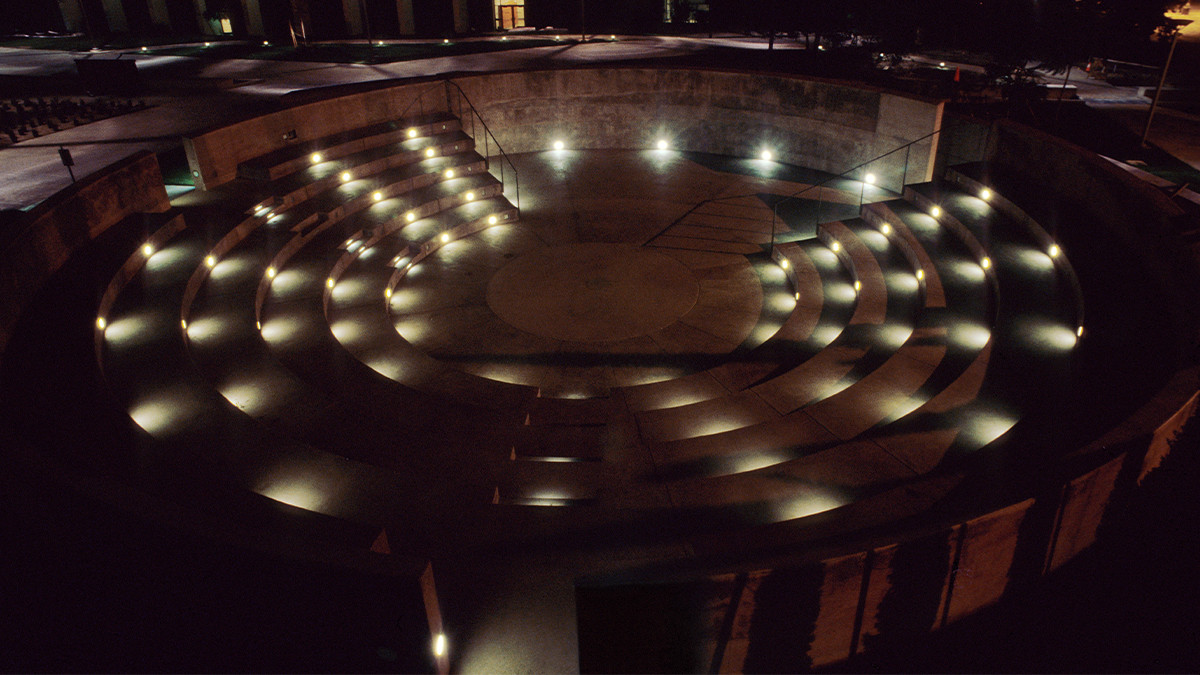
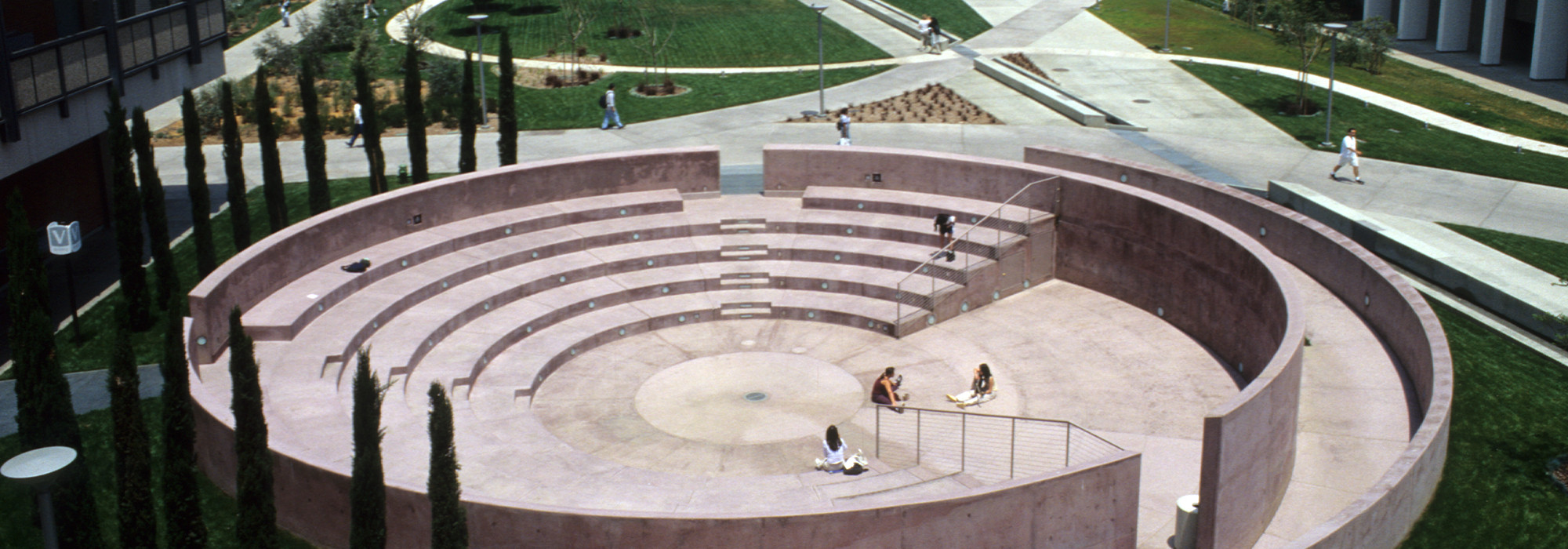
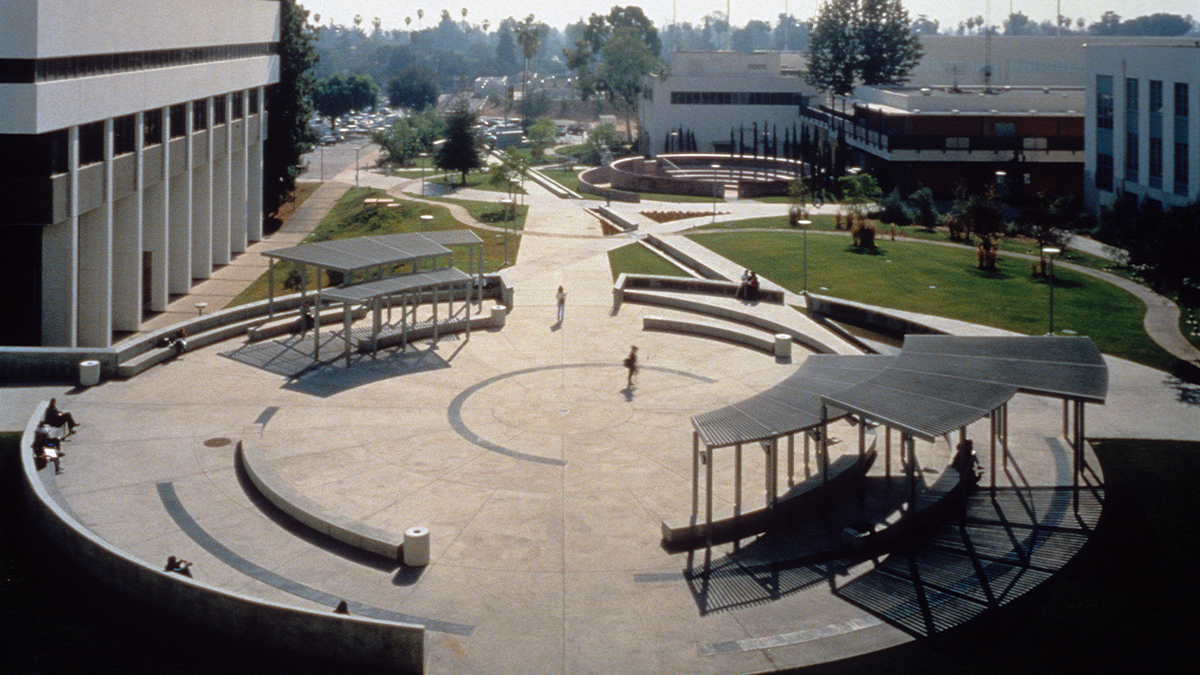
Visually unified by circular and arcing forms, the gently sloping sculpture garden is anchored to the north by the library and to the south by an arcing concrete wall. Just south of the library and on axis with its main entrance is a circular, elevated plaza ringed by concrete benches and tiered trellises. Accessed by four axial paths, the plaza acts like a compass orienting visitors. A diagonal, 450-foot, linear water trough extends southward from the plaza, animating the garden. Edged by a backless, concrete bench, the three-foot-wide channel was designed to allow students to put their feet into running water. The trough passes under straight and curvilinear paths framing lawn panels planted with olive, crape myrtle, and cypress trees. Tucked along the western edge of the site, off axis with the plaza, is a recessed rose-colored concrete amphitheater that offers privacy and is intended to evoke “the warmth of buttes and sandstone, or a sunset in the San Gabriels.”
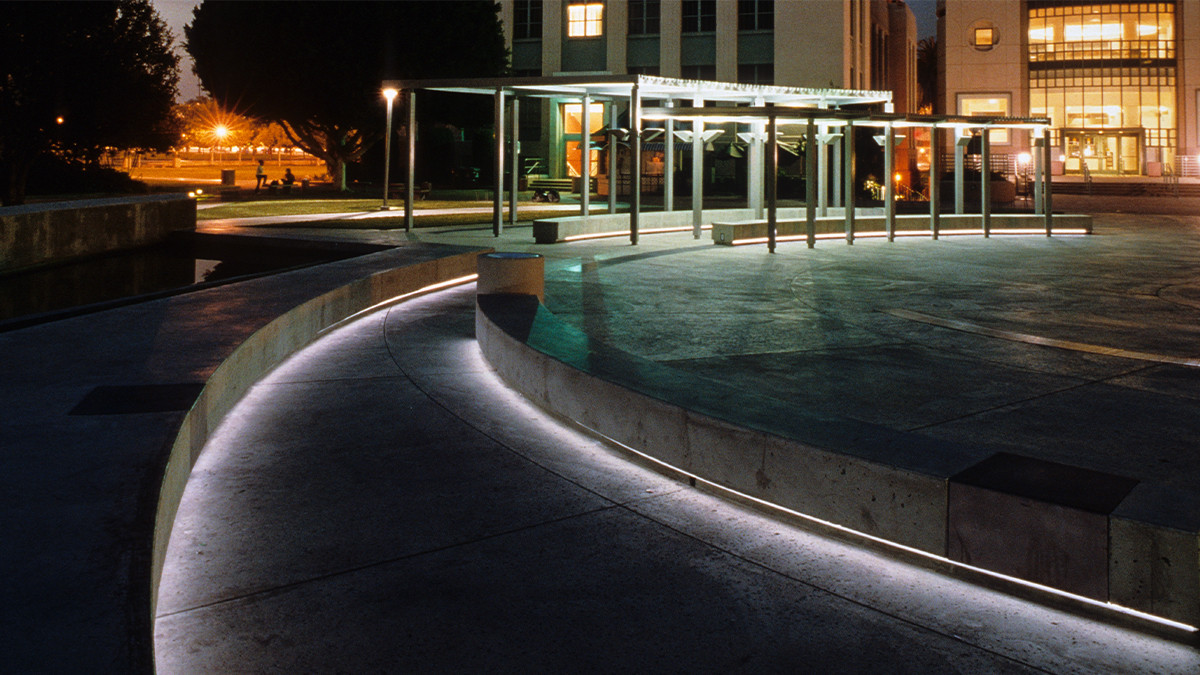
Designed to be viewed from ground level and from above, the sculpture garden is illuminated at night, to form a “stellar drawing” of a galaxy. Lit bollards serve as “stars” whereas sinuous strips of luminescent fiberoptic tape resemble falling meteors.
Today artworks by notable sculptors, including Deborah Butterfield, Stephan Balkenhol, and Jack Zajac are spread throughout the sculpture garden.