



Expecting a Worst-Case Scenario
In a recent New York Times interview about the administration’s pet projects in Washington, D.C., including the Triumphal Arch, high-end golf course in East Potomac Park, the National Garden of American Heroes in West Potomac Park, and others, Charles A. Birnbaum, Founding President & CEO of The Cultural Landscape Foundation (TCLF), said: “I’m expecting between now and the seating of the next Congress a worst-case scenario.”
The administration is racing to lock in approvals for these projects from the U.S. Commission of Fine Arts (CFA) and the National Capital Planning Commission (NCPC), and to complete Section 106 reviews before the new Congress is seated on January 3, 2027.
The Triumphal Arch
Of all the projects pending, the Triumphal Arch, which proponents say would honor the nation’s 250th anniversary, is the most high profile. The 250-foot-tall edifice would be built on Memorial Circle, which is located between the Lincoln Memorial and Arlington House and Arlington National Cemetery. The arch would sever a deeply symbolic viewshed that honors the nation’s healing following the Civil War. The project easily sailed through the CFA after only two meetings, in part because the commission’s chairman, Rodney Mims Cook, Jr., has been campaigning for just such a monument in D.C. for more than 25 years, and the administration claims that a 1925 law, in which Congress authorized the Arlington Memorial Bridge’s construction, is still in effect and justifies the arch’s construction.
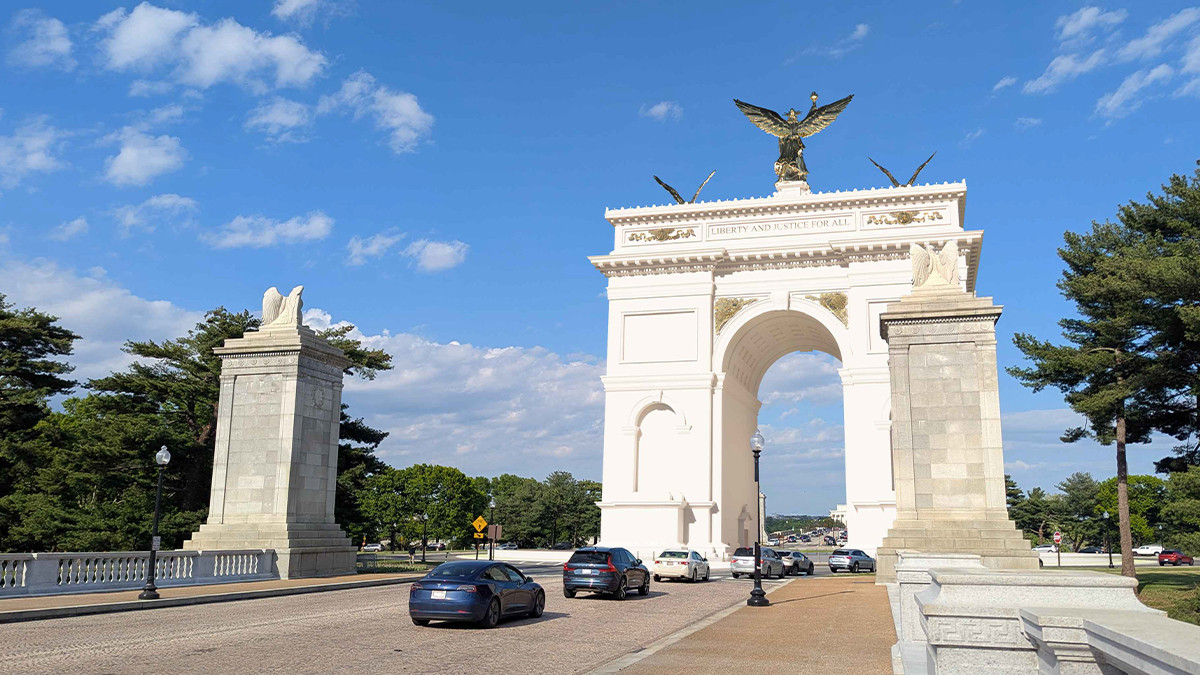
The project is the subject of three lawsuits: two are in the D.C. District Court, the first filed by three veterans and a historian and the second by the City of D.C. and the Commonwealth of Virginia, both of which are before Judge Tanya Chutkan; and the third filed in the District Court of the Eastern District of Virginia by the County Board of Arlington County, Virginia, is before Judge Leonie Brinkema. The two cases in the D.C. District Court have been consolidated, and Judge Chutkan recently paused the Arch project temporarily, saying the administration’s many claims—including the reliance on a century-old Congressional authorization—were invalid. The temporary restraining order was issued shortly after the Arch received approval from NCPC following a nine-hour public hearing on Thursday, November 5. The administration had threatened to begin construction as soon as the project cleared NCPC. The administration also claims the Arch would be a military facility with drones and snipers, though the plans submitted to NCPC contained nothing about that.
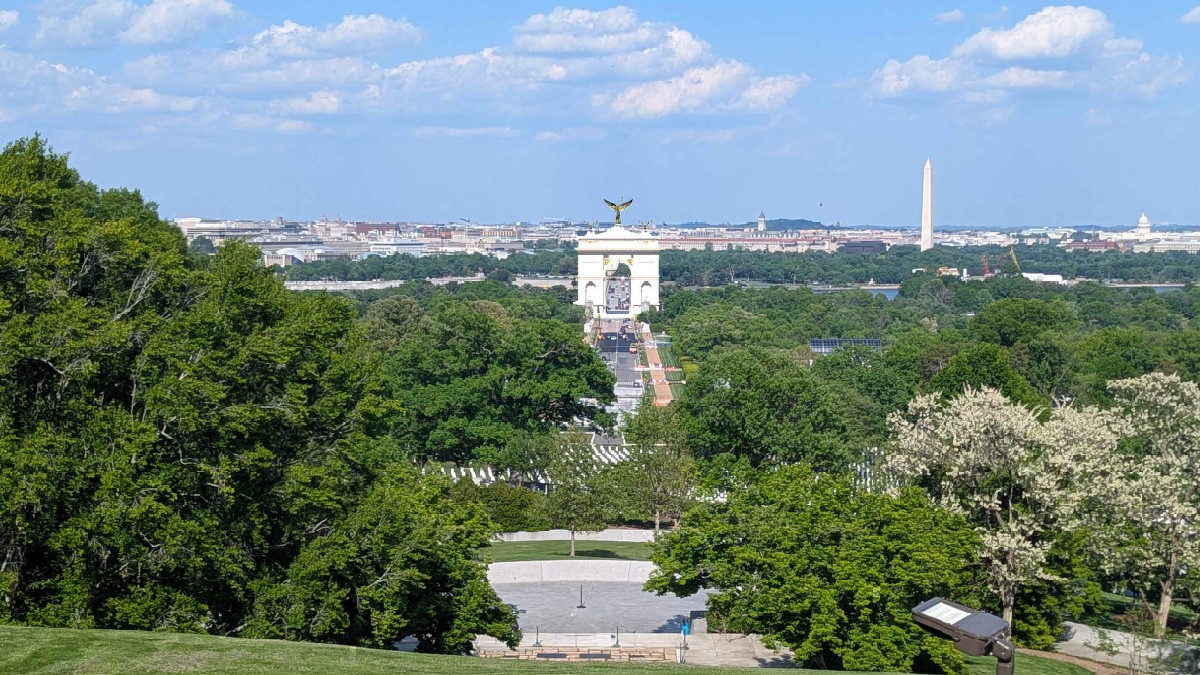
The project cleared NCPC because a necessary prerequisite, completion of a Section 106 review, had been short-circuited by the Advisory Council on Historic Preservation. The Section 106 review to determine what negative impact the Arch would have on designated historic resources—dozens according to the National Park Service (NPS)—and how to “avoid, minimize, or mitigate” those impacts was shut down after only one Section 106 “consulting party” meeting, an exceedingly rare occurrence. The administration claimed the project’s design and scale was site-specific and could not be moved or altered and concluded there was no way to negotiate an agreement with stakeholders. So, they cancelled the review and declared it complete. The move was denounced by numerous consulting parties, including TCLF. No new hearings on the Arch have been scheduled, and the temporary restraining order is due to expire on November 19.
Reflecting Pool Update
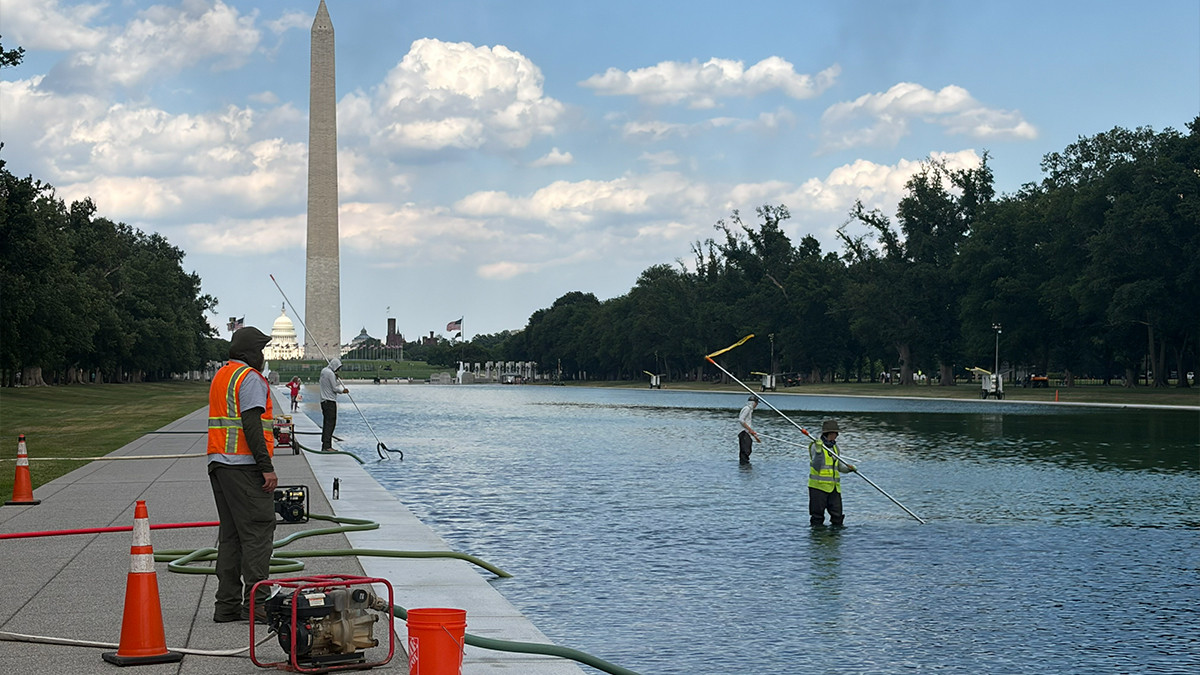
TCLF’s suit against the administration for painting the Reflecting Pool is in a holding pattern. The administration challenged TCLF and Charles Birnbaum’s standing to sue—which they successfully did with the member of the National Trust for Historic Preservation who sued about the ballroom that replaced the East Wing of the White House. TCLF’s attorneys with the Washington Litigation Group countered with a court filing on September 18. The court has not issued a decision.
West Potomac Park and the National Garden of American Heroes
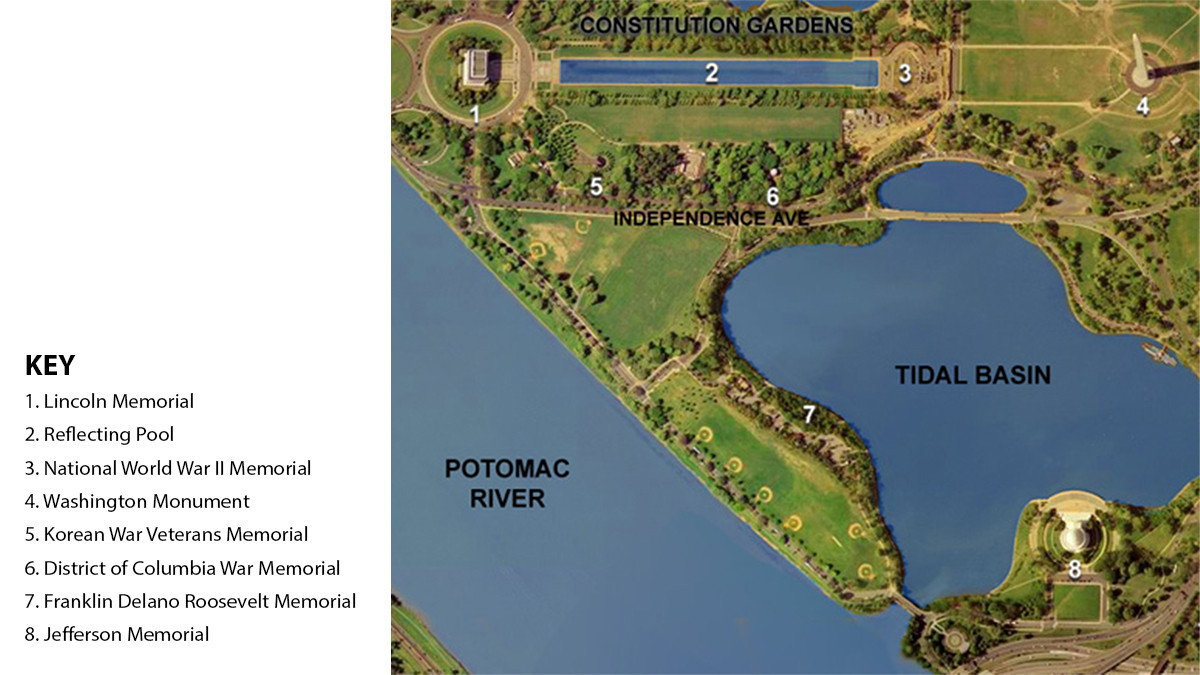
Another lawsuit with which TCLF is involved is the proposed National Garden of American Heroes in West Potomac Park (part of the National Mall). A series of recent court motions was triggered by an October 19 Section 106 meeting about the anodyne sounding “Revised Tidal Basin Development Concept Plan,” at which an NPS official unveiled a redesigned West Potomac Park. The current picturesque design with curvilinear paths that includes multiple ballfields was replaced with more formal elements, including a large oval expanse of lawn that alters the length of the entrance experience to the FDR Memorial. In addition, the once picturesque path that wends its way along the memorial's southern edge is now straightened for its entire length and formally planted with evenly spaced canopy trees. The first question raised by consulting parties was whether the redesign was done to accommodate the Heroes Garden. The NPS official flatly stated this was not the National Garden of American Heroes.
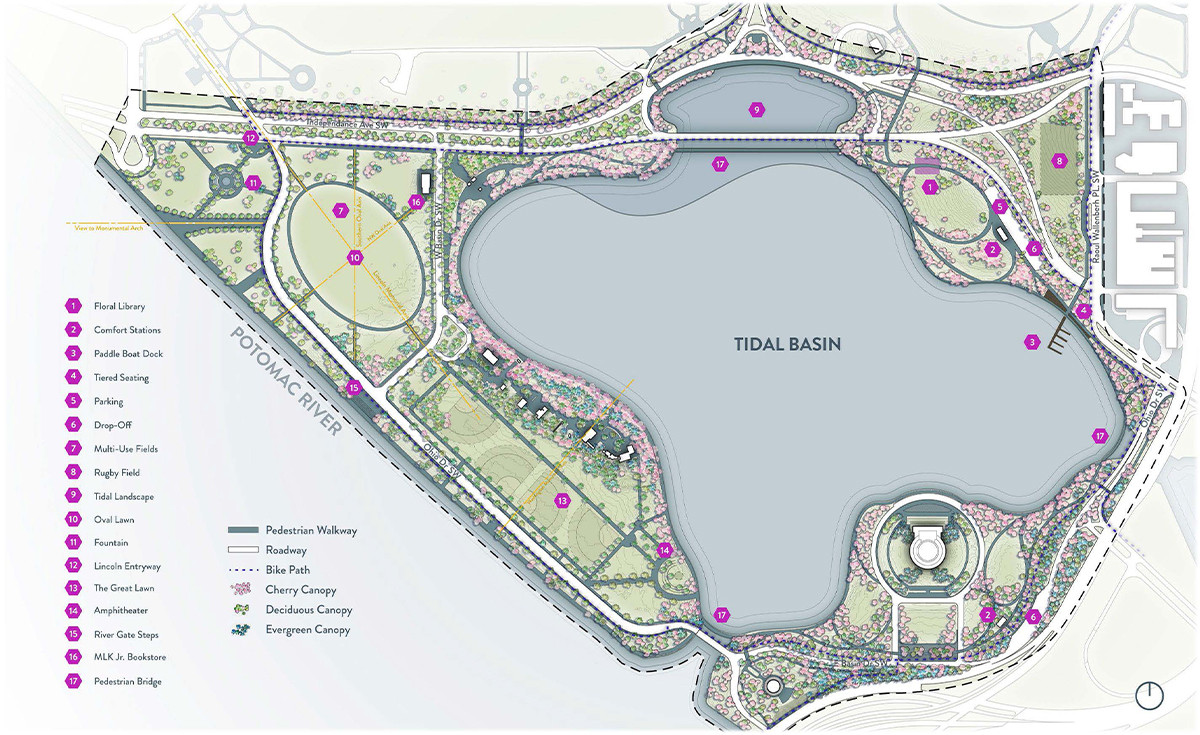
Nevertheless, a comparison of the proposed redesign provided by NPS (above) and a plan for the Heroes Garden circulated earlier this year by the National Garden of American Heroes Foundation (below) revealed astonishing similarities between the two, including the new formal elements, along with an amphitheater and great stairway on the Potomac River side of the park. On November 2, attorneys for TCLF and the other co-plaintiffs detailed the similarities and have asked the court to step in.
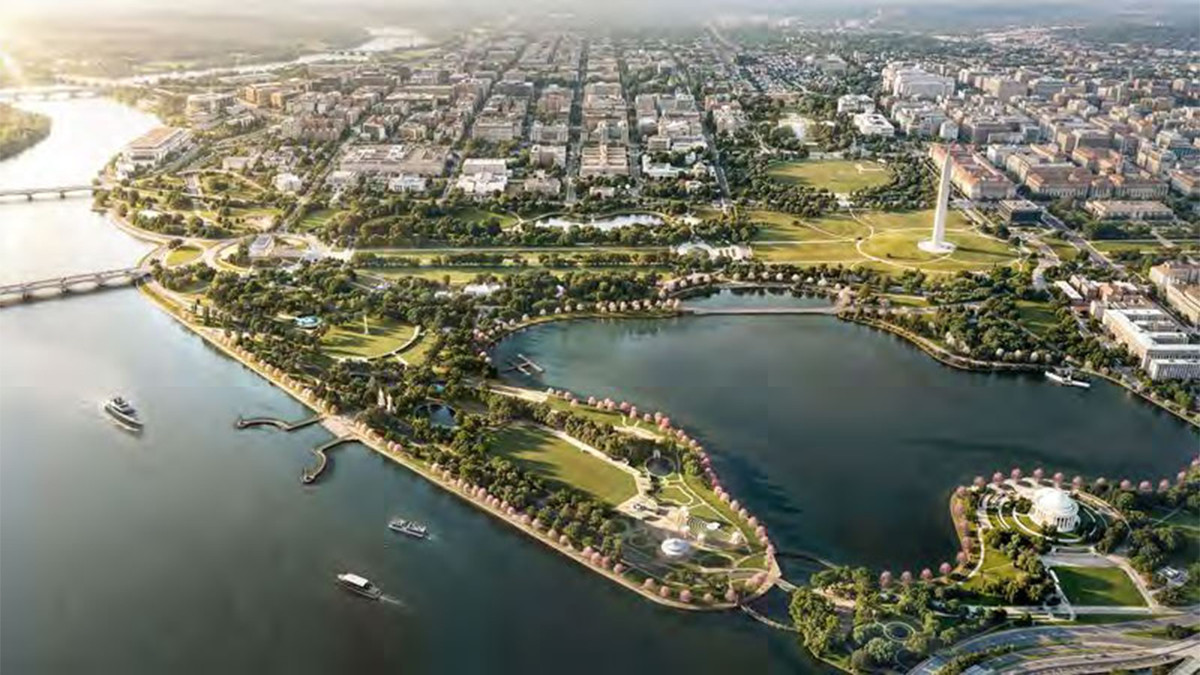
The project is scheduled to appear before the CFA on November 19, at which time it could receive both concept and final design approvals, which is what happened when the White House ballroom was considered earlier this year. The redesign of the park would next go to NCPC on December 3, where it could receive both concept and final design approvals, provided it has cleared the Section 106 review process.
East Potomac Park’s Golf Course
Perhaps the most contentious court case involves the high-end golf course proposed at East Potomac Park, where the administration has also dumped 810,000 cubic feet of fill from the demolished East Wing of the White House. An affordable series of municipal courses has served Washington-area residents for more than a century; the park is listed in the National Register of Historic Places. The administration claims the site is decrepit and dangerous, and they’ve engaged golf course designer Tom Fazio to design a new eighteen-hole championship-level facility that would replace the current three courses (and also the nation’s oldest miniature golf course). The D.C. Preservation League and two area golfers filed suit earlier this year. Judge Ana Reyes has resisted numerous calls for judicial intervention for months, saying she’s not the park and recreation commission. Attorneys for the Department of Justice (DOJ) have consistently argued there was no formal plan, let alone a “final agency action.” Earlier this year, Judge Reyes asked the DOJ to give the plaintiffs and the court a heads-up if any significant tree-clearing (more than approximately ten trees) would take place beyond what was needed to deal with dead, dying and hazardous ones.
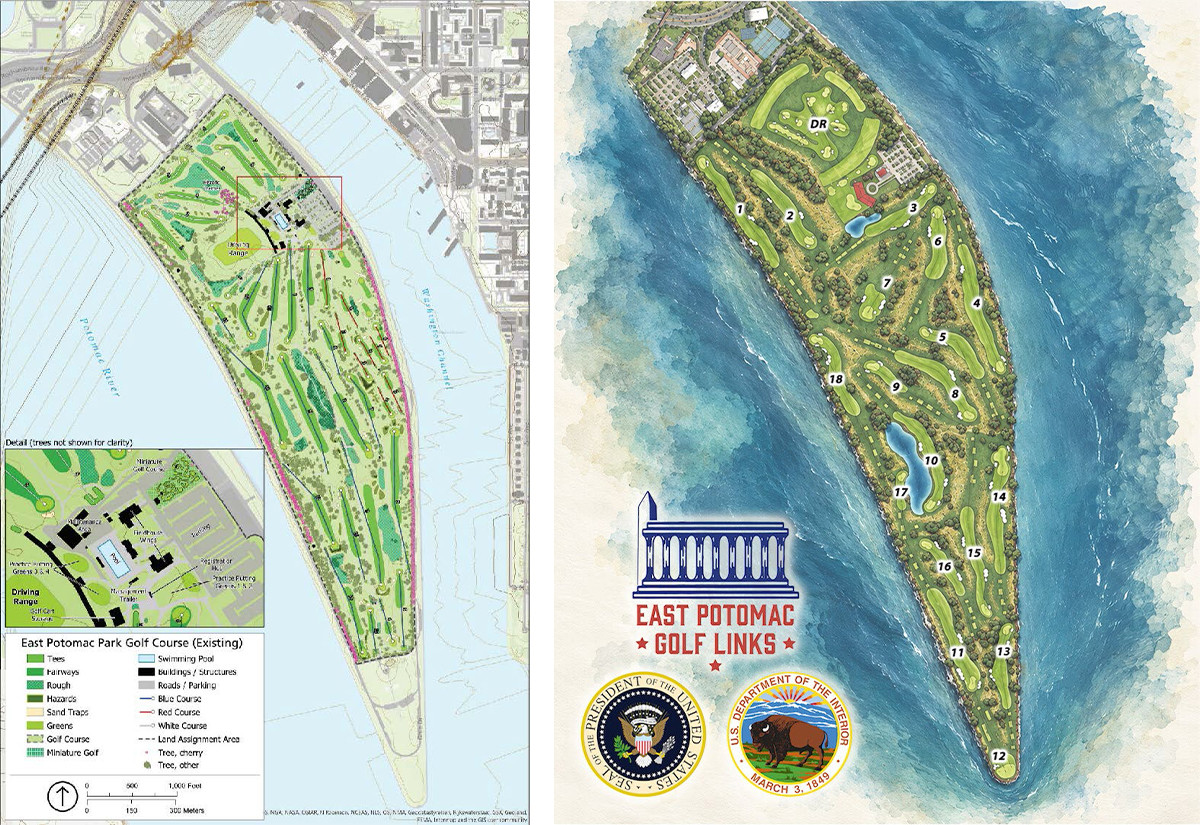
On late Friday afternoon, just prior to the three-day Columbus Day weekend, the administration filed a motion saying they would begin tree removal that weekend. The next day, before the attorneys for the plaintiffs and DOJ could meet and then confer with the judge, more than 400 healthy trees were cut down. Had it not rained the next day, at least another 100 would have likely come down. Judge Reyes held a hearing on Columbus Day and excoriated DOJ attorneys, ultimately saying that she wanted to find out if she’d been lied to about the extent of the plans for the new course.

Even after the tree clearing, the DOJ lawyers continued to tell Judge Reyes, as they had told her throughout the year, that there was no final plan to build a championship course; they asserted the massive tree-felling was actually part of an effort to restore the course to what it had looked like a century ago, an outgrowth of a cultural landscape report written in 2019. Nevertheless, on October 26 the judge issued a preliminary injunction halting additional work. Later than evening the president issued a statement on Truth Social: “We are closing the East Potomac Golf Course Site as scheduled on November 15th in order to renovate and rebuild for Competitive (with other such projects!), Safety, Modernization, and Aesthetic reasons." Two days later the DOJ filed a motion stating: “On Friday, October 30, 2026, the National Park Service will submit to the National Capital Planning Commission (“NCPC”) for review a rendering designed by Tom Fazio for a World Class, championship-level golf course that is capable of hosting major events.”

In a four-hour hearing on October 30 Judge Reyes opened by reading the D.C. Bars’ code of conduct, which prohibits lawyers from knowingly making false statements or misrepresenting facts to a court, and closed by saying there would be an investigation to determine the veracity of the DOJ attorney’s claims about the absence of any final plans in previous hearings. On Saturday, November 7 the judge announced her intention to appoint “former United States Attorney Jessie K. Liu” as “a special master to investigate whether Department of Justice or Department of the Interior counsel have committed ethical violations” in their representations to the court. Among the attorneys who would be investigated is Associate Attorney General Stanley Woodward, Jr., the number three official at DOJ. The next hearing is slated for Friday, November 13 at 10:00AM ET.
The golf course proposal is also required to go through a Section 106 review, though no consulting party meetings have been scheduled. TCLF and other advocates are closely monitoring developments in these cases and others, including the proposed renovation of the Kennedy Center and permanent fencing around Lafayette Park—across the street from the White House—which is historically significant for its associations with First Amendment protected rights.
The administration in recent days has indicated that it will continue to aggressively pursue its agenda, especially before the next Congress is seated. These next eight weeks could see a radical redesign of Washington, D.C.’s Monumental Core.
Related Content

Lincoln Memorial Grounds
Washington, DC
Arlington National Cemetery
Arlington, VA
West Potomac Park
Washington, DC
East Potomac Park
Washington, DC