


Pioneer Information
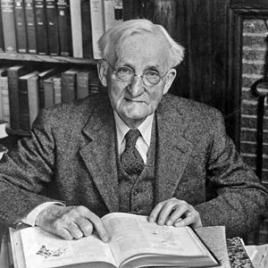
Born on a farm outside South Haven, Michigan, Bailey earned a BS from Michigan Agricultural College (now Michigan State University) in 1882 and subsequently spent two years working with botanist Asa Gray at Harvard University. In 1884 he returned to Michigan Agricultural College where he simultaneously earned an MS (1886) while teaching horticulture and landscape gardening there and establishing the Department of Horticulture and Landscape Gardening (1885)—one of the first such programs in the country. In 1888 Bailey accepted a position as the director of the College of Agriculture (now College of Agriculture and Life Sciences) at Cornell University, where he developed a farm extension program and established the Department of Experimental Plant Biology (1907), thus securing his role as a leader in agricultural education. He retired from teaching in 1913 to focus on specimen collection, research, and writing.
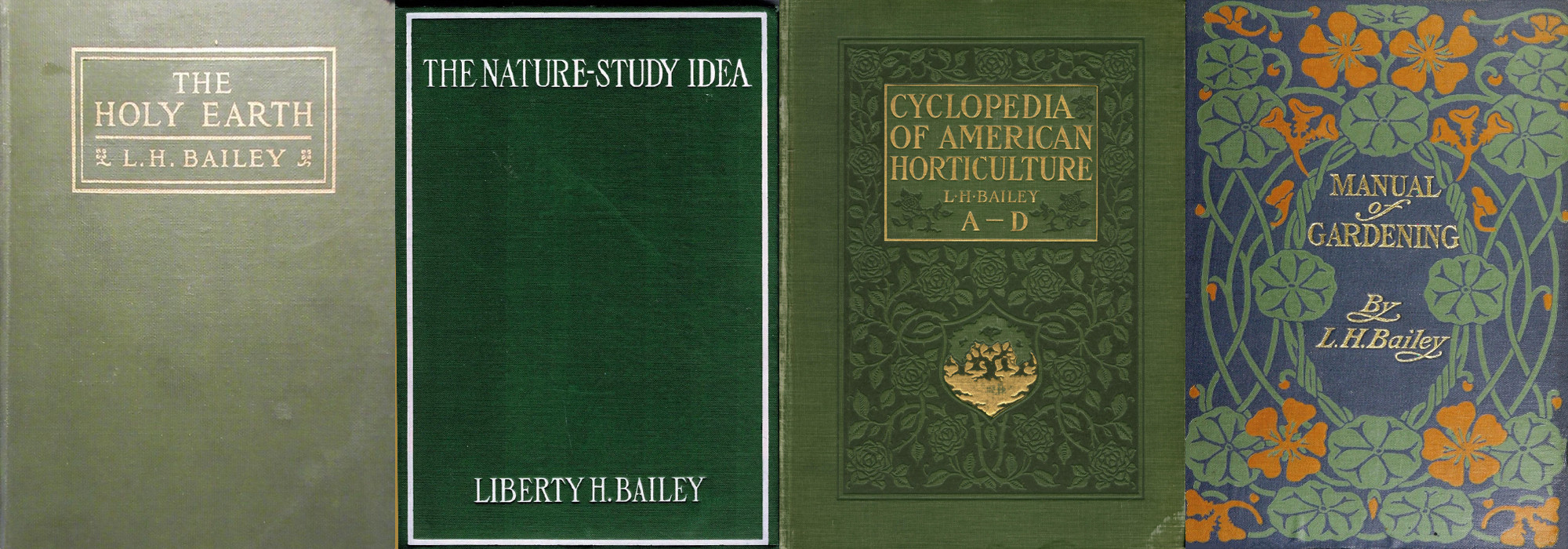
A prolific author, Bailey produced dozens of popular books, including The Nature-Study Idea (1903), The Holy Earth (1916), the four-volume Standard Cyclopedia of Horticulture (1914–1917), and more than 1,000 articles in journals and periodicals. He is recognized for conceptually moving away from set rules in landscape design toward the idea of “making a picture,” unified around a central feature. In 1935 he donated his 3,000-volume library and private herbarium (now the Bailey Hortatorium, with more than 140,000 specimens) to Cornell University, serving as its director until 1951.
Bailey co-founded the American Society for Horticultural Science (1903) and was appointed by President Theodore Roosevelt to chair the Country Life Commission (1908) to survey rural life in the United States and recommend improvements. A proponent of both “nature-study” education and the country-life movement, he was recognized with many accolades for his rich and varied contributions to the fields of botany, horticulture, and landscape design. Bailey died at the age of 98 and is interred in an Egyptian Revival mausoleum of his own design at the Lake View Cemetery in Ithaca, New York.