Landscape Information
Situated in West Hill and framed by linear streets, this 21-acre rectangular park features two distinct sections divided by a central path. In the 1850s the city established a reservoir enclosed by eighteen-foot-tall earthen berms in the eastern section (now Bleecker Stadium), and the following decade the western section was graded and improved as an ornamental flower garden. Dedicated as Swinburne Park in 1901, this parcel was designed by landscape architect Charles Downing Lay in 1913. Later, as part of the New Deal work relief programs (1930s), the reservoir was decommissioned and converted into the open-air Bleecker Stadium for high-school athletics.
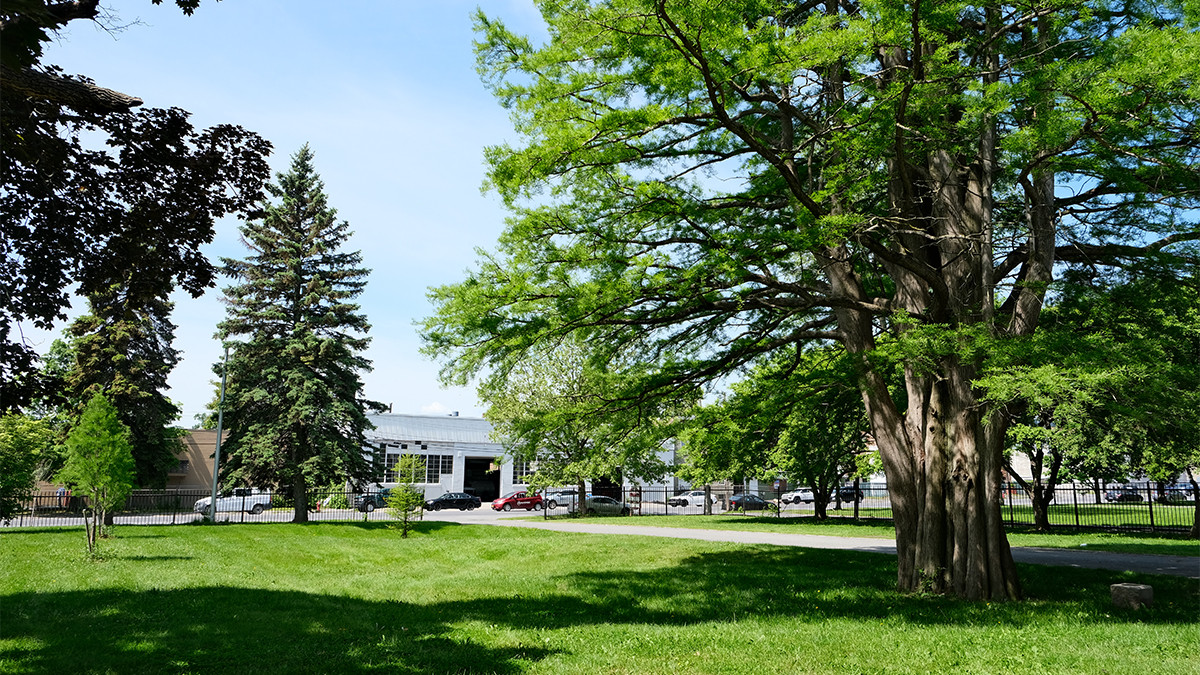
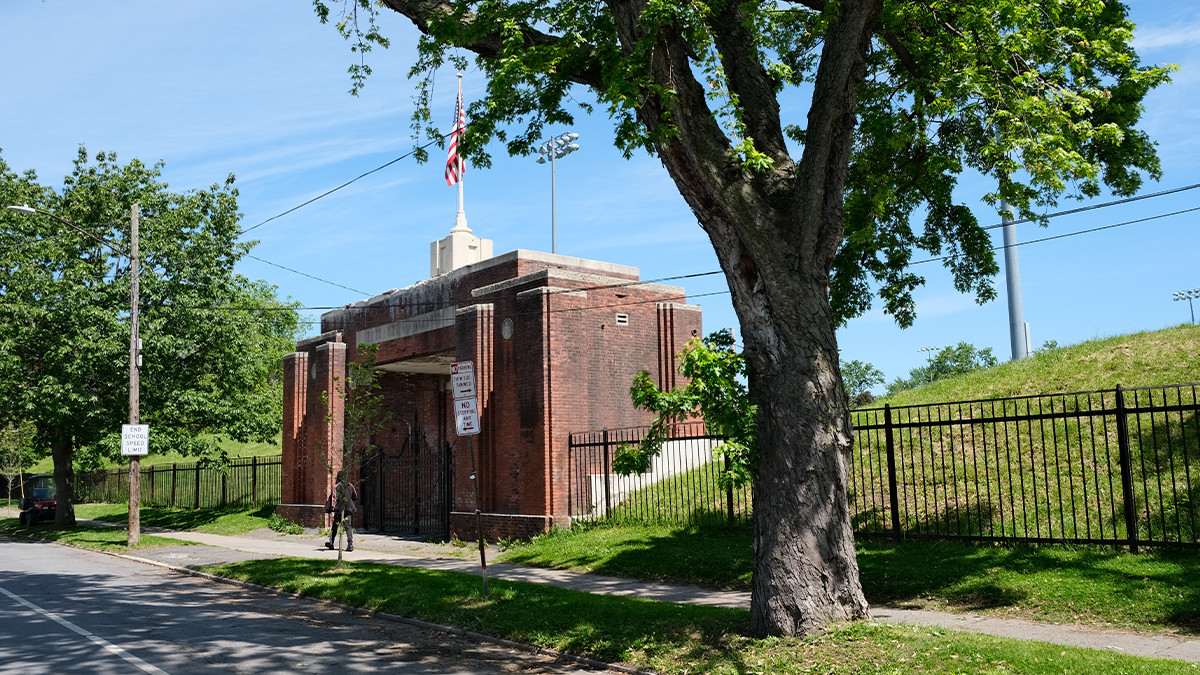
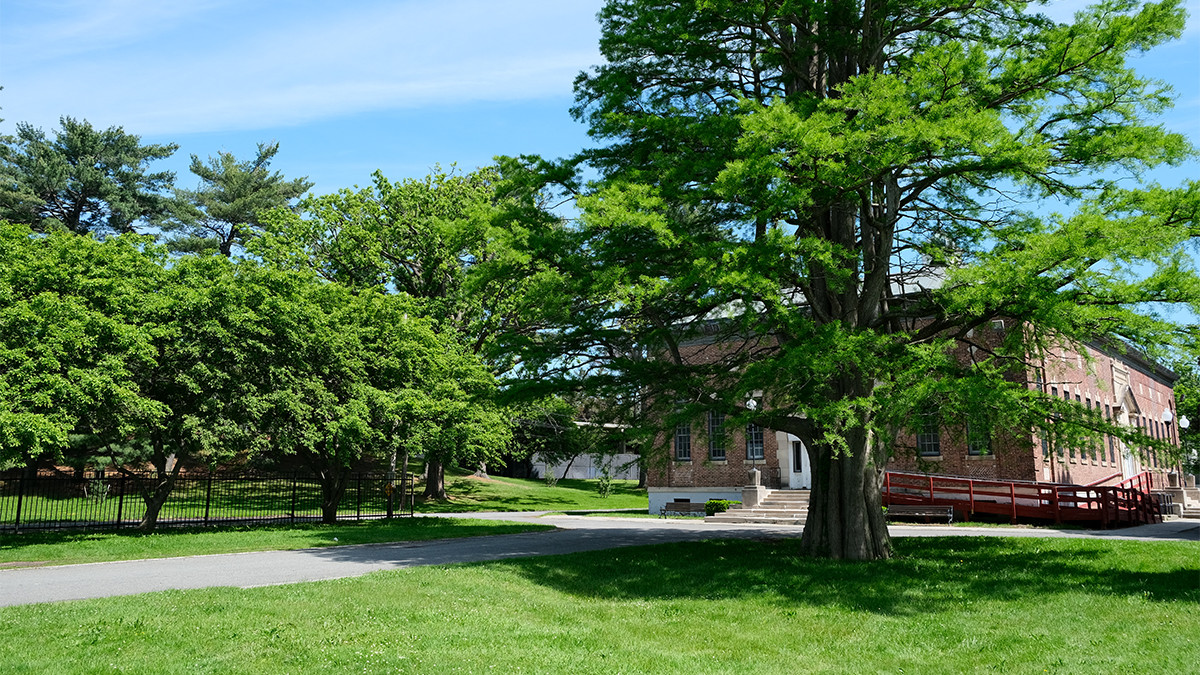
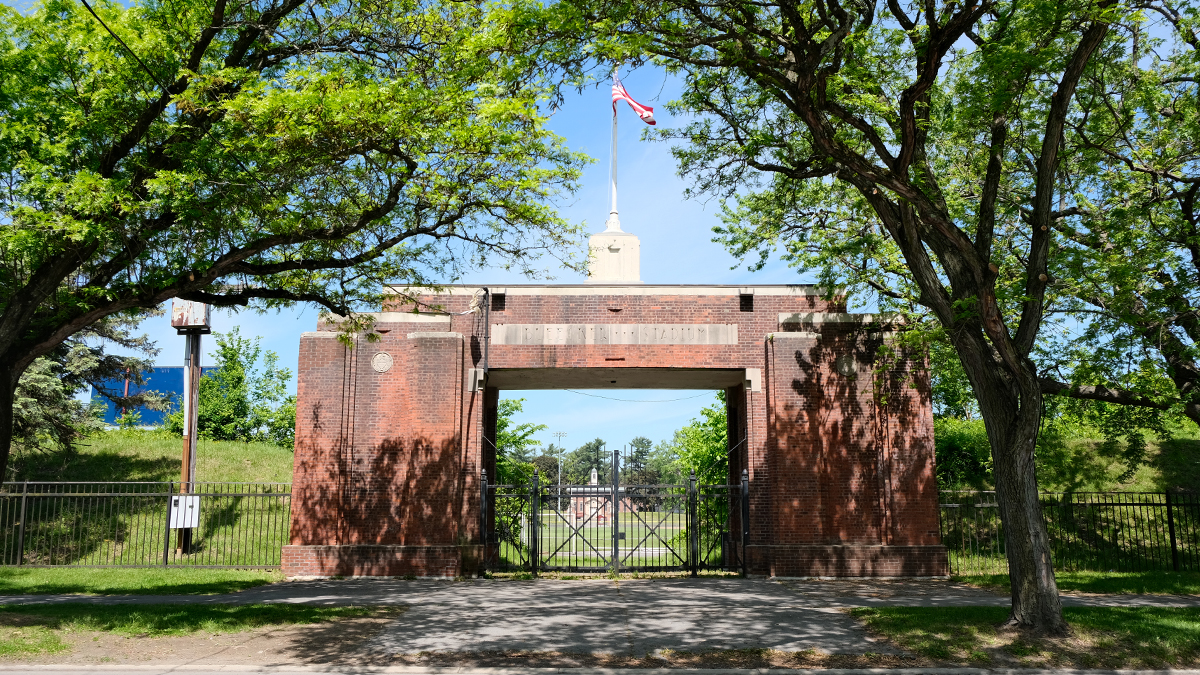
Enclosed by an iron fence and the berms, the stadium is accessed through four axial brick and cast stone entrances located at the midpoint of each side. Three of the entrances are have stylized triumphal arches, whereas the westernmost entrance incorporates parallel brick retaining walls. The walls flank a ramped, paved path oriented on axis with a Colonial Revival fieldhouse (1938), designed by architect John Carroll and located at the center of the property. The fieldhouse is separated from Swinburne Park by a generous paved path flanked by trees, including a mature bald cypress specimen.
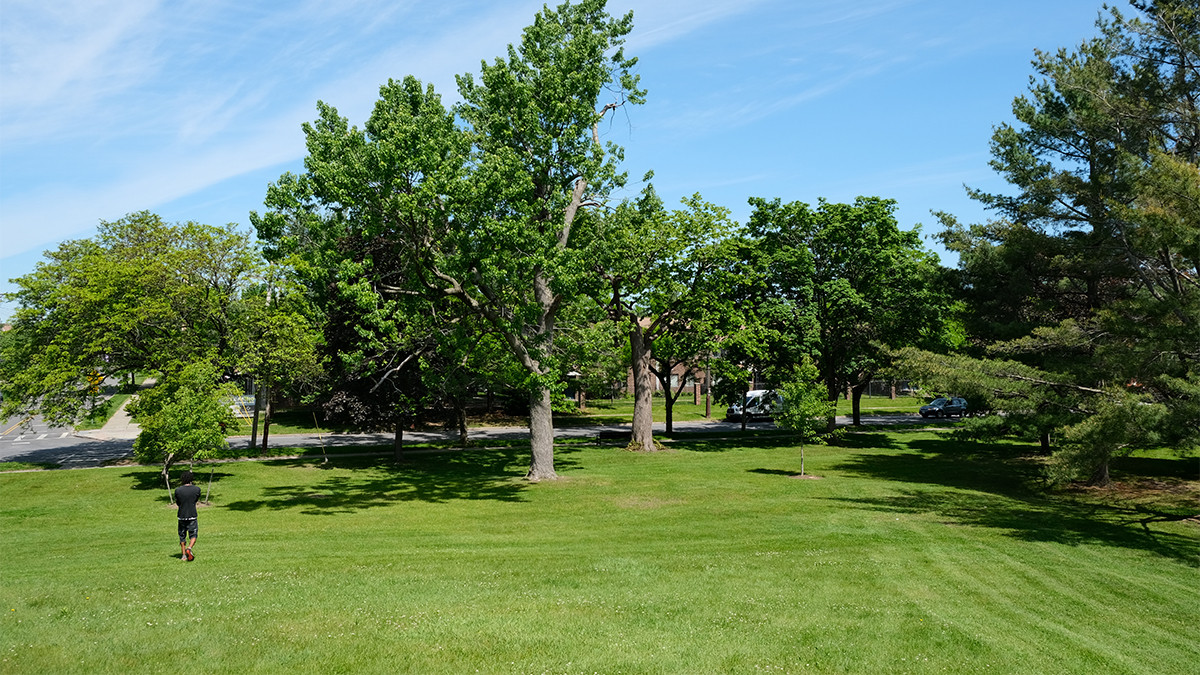
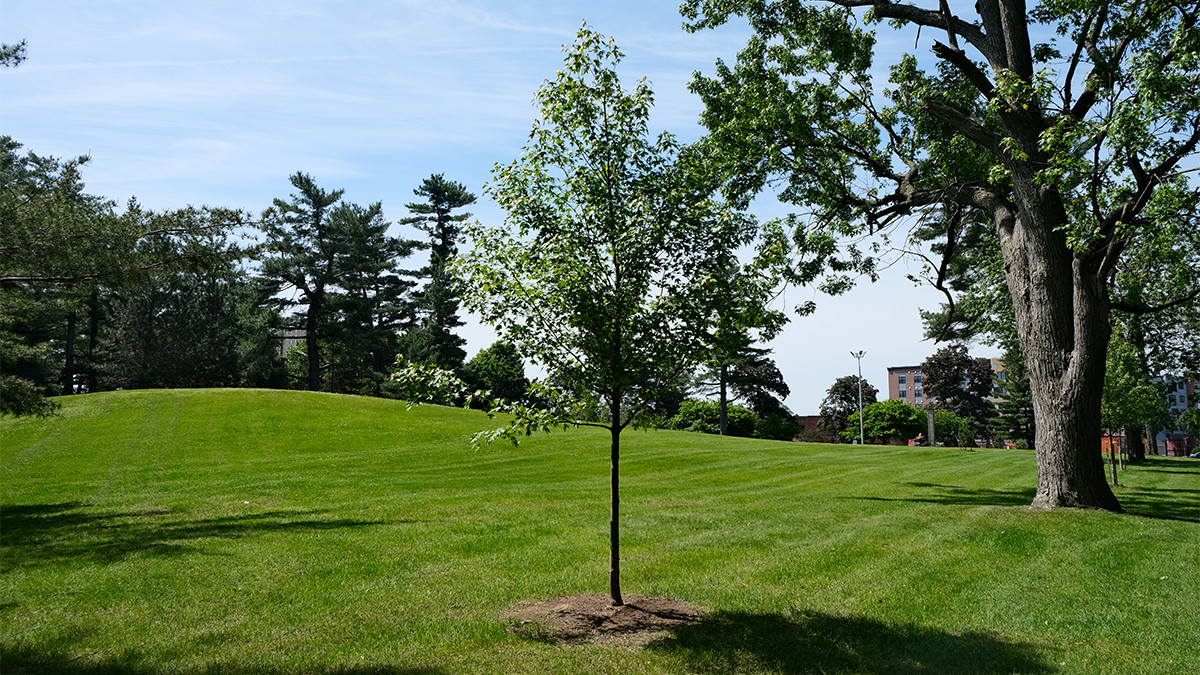
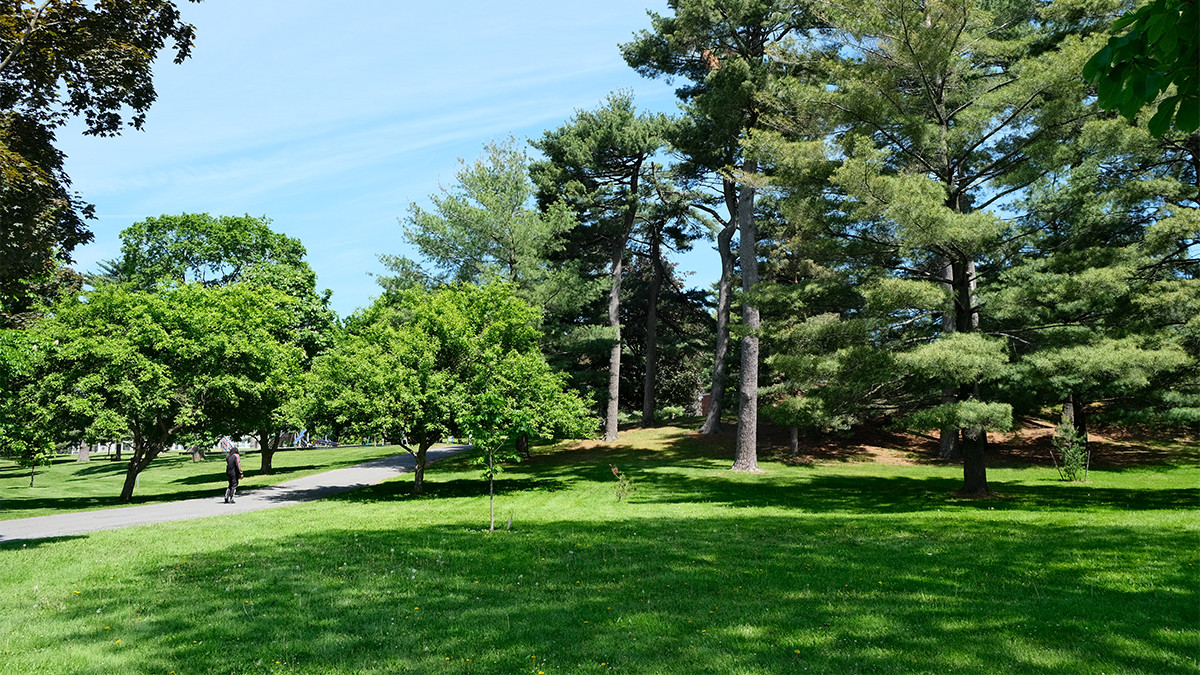
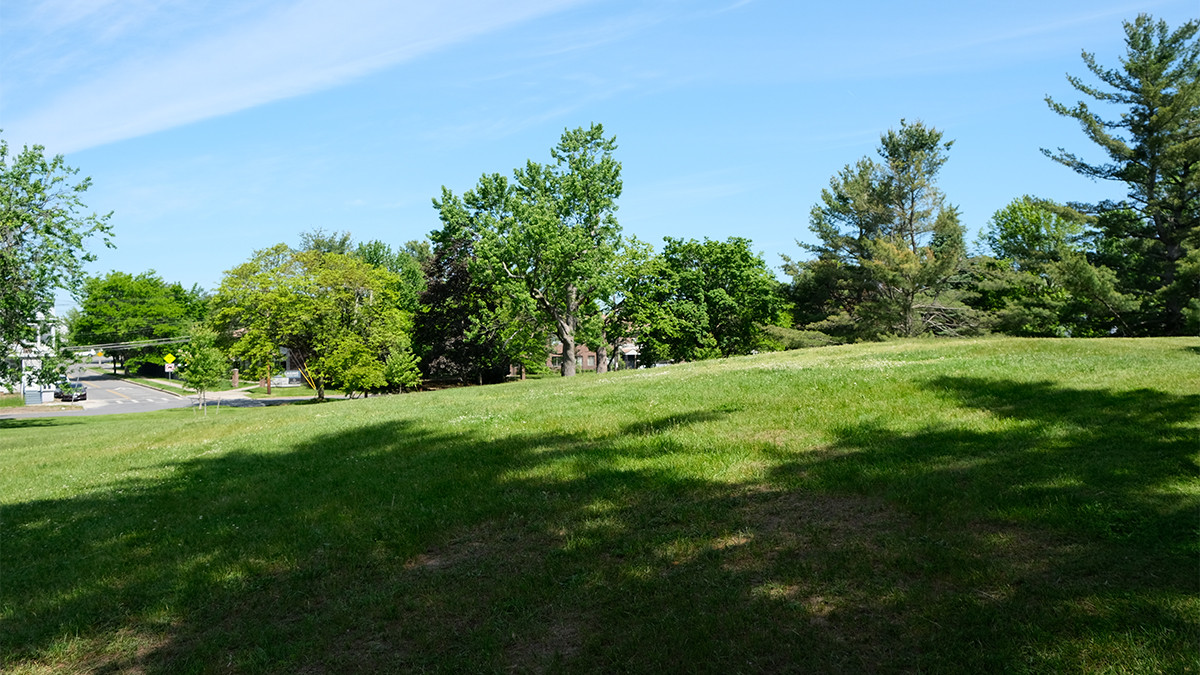
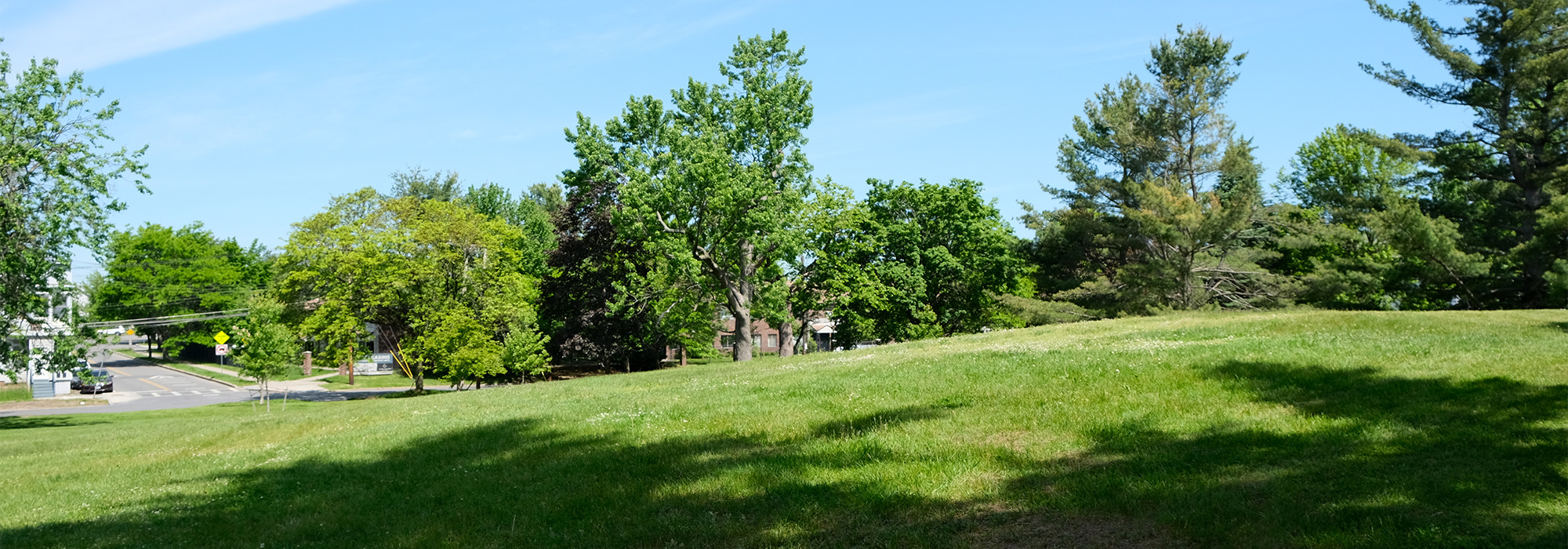
Swinburne Park is navigated by arced diagonal paths that meet at its approximate center. The paths frame lawn panels planted irregularly with deciduous canopy trees, including oak and maple;, the westernmost panel is distinguished by a modest hillock. Built elements include a comfort station (1938) and recreational amenities, including a skating rink (1967-69) and playground.
The park and stadium were listed in the National Register of Historic Places in 2017.