Triumphal Arch Update and TCLF's Letter to the National Park Service
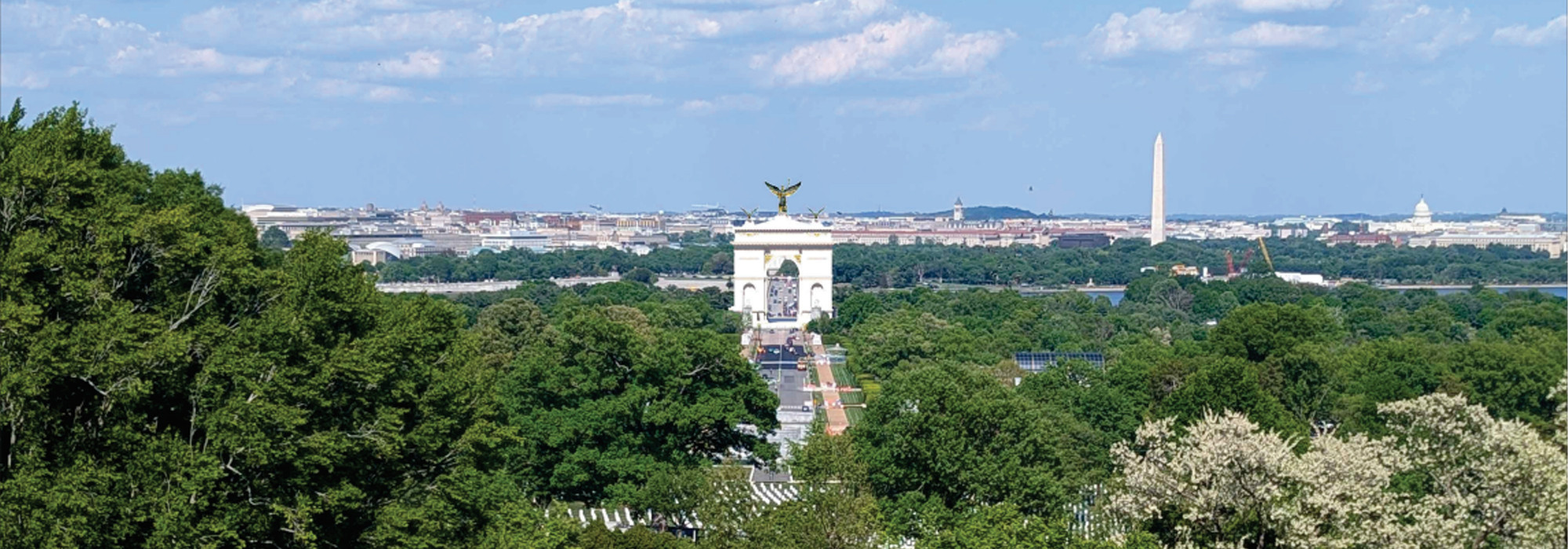
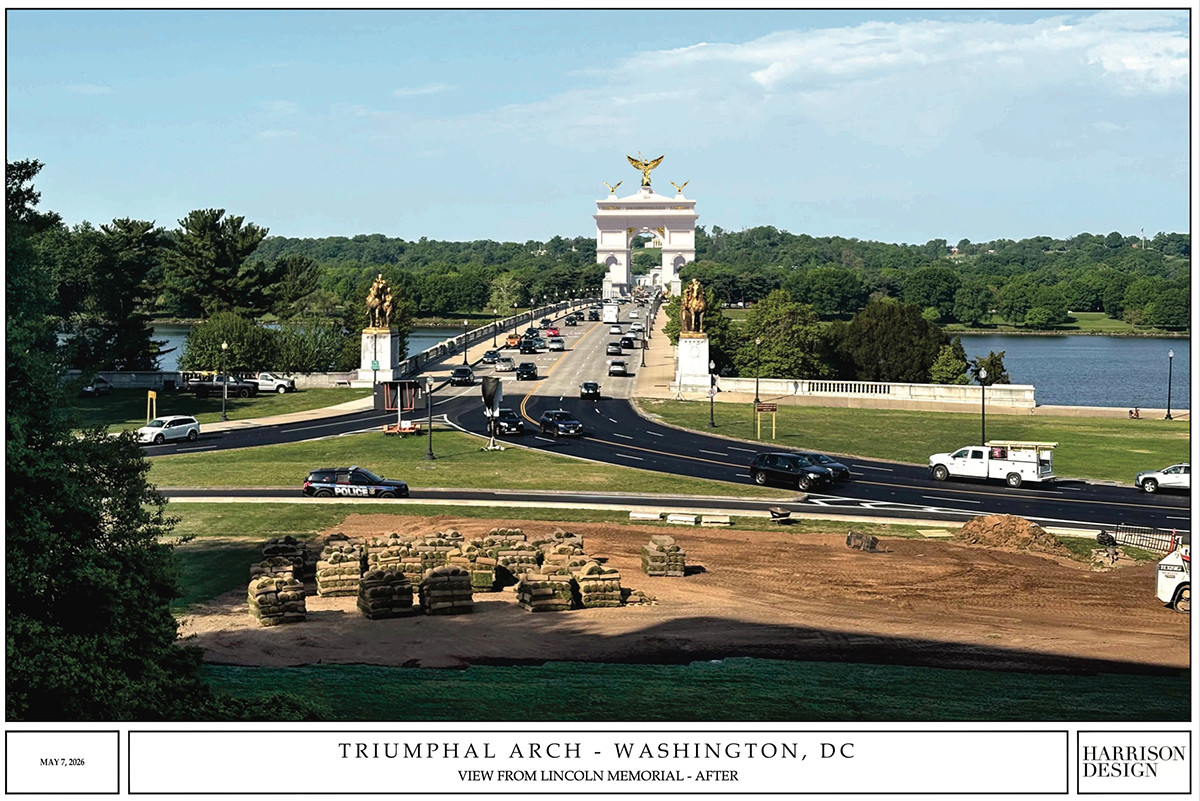
Will the administration use a loophole to get the very unpopular 250-foot-tall Triumphal Arch built in front of Arlington National Cemetery?
Charles A. Birnbaum, Founding President & CEO of The Cultural Landscape Foundation (TCLF) has just written to the National Park Service (NPS), which is managing the federal level historic preservation reviews for the Arch. Read the letter—sent July 30, 2026— below:
Ms. Tammy Stidham
Associate Regional Director - Lands and Planning
National Park Service
1100 Ohio Drive SW
Washington, DC 20242
Dear Ms. Stidham,
Thank you for the materials sent to consulting parties to the Section 106 review of the Triumphal Arch project on July 28, 2026. As The Cultural Landscape Foundation (TCLF) prepares another set of comments (which follow on those of June 15, 2026, and July 18, 2026), it would be helpful to understand how the National Park Service (NPS) will address the Section 106 requirement to “seek ways to avoid, minimize or mitigate any adverse effects on historic properties."
Thus far, there has been one consulting parties meeting (June 15, 2026), to which TCLF and five other organizations seeking “consulting party” status were not invited; the invitation was ultimately extended on Jul 10, 2026. The June 15 meeting followed the initiation of a Section 106 review on June 5, after the project had received final design review from the Commission of Fine Arts (which did not see a final design). This appears to directly contradict the language of Section 106, as noted in 36 CFR § 800.1(a) “Purposes of the section 106 process”: "The section 106 process seeks to accommodate historic preservation concerns with the needs of Federal undertakings through consultation among the agency official and other parties with an interest in the effects of the undertaking on historic properties, commencing at the early stages of project planning.” [emphasis added]
This inverted approach to the Section 106 is very disconcerting, but so is the astonishing fact that there was no design competition for what would be the second largest monument in the Monumental Core after the Washington Monument.
Had this review commenced at the “early stages of project planning,” it would likely have dealt with the most appropriate site for the arch. But the process began after a site had been selected.
The “Assessment of Effects” previously published by NPS does not address either a no-build option or an alternative location option. Consequently, would you please tell us if NPS is considering either a no-build option or an alternative location option, or if those options have been foreclosed?
In addition, the due date for consulting party comments is August 6, 2026. As noted in your email: "Consulting parties will have an opportunity to consult in the development and evaluation of alternatives or modifications to the undertaking that could avoid, minimize, or mitigate adverse effects on historic properties if an adverse effect determination is issued.” [emphasis added]
When will consulting parties and the public be told of NPS’ “determination”?
According to 36 CFR § 800.5(b) “Finding of no adverse effect” and (c) “Consulting party review,” following a no adverse effect determination, the D.C. State Historic Preservation Office and other consulting parties would have 30 days to notify NPS in writing of any disagreements with the determination. Accordingly, NPS "shall either consult with the party to resolve the disagreement, or request the Council to review the finding.” According to 36 CFR § 800.5(c)(3)(i) "If the Council does not respond within the applicable time period, [NPS’] responsibilities under section 106 are fulfilled.”
Please explain ow NPS would decide to "either consult with the party to resolve the disagreement, or request the Council to review the finding.” [emphasis added]
It seems that if NPS chooses not to work with consulting parties and instead forwards the issue to the Advisory Council on Historic Preservation (ACHP), that if ACHP takes no action, the Section 106 process would be concluded. Is that a correct reading of how Section 106 could be implemented by NPS in this matter?
Sincerely,
Charles A. Birnbaum, FASLA, FAAR
Founding President & CEO