2025 Landslide in Action Videos
Some of the most debated issues today—anti-war activism, civil rights, gay rights, women’s rights, Native rights, disability rights, and more—have been the subject of historic acts of protests, civil disobedience, and dissent, some dating to the Colonial era. Explored in The Cultural Landscape Foundation's (TCLF) thematic report and digital exhibition, Landslide 2024: Demonstration Grounds, the histories of some of these protests are at risk of erasure, fading from public memory, or worse, being forgotten. And, the threat is accelerating. As the New York Times reported in March 2025, federal “agencies have flagged hundreds of words to limit or avoid . . . in government memos, in official and unofficial agency guidance and in other documents.” Examples include the terms “Native American” and “cultural heritage.” As the Times noted: “That shift is already apparent on hundreds of federal government websites.”
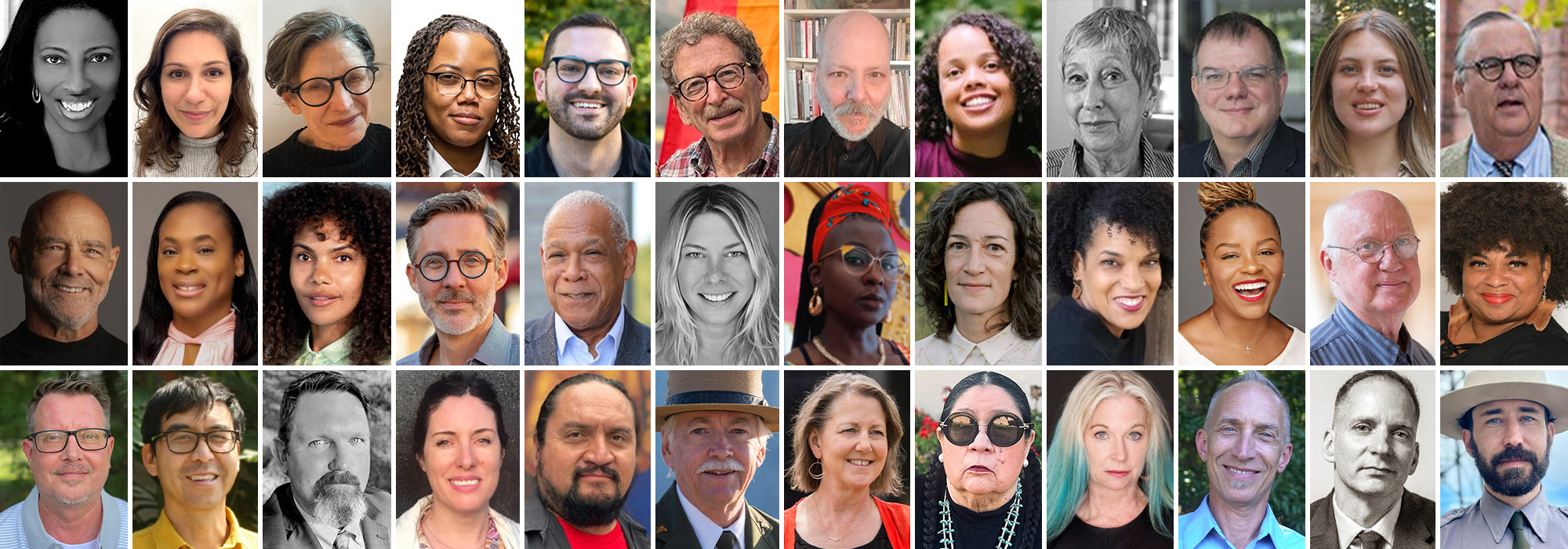
To highlight the range of threats to several historic protests explored in the thematic report TCLF organized in 2025 Landslide In Action—a series of FREE webinars, sponsored by Victor Stanley. The series featured dynamic speakers who revealed amazing stories about the ordinary people who dared to shape history, how the powerless became empowered, and the places where that happened. TCLF hosted eight webinars, all of which are presented below and are available to watch on TCLF's YouTube Channel. Each video relays some of the issues and people featured in the report and exhibition of 2024.
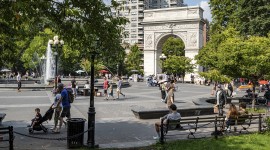
Prelude to the Modern Preservation Movement
Apr 17, 2025
Empowering the powerless is a key element of the modern historic preservation movement. Ordinary citizens advocating for a shared interest—a cultural landscape, a historic structure, historic property, neighborhood, or a regional expanse—working together can effect change. Milestones in the movement include the enactment of the National Historic Preservation Act of 1966 (NHPA), and the renaming of the Secretary of the Interior’s Standards from “historic buildings” to “historic properties,” reflecting a shift from being architecture-centric to more inclusive (1992). But two significant events at sites on opposite coasts, Washington Square Park in New York City's Greenwich Village and the historic Pike Place Market neighborhood in Seattle, Washington, took place several years before enactment of the NHPA. Learn how broad coalitions of activists at each prevailed and the sites survived.
Three generations of preservation professionals look at the origins and successes that galvanized public attention, interest, and buy-in. They also consider how the movement expanded beyond buildings and landscapes to embrace cultural heritage and cultural lifeways and how a new generation of preservationists is making “preservation” relevant and meaningful.
*****
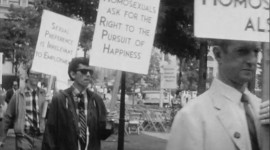
Independence Mall Equal Rights Protests
Apr 23, 2025
A major precursor to the Stonewall protests of 1969 in New York City’s Greenwich Village, often seen as the genesis of the modern gay-rights movement, were the marches on “Annual Reminder Day” that took place for five years beginning in 1965 on July 4th on Philadelphia’s Independence Mall. Since those events, extraordinary changes in law, society, and culture have occurred—including the legalization of same-sex marriage. Many efforts are contributing to the legacy of LGBTQ+ activism. With 2025 marking the 60th anniversary of the first “Annual Reminder Day,” this webinar addressed the significance of the 1960s protests in Philadelphia and New York, the upholding and protection of the history and memory of these events, and current challenges and threats.
Learn from professionals representing the fields of preservation, landscape design, archives, and photography who offer their observations and insights.
*****
Biscayne Bay Wade Ins
July 30, 2025
On May 9, 1945, six African American men and women clad in bathing suits courageously waded into the Atlantic Ocean at the “whites-only” Baker’s Haulover Beach (now Haulover Park) northeast of downtown Miami, FL. As a direct result of what became known as a “wade-in,” Virginia Key Beach (located on a barrier island east of the city) was dedicated on August 1, as a “colored-only” park. The creation of Virginia Key Beach was a symbolic victory for Miami’s African American community and the site immediately became a popular destination. By 1959, however, all county parks and beaches were desegregated after another peaceful protest, when a group of African American women and men visited the segregated beach at nearby Crandon Park.
Learn from webinar participants, who reveal the history of the site and how contemporary, local artists draw inspiration from the landscape.
*****
City Parks as Stages for Public Protest
Sep 18, 2025
Many public parks across the nation have witnessed significant demonstrations where ordinary people and groups have gathered to make their voices heard. This session explores the legacy of three twentieth-century protests: in New York City, NY; Chicago, IL; Atlanta, GA. In “The Battle of Central Park” of 1956, a group of more than 50 mothers and their children thwarted plans of New York City Parks Commissioner Robert Moses to build a parking lot on a wooded parcel used by local children as a play area, leading to the origins of the first Adventure Playground. In Chicago, in 1968, during the Democratic National Convention, anti-Vietnam War protestors gathered in Grant Park. An ensuing clash with Chicago police turned the park into a site of mixed legacy, now remembered as ground zero for anti-war discord. And, in Atlanta, in the 1980s, the expansion of Ponce de Leon Avenue into an expressway threatened the Druid Hills neighborhood—the last residential community designed by Frederick Law Olmsted, Sr. Protestors transformed the neighborhood’s Shadyside Park into a tent city. At the adjacent Dellwood Park, rallies were held where speakers—including then-city council member John Lewis—denounced the proposed freeway.
Hear from panelists who draw upon their extensive collective experience in park administration, preservation, and the practice of landscape architecture.
*****
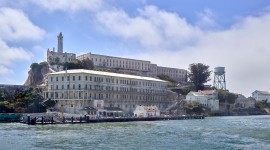
Alcatraz Island’s Native American Lifeways
Sep 25, 2025
On March 9, 1964, five Lakota Sioux landed on Alcatraz Island, briefly claiming it as “Indian Land.” A more protracted occupation of the island by the “Indians of All Tribes” lasted nineteen months, from November 20, 1969, to June 11, 1971, which at its peak involved more than 400 Native Americans. The protest was significant as it galvanized the Native American “Red Power” tribal and treaty rights movement, drawing national and international attention to Native American struggle for sovereignty and self-determination. Discover how the watershed occupation inspired a national movement and how the event is commemorated on the site today.
Join park administrators, a Native American activist, an artist, and landscape practitioners to explore this revolutionary event and how it is commemorated.
*****
The Legacy of Two Major Campus Protests
Oct 29, 2025
Find out how the fascinating stories of two significant twentieth-century student uprisings are told today at the landscapes in which they took place. This session explored how events at two American universities led to fundamental changes in leadership and how these events are interpreted online and on-site today.
Student protests at Fisk University in Nashville, TN (1924-25) not only ousted the president, but paved the way (slightly more than a generation later) for the appointment of the university’s first African American president. Decades later, in 1988, students at Gallaudet in Washington, D.C. protested the appointment of a hearing president with little knowledge of sign language. The “Deaf President Now” movement resulted in the appointment of a Gallaudet alumnus, I. King Jordan, as the institution’s president.
The webinar also makes visible the efforts of Louise B. Miller, who led the fight for educational justice for African American deaf children during the era of segregation.
*****
Invisible Histories along the Mississippi River
Nov 6, 2025
The 28.5-mile stretch of fortified Mississippi Riverbanks in Louisiana’s St. John the Baptist Parish have born witness to centuries of history and three key movements of protest, including one of the largest slave revolts in America (1811). An eleven-mile stretch was under consideration for designation as a National Historic Landmark; federal officials revoked that option in February 2025.
Hear from panelists and learn about this vital landscape and its stewards.
*****
Elevating and Interpreting Chicano History
Nov 18, 2025
On August 29, 1970, thousands of people gathered for a peaceful demonstration along a 3.7-mile route between the East Los Angeles Civic Center and Laguna (now Ruben Salazar) Park for the National Chicano Moratorium March. The protest was a significant catalyst for El Movimiento (the Chicano Movement) for self-determination and civil rights—particularly regarding disproportionate Chicano losses in the Vietnam War—drawing national attention to its cause.
Discover this vital moment in Chicano history and how the event is commemorated today thanks, in part, to the efforts of the city, the community groups, landscape architects and advocacy organizations.