Landscape Information
Situated between Hampton River and Interstate 64, this relatively level, 314-acre irregularly shaped campus was established in 1868 on the former Little Scotland Plantation. Founded by Samuel Chapman Armstrong for the vocational education of African Americans, it served as a model for similar subsequent institutions. The campus frames the rectilinear Hampton National Cemetery (1866) and features a sprawling Southern live oak (Emancipation Oak) under which Mary Peake—the first African American teacher hired by the American Missionary Association—taught newly emancipated individuals in 1861.
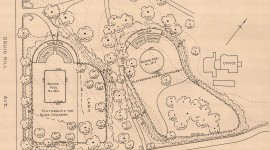
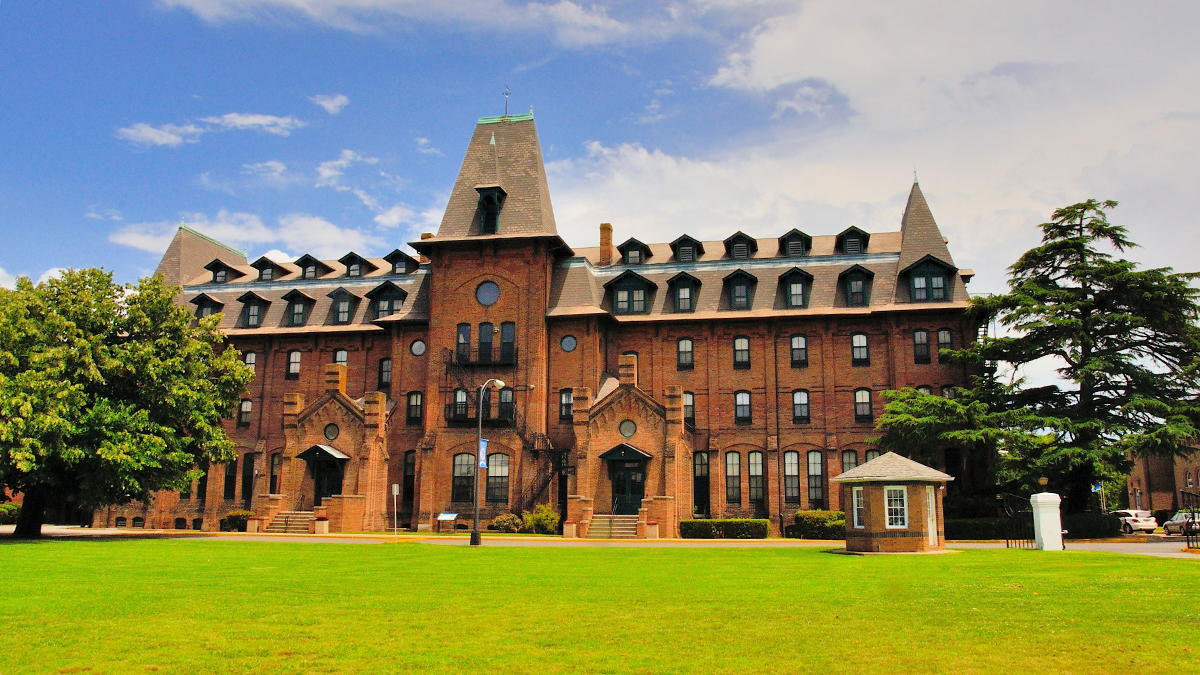
Armstrong engaged architect Richard Morris Hunt in the 1870s to design two buildings along the Hampton River shoreline, adjacent to the site’s original residence (1820s, now Mansion House). These buildings, encircled by curvilinear drives, were accessed by two parallel east-west roads that traversed expansive agricultural land used by the students. By 1893, the campus expanded eastward to include additional buildings, gardens, pastures, and athletic fields.
Between 1914–1915 architects Ludlow and Peabody prepared a masterplan that introduced a network of drives to connect existing and proposed buildings and laid out irregularly shaped quadrangles throughout. In the 1940s, the campus expanded with the addition of International Style dormitories and academic buildings by architect Hilyard Robinson.
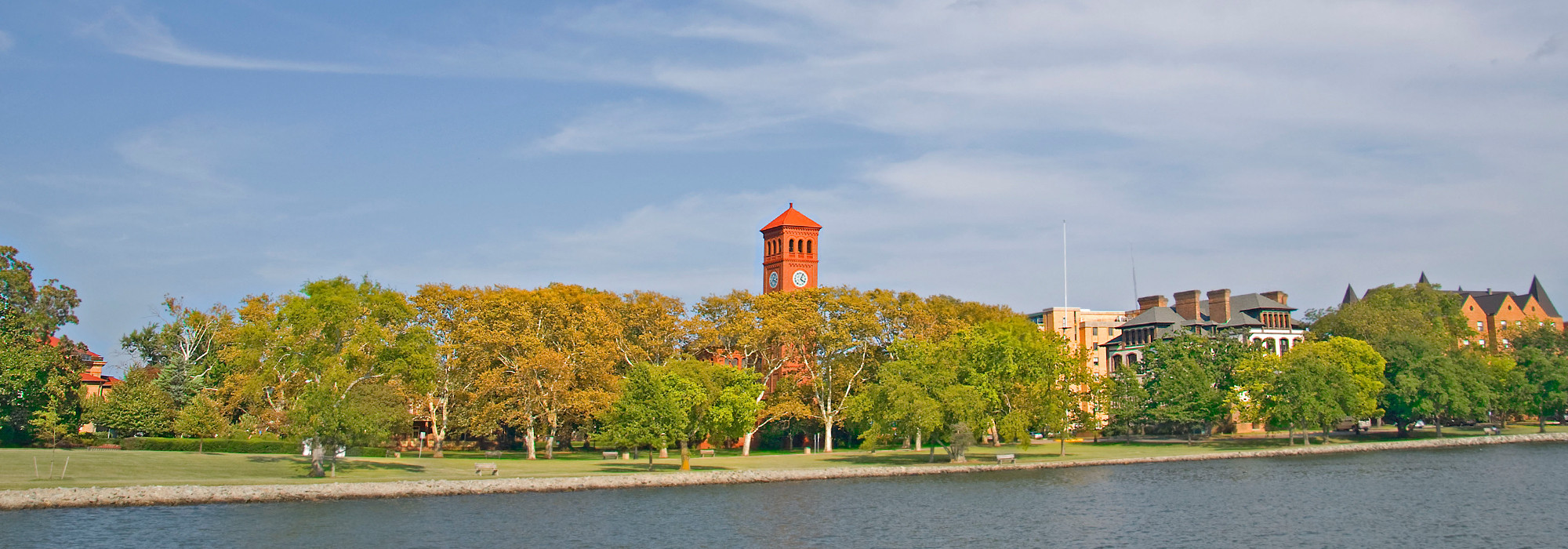
Today, the original east-west roads retain their historic alignment, enframing the campus core, comprised of irregularly sited buildings that define quadrangles; some are asymmetrical and navigated by networks of angular, concrete sidewalks, whereas others are rectilinear and include formal, axial paths. At the campus’s western edge, an expansive lawn, populated by deciduous canopy trees, leads to the river’s edge. Immediately southeast of Mansion House is Legacy Park (2019), which was designed by architects The Livas Group with intersecting arcing brick paths and statuary by artist Jon Hair.
The fifteen-acre historic core of the campus was listed in the National Register of Historic Places in 1969 and designated a National Historic Landmark District in 1974.