Landscape Information
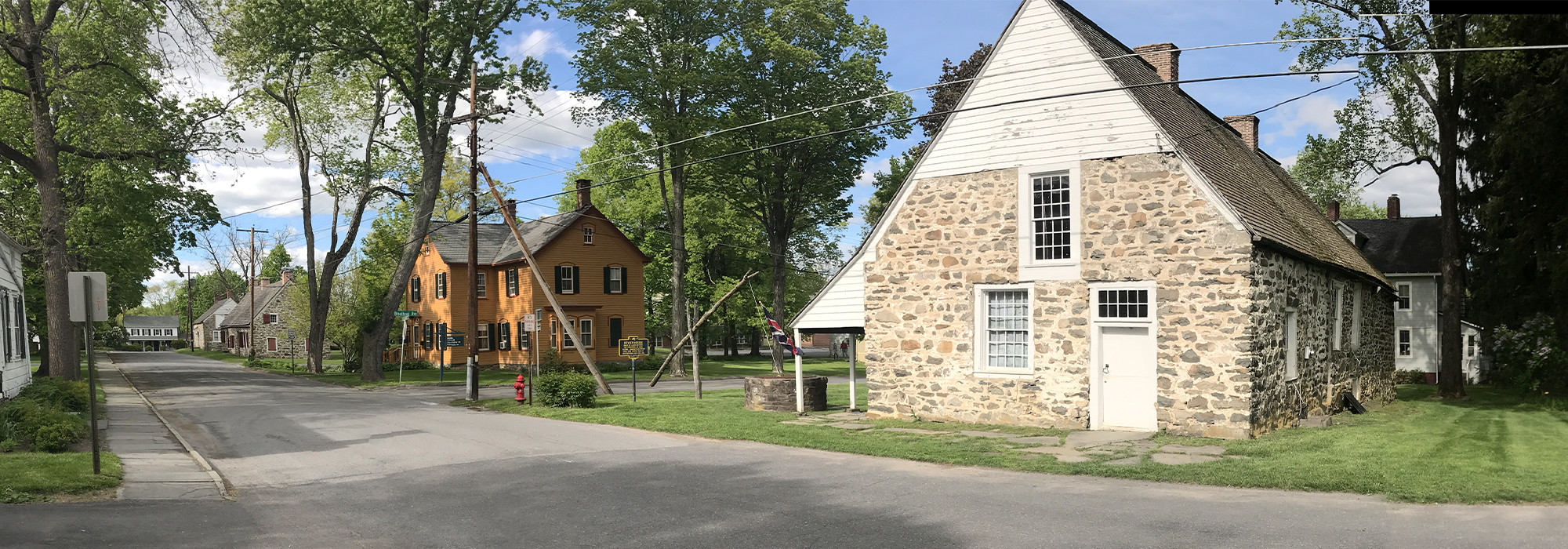
Encompassing a zig-zagged, three-block stretch of relatively level terrain roughly a quarter mile east of the Wallkill River on the town’s northern edge, this historic street is the heart of a colonial settlement founded by French-Huguenot, Protestant refugees who fled persecution and sought economic opportunity. The paved street is intersected by Broadhead Avenue and North Front Street; to the east, it is bordered by the Wallkill Valley Rail Trail (formerly West Shore Railroad, 1870). It is characterized by seventeenth- and eighteenth-century buildings set close to the curb. Nominal flagstone sidewalks and broad lawns between houses are shaded by rows of deciduous trees—including oak, locust, and maple—as well as conifers.
In 1677 a group of twelve families—Huguenot and Walloon refugees from France and Belgium, respectively—purchased approximately 40,000 acres from the Esopus-Munsee tribe, establishing New Paltz. Emulating their home villages, they constructed vernacular, fieldstone homes with steep-pitched, thatched roofs along a central road. Into the eighteenth and nineteenth centuries, surrounding homes and structures were built and the town gradually expanded.
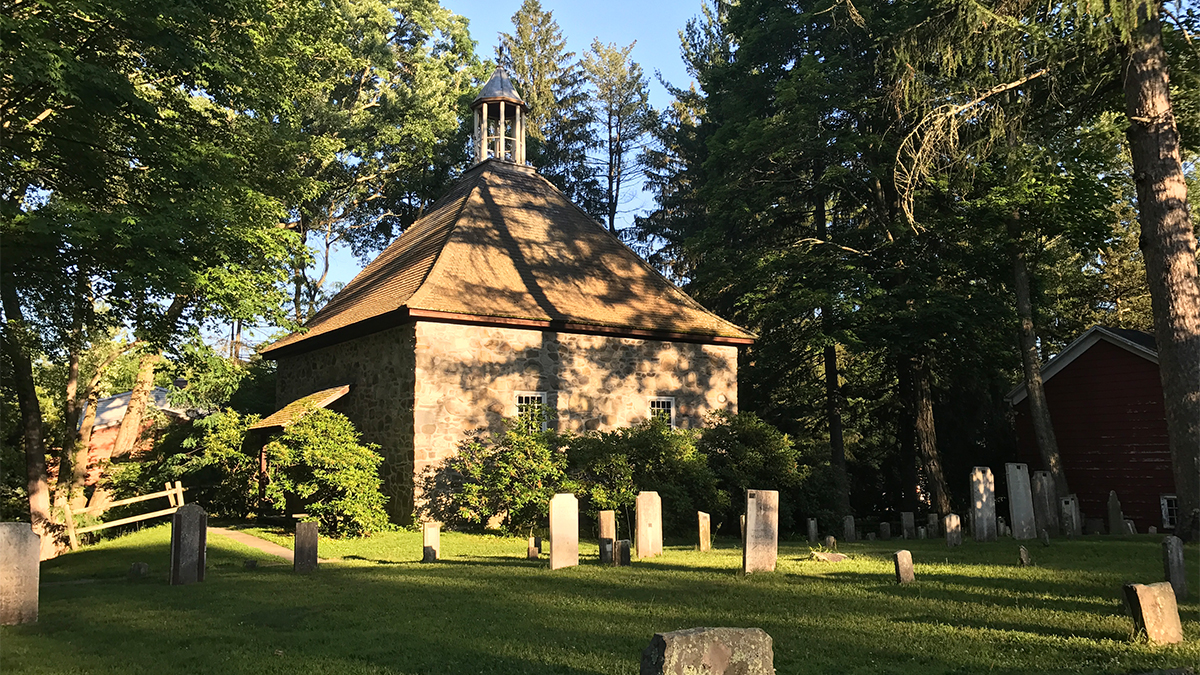
In 1899 descendants of the settlers founded the Huguenot Patriotic, Historical, and Monumental Society (now Historic Huguenot Street) and purchased the Jean Hasbrouck House (1712), opening it as a museum that year. By the 1960s the organization had purchased six additional stone houses, rehabilitating them into museums and a visitor center. The southern leg of the street includes Crispell Memorial French Church (1717; reconstructed 1972) and its cemetery (1715–1864). At the Front Street intersection, a stone marker with a plaque containing the founders’ names was erected (1908) and a replica Esopus wigwam (2017) was built on the street’s eastern side.
The Huguenot Street Historic District was designated a National Historic Landmark in 1960; and a district of the same name was listed in the National Register of Historic Places in 1966.