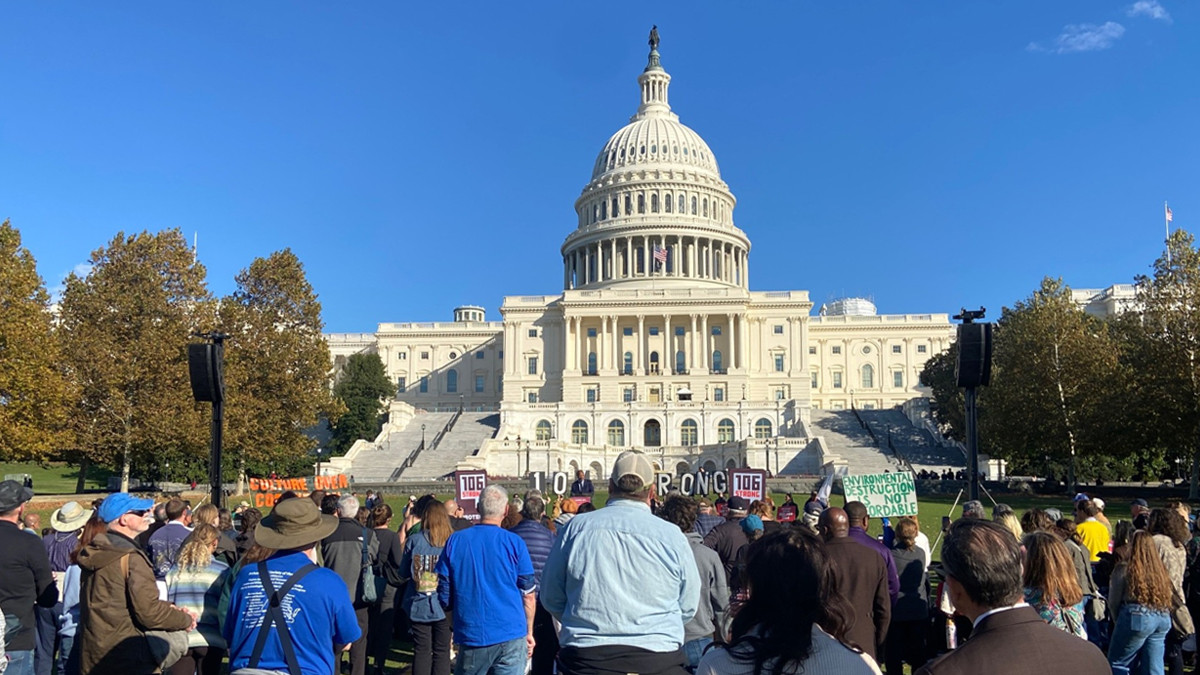
Hundreds attend Save 106 Rally at U.S. Capitol Building
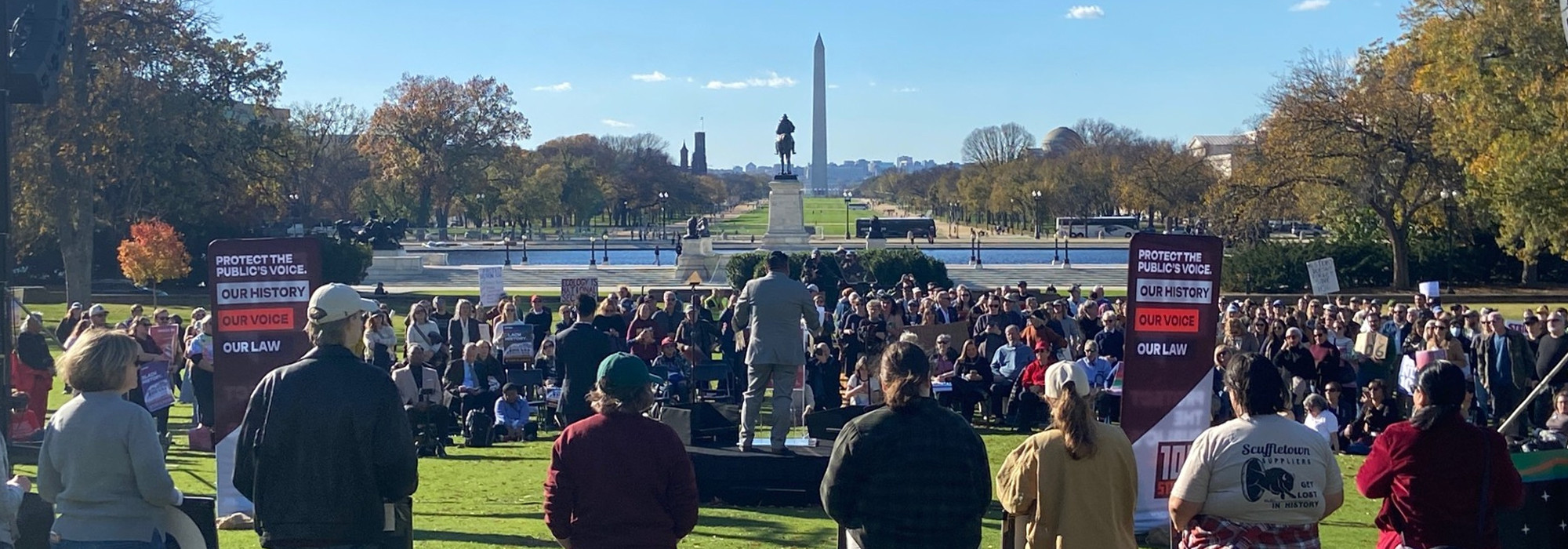
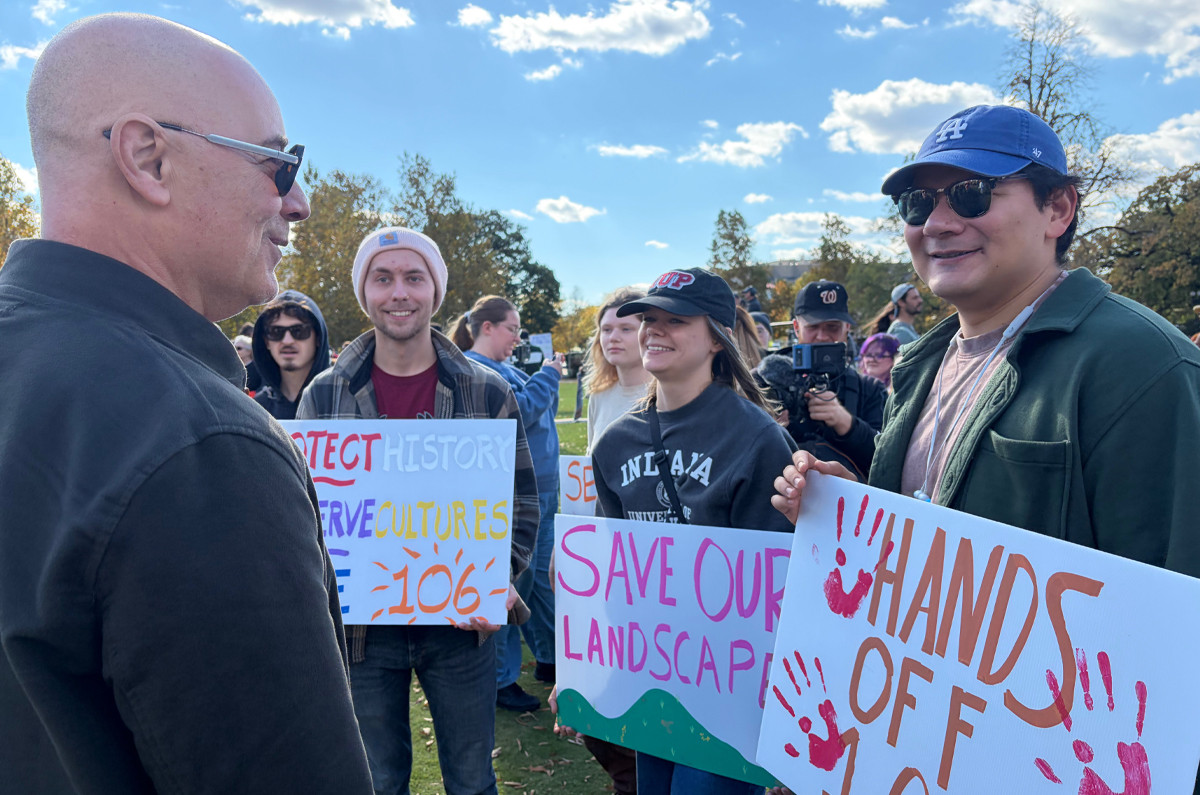
On November 9, 2026, hours before a crucial procedural vote on the Senate floor on a bill—S. 5653, misleadingly titled the Bipartisan American Affordability and Jobs Act—that features multiple provisions that would gut Section 106 of the National Historic Preservation Act and eliminate the public’s essential role protecting our shared culture and heritage, hundreds gathered at the U.S. Capitol to tell Congress to kill the bill. Attendees included members of a national coalition of more than 1,200 organizations assembled by Cultural Heritage Partners—representing landscape architects, Tribal leaders, architects, preservationists, historians, community leaders, and more. Speakers included numerous Members of Congress such as Rashida Tlaib (MI), Adelina Grijalva (AZ), Melanie Stansbury (NM), and Jared Huffman (CA); Martin Luther King III; Joy and Jo Banner, whose work was featured in Landslide 2024: Demonstration Grounds; and others. Charles A. Birnbaum, founding President & CEO of The Cultural Landscape Foundation, provided the following remarks:
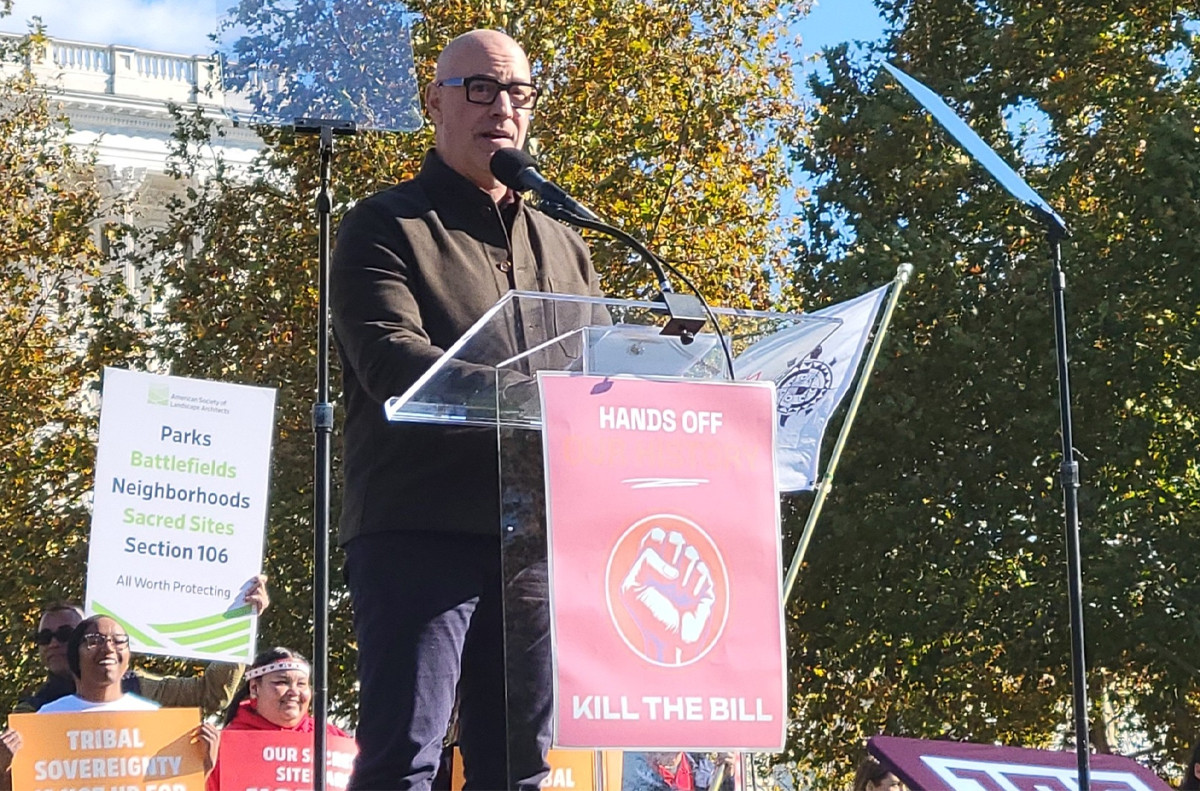
Thank you for the opportunity to speak today and more importantly, thank you to Cultural Heritage Partners for organizing today’s rally and for pulling together the largest coalition EVER of historic preservation organizations, Tribes, and advocates to protect our ability to have a seat at the table and a say in our shared history and legacy.
This national coalition is made up of more than 1,200 organizations across the country – that is an astonishing accomplishment and demonstrates how important Section 106 and the National Historic Preservation Act are to cities, towns, communities, neighborhoods, and Tribes throughout the United States.
In my decades of advocacy, I have never seen a coalition more inspiring, motivated, and fired-up.
I am trained as a landscape architect and practiced for eleven years in NYC advocating for and renewing historic landscapes designed by celebrated landscape architects like Frederick Law Olmsted, Sr. who designed these U.S. Capitol grounds, which complement the symmetry of the city and the National Mall. The National Park Service was my professional home for the next fifteen years and is where I authored the Guidelines that are part of Section 106 that focus on preserving and protecting our cultural landscape legacy.
The work of The Cultural Landscape Foundation, an education and advocacy organization I founded nearly 30 years ago, is inspired by the words, deeds, and actions of the great writer and urbanist Jane Jacobs.
Jane Jacobs viewed cities as organic, bottom-up ecosystems rather than mechanical blueprints drawn by bureaucrats. Jacobs did not see the public as passive or a target for top-down municipal administrations, but as the active influencers and guardians of our shared heritage and patrimony. Her remarkable book published 65 years ago — The Death and Life of Great American Cities — said that “urban renewal” and “slum clearance” did not respect the needs of city-dwellers.
Jacobs felt that the public must actively intervene to protect communities from destructive, centralized projects, demonstrating this role directly by leading citizen movements. In the 1960s urban renewal and highways crippled cities. Today communities throughout the country are under siege again – this time the threats include energy extraction projects and the construction of gigantic, energy sucking, resource intensive data centers that are radically altering cultural landscapes across the country. We need a seat at the table to work with decision makers to protect our shared history and legacy.
Among the most important words in Section 106 are these: “public input is essential to federal decision making.”
Let’s be clear here today: The legislation before Congress would eliminate the public’s role. Public input would no longer be mandatory – the public’s voice would be discretionary. The message is very dangerous – our opinion is not wanted and doesn’t matter.
If there is an original sin in this proposal, it is to silence the public. I stand here today to amplify and remind us of the ideological shift that Jacobs gave rise to and made the law that we are here to protect today possible.
Last week voters across the country made it clear that they will not be silenced. Let’s make sure the Senate hears us today. We won’t be silenced. We won’t give up our seat at the table. We will be heard… kill the bill.
Postscript
The Senate voted 75-23 on November 9 to advance S. 5653, but it is still subject to amendments prior to a final vote. If it passes the Senate, the bill would then go to the House of Representatives. Proponents, including the White House, want to pass the legislation during the lame duck session of Congress. The Save 106 Coalition is urging the public to contact your elected officials in Congress, especially members of the Senate, to oppose gutting Section 106. Action is urgently needed—contact your Senators today.
Related Content
- Image