
Pioneer Information
Raised on his family’s farm on the outskirts of Seattle near Richmond Beach, Jones’s childhood was spent exploring its tidal flats, which were foundational to his lifelong appreciation for nature and passion for ecological conservation. He attended Colorado College and then the University of Washington, where he studied under landscape architect Richard Haag and earned a BArch in 1961. Jones subsequently spent two years studying poetry under Theodore Roethke, whose work left a lasting impact on him, at the University of Washington while simultaneously working for Richard Haag Associates. Jones then attended Harvard University’s Graduate School of Design, graduating in 1966 with an MLA. He was also awarded Harvard’s Sheldon Traveling Fellowship in 1966, which gave him the opportunity to travel across South America and western Europe. In 1968 he moved to Honolulu, Hawaii, to work for Eckbo, Dean, Austin & Williams before returning to Seattle and co-founding Jones & Jones Architects and Landscape Architects in 1969 with architect and landscape architect Ilze Jones (whom he had married in 1965); joined two years later by architect Johnpaul Jones (no relation).
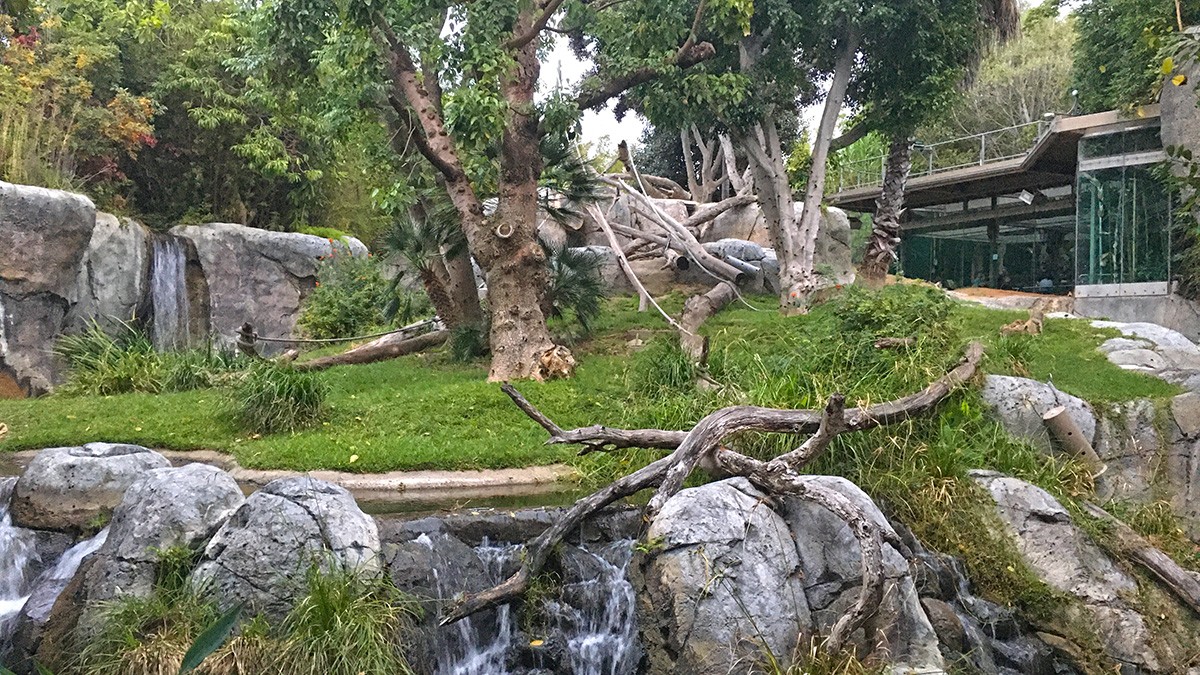
With his interdisciplinary firm, Jones shaped cultural landscapes across the Pacific Northwest and beyond, motivated by his philosophy that landscape architecture’s purpose is “to serve the land.” Jones revolutionized methods of river planning (Nooksack River Plan, 1973), naturalistic zoo habitat design, such as the master plans for Woodland Park Zoo, Seattle (1976) and the San Diego Zoo (1985), and scenic highway design, including Paris Pike Highway, Kentucky (1993). He was also instrumental in developing an early FORTAN program, a precursor to GIS modeling, for use in hydrology.
Jones taught at the University of Washington; University of Virginia; and University of California, Berkeley; among other universities. In addition to writing about design and professional practice, poetry was a constant in Jones’s life and work, often fueled by his intimate understanding of—and appreciation for—the natural and ecological environment. Jones and his firm were awarded multiple distinctions from the American Society of Landscape Architects (ASLA), including the first ASLA Firm Award in 2003, and in 1980 he became a Fellow of the society. Jones retired in 2015, living on a farm and native plant nursery in the Okanogan Valley in Washington until he passed away at the age of 82.