Pioneer Information
Born in Medina, Washington, to a landscape gardener father, Yamasaki graduated from Franklin High School in Seattle in 1939. Three years later during World War II, he and his family were interned at the Minidoka War Relocation Center (now the Minidoka National Historic Site) in Jerome, Idaho, for nine months before he and his wife Fumiko Hayashi (1920–2017), who had been interned at another camp, were released to work in Buhl, Idaho. In 1946 they returned to Seattle, and he took over his father’s landscape gardening business, which had catered to wealthy clients. His wife planted flowers in a nursery greenhouse, possibly at her husband’s firm.
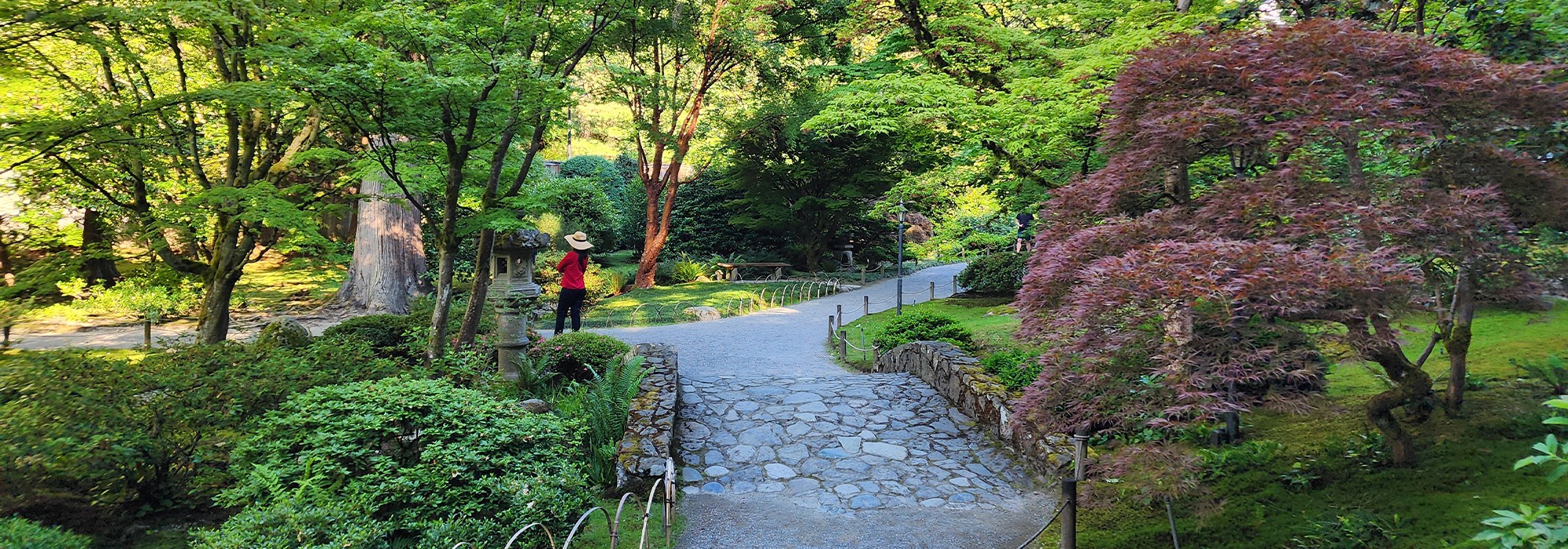
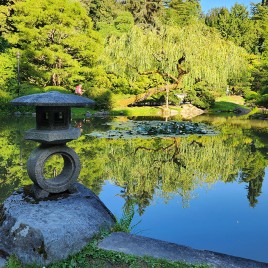
In 1959 Yamasaki was selected by Japanese landscape designer Jūki Iida to oversee the installation of stonework at the Seattle Japanese Garden according to the plan that Iida and his team of master Japanese gardeners had produced for the Washington Park Arboretum. Thus began a deep and fruitful mentoring relationship that transformed Yamasaki’s life. As sensei (teacher), Iida instructed Yamasaki in the principles of Japanese garden design and trained him in the care of the Seattle garden before returning to Japan. Yamasaki continued to tend the grounds for the next thirty years. In the 1970s Yamasaki was hired to improve the paths and restore plantings at the Japanese Garden of the Bloedel Reserve on Bainbridge Island, which initially had been designed by Fujitarō Kubota in the 1950s.
A Japanese black pine tree that his father had been given in the 1920s and had trained in the Japanese style—before being interned himself—was cared for by Yamasaki after the war. In 1993 he donated it to the Seattle Japanese Garden, where it is a prized specimen today.
Yamasaki died at the age of 86 and is buried in the Evergreen-Washelli Memorial Park, Seattle.