Landscape Information
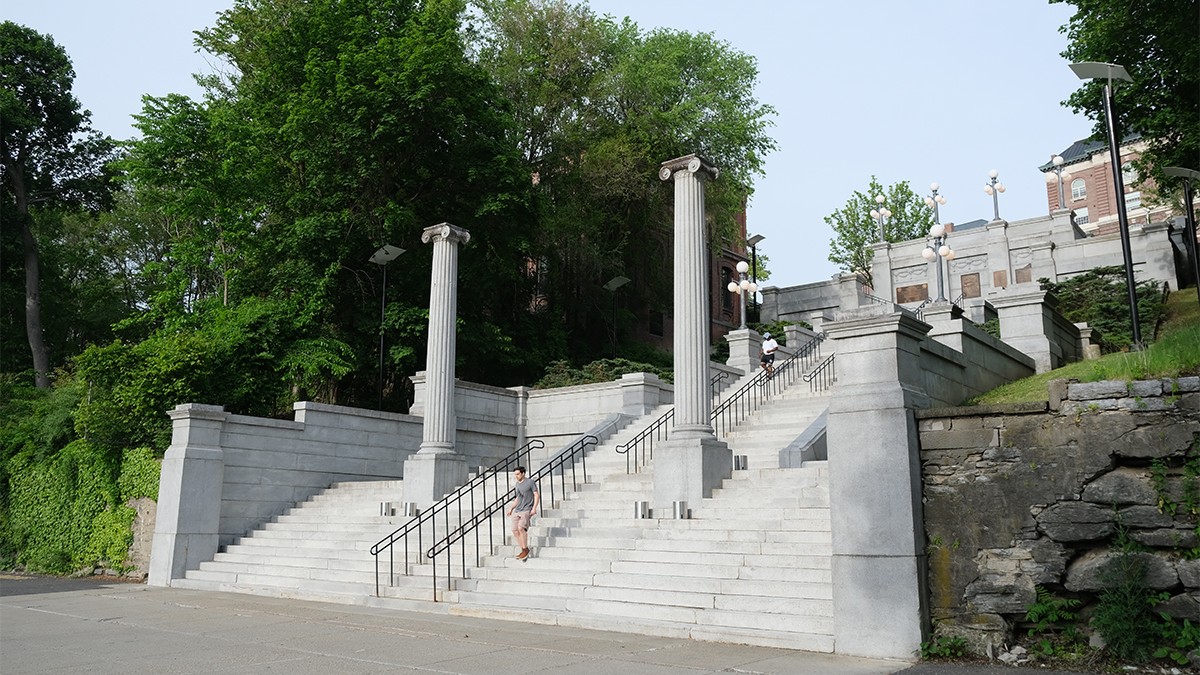
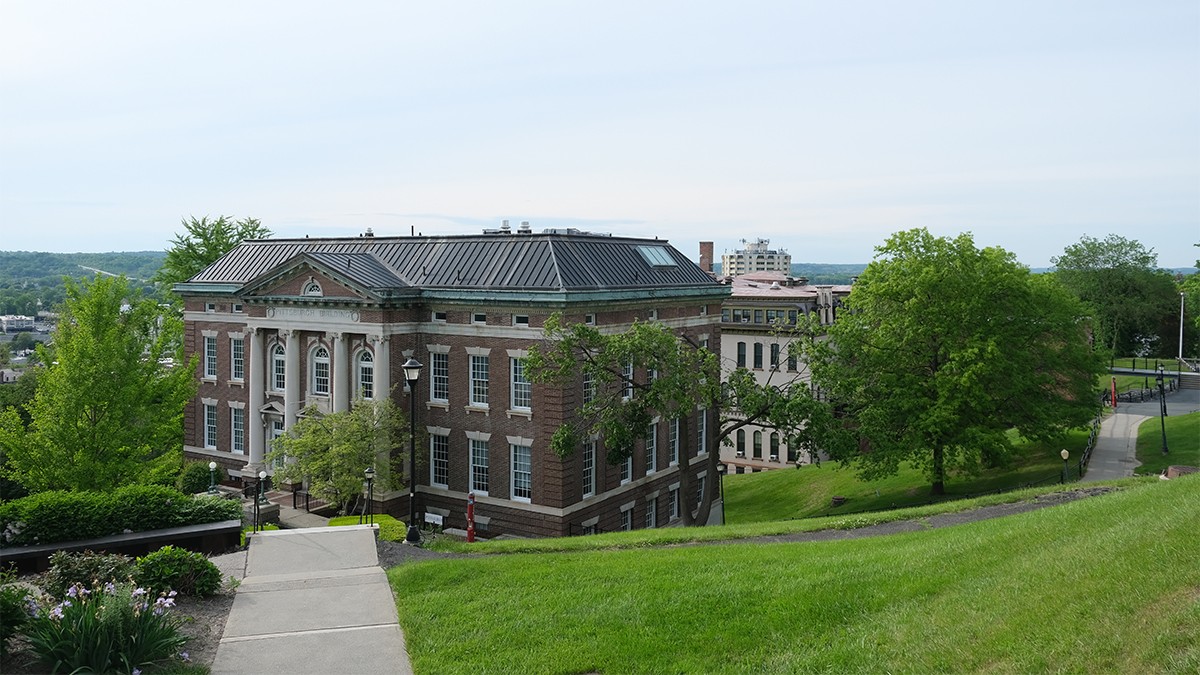
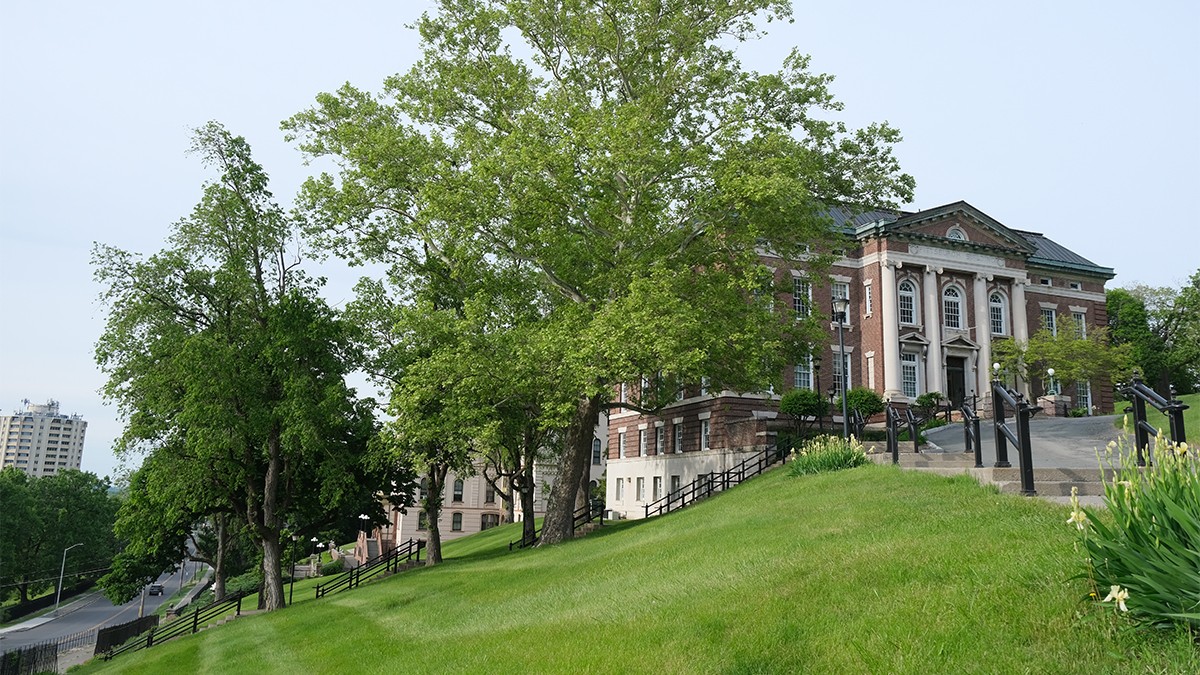
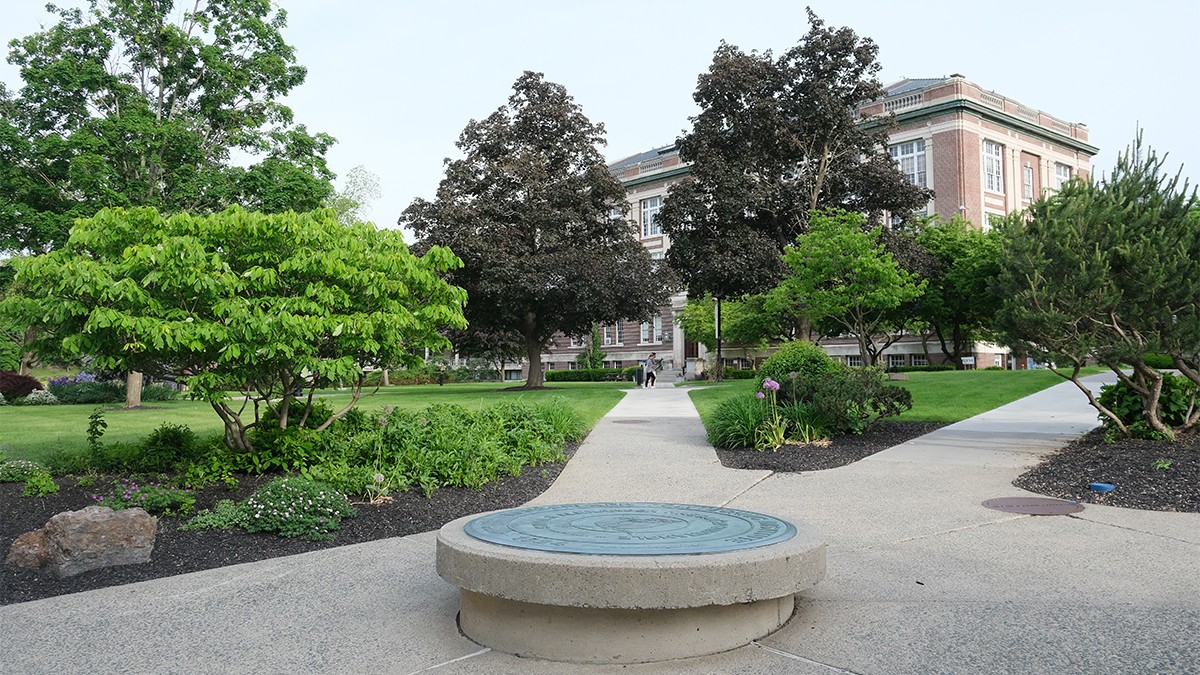
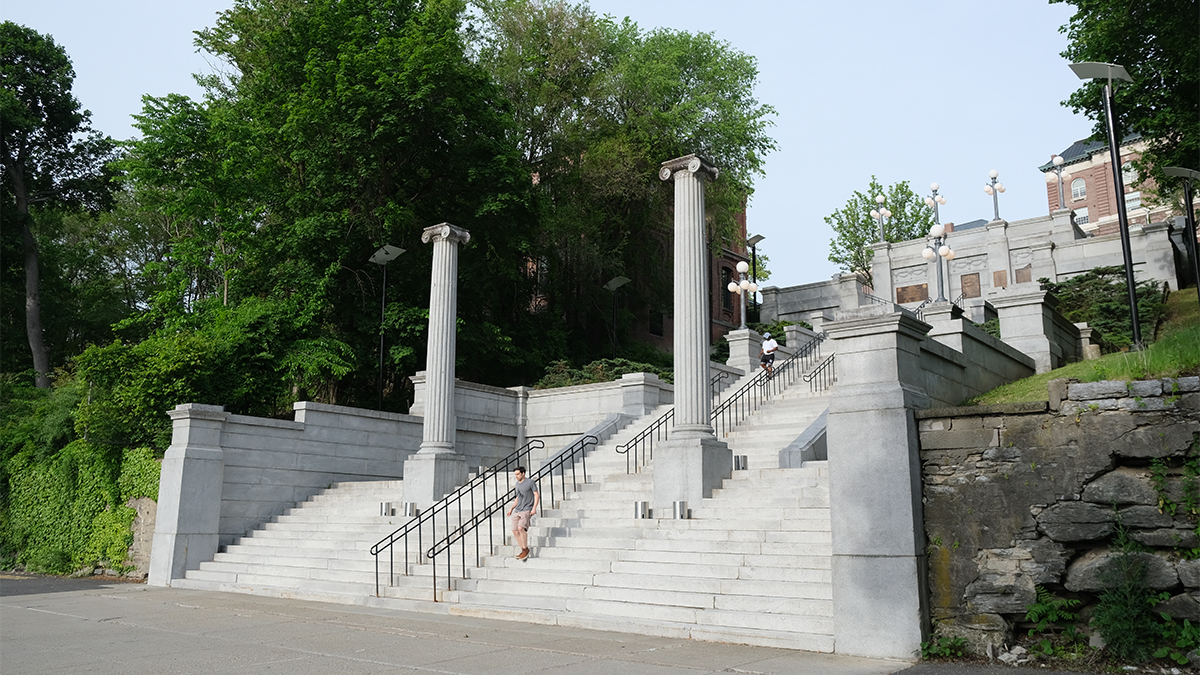
Founded in 1824, by Stephen Van Rensselaer to instruct students “in the application of science to the common purposes of life,” the school was the first of its kind established in an English-speaking country. Originally located downtown, the institution relocated east following a fire in 1862. After another fire, this time in 1904, destroyed the university’s Main Building (1864), the ten-acre Walter Phelps Warren estate, Mount Airy, was acquired immediately to the east, making possible a true campus plan. The city constructed a grand, granite staircase, The Approach, on the former building site (1907, rehabilitated 1994–1999), which fostered connectivity between town and gown.
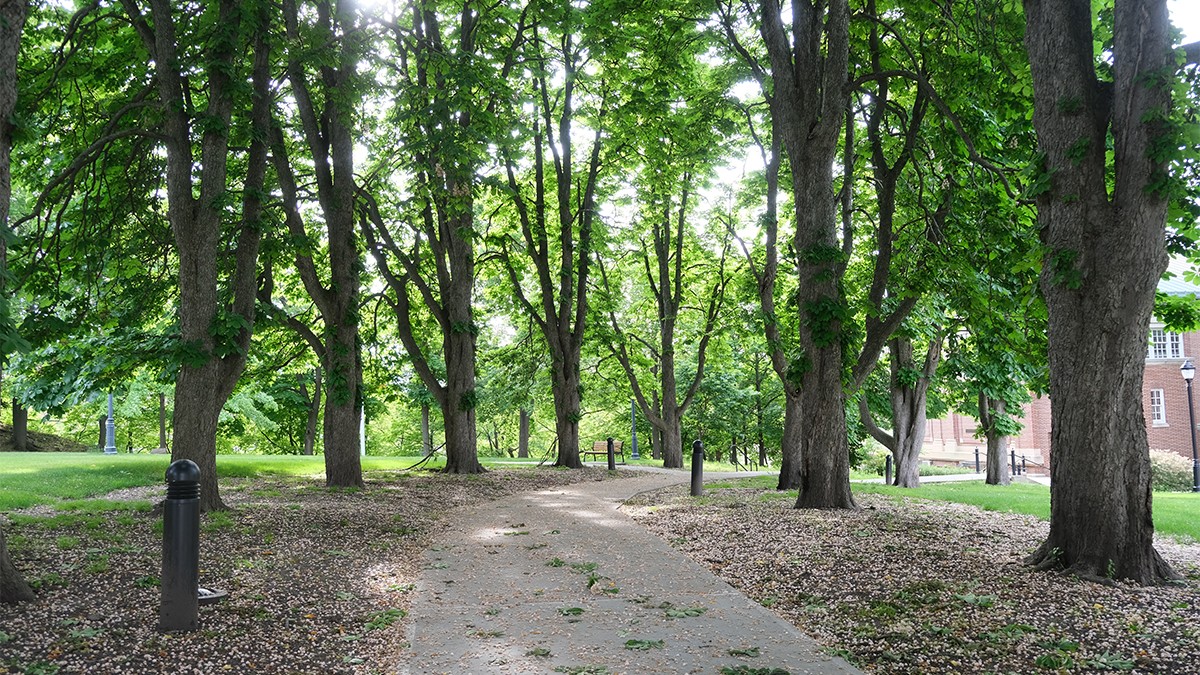
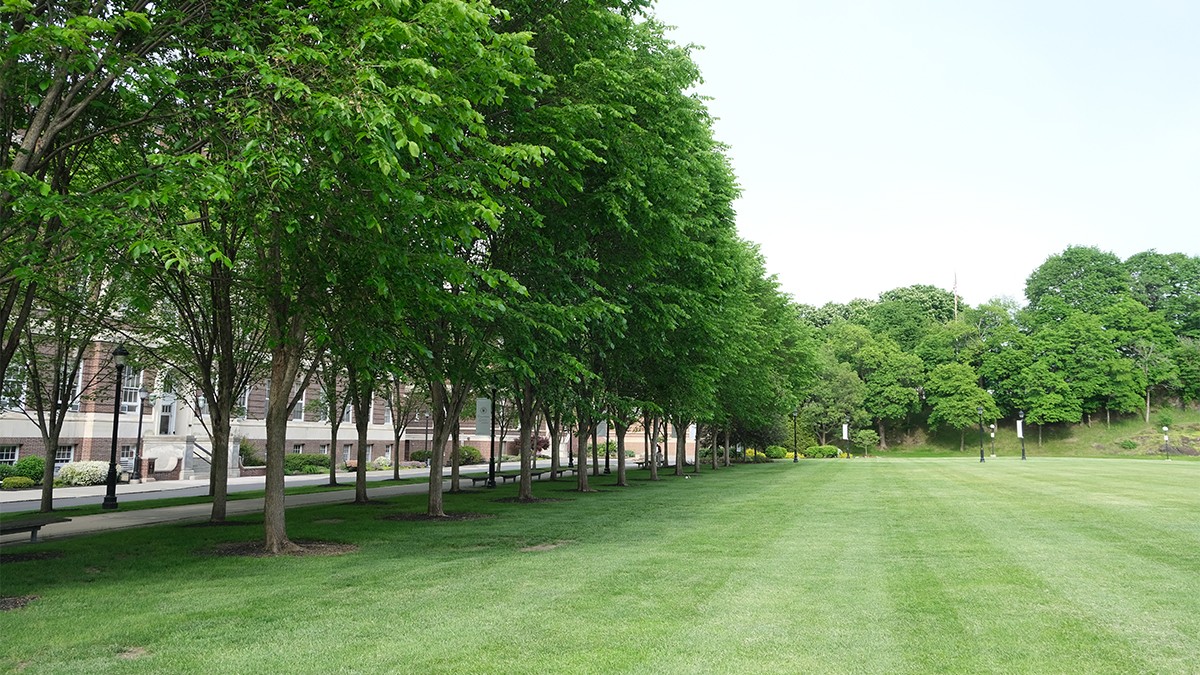
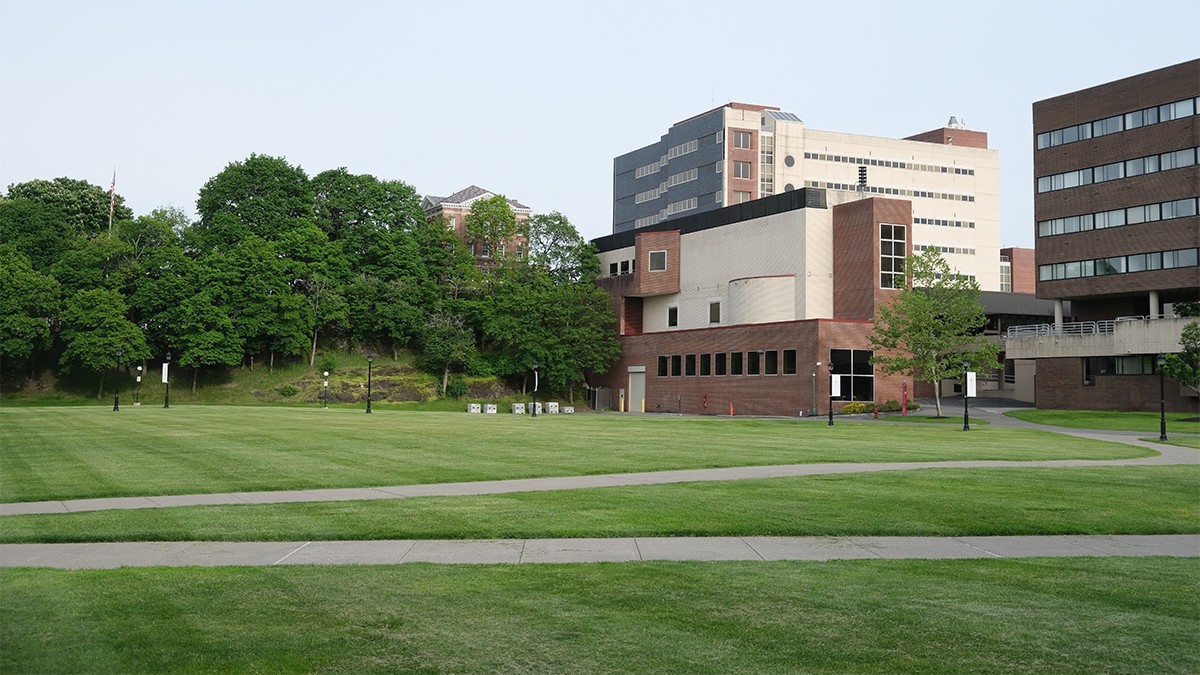
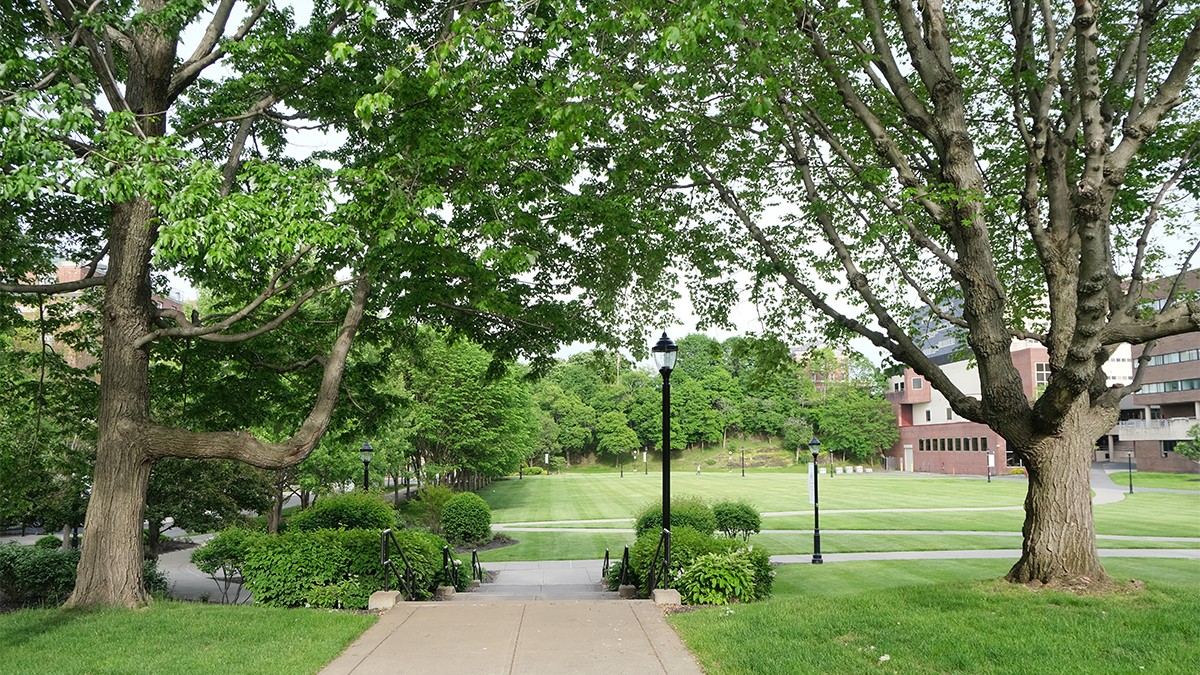
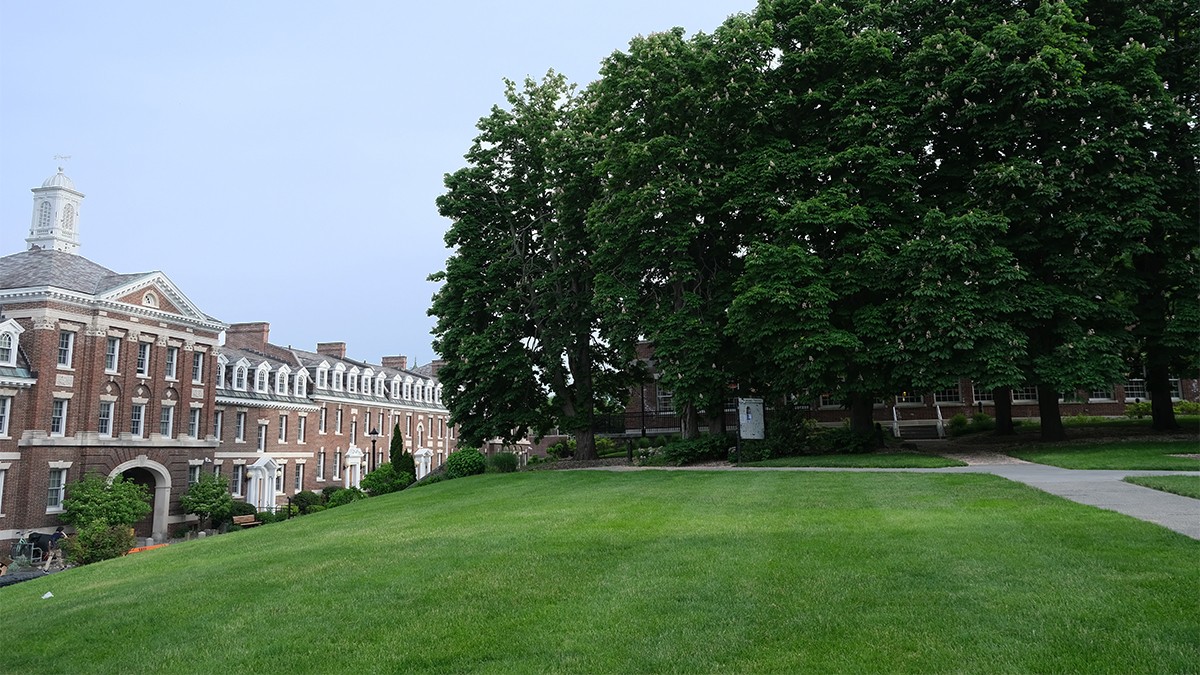
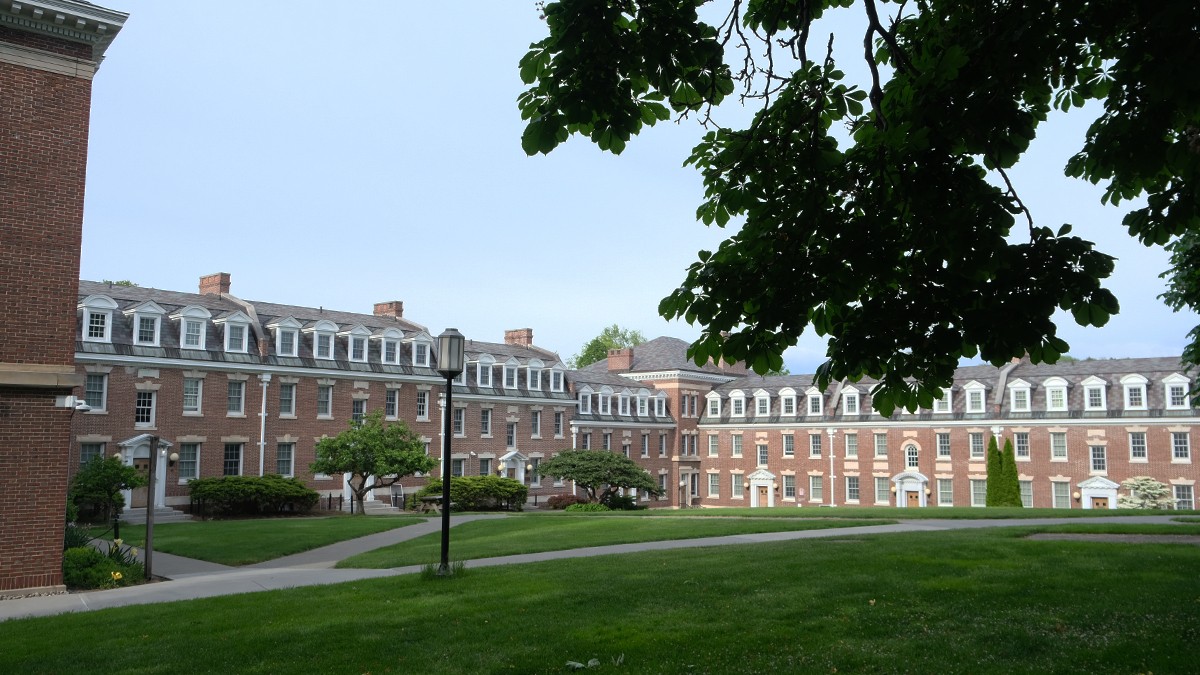
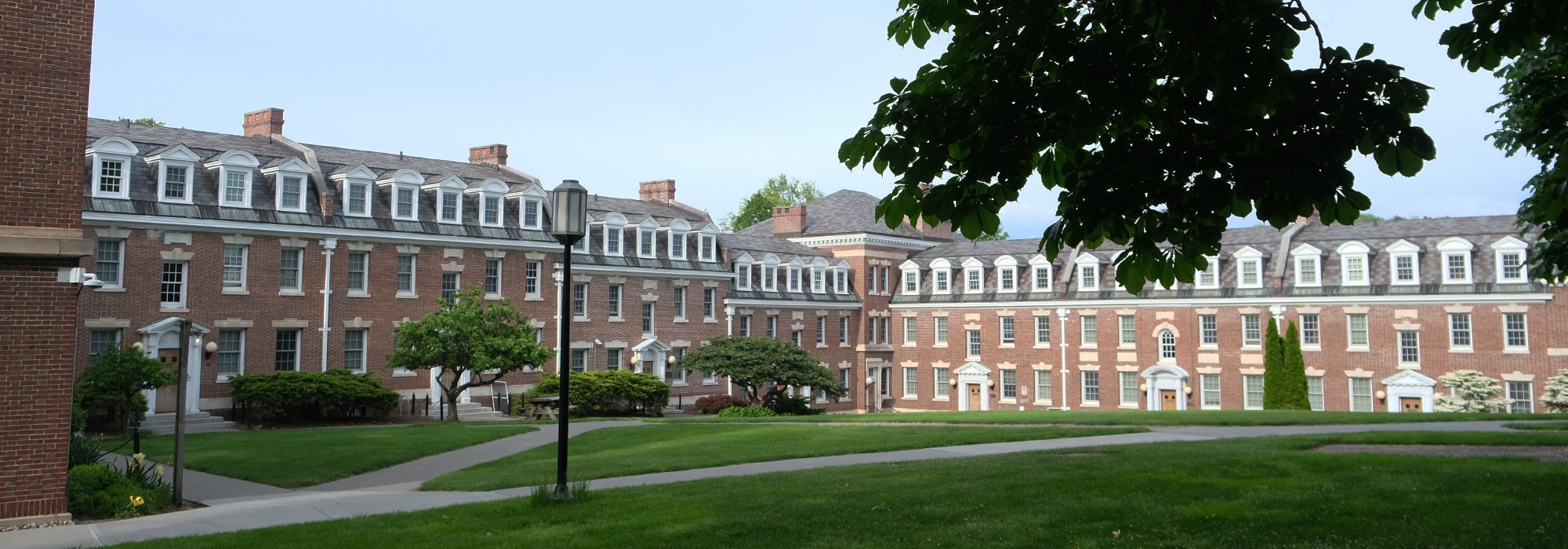
By 1909 a curvilinear path and drive ascended the hill east of The Approach, affording expansive Hudson River views. Atop the hill, the drive met an academic building group, a dormitory, and an athletic field. Sited in a depression, the field is flanked by a rocky hillock to the east, crowned with another curvilinear path (1940) lined with a horse-chestnut allée and a quadrangle framed by an L-shaped, Georgian Revival dormitory. Sloping downward, the quadrangle meets the dormitory’s central arch which provides access to a group of post-World War II buildings across Fifteenth Street. The arch is also on axis with the Rensselaer Union (1967), designed by architects Ernest J. Kump Associates. To the south and southeast, respectively, are an athletic center (1920, expanded and rehabilitated 1970s), and symmetrical L-shaped dormitories (1953–1958) whose enclosed courtyards are shaded by a canopy of oak trees and traversed by linear paths.
The institution’s many noteworthy graduates include civil engineer and landscape architect Garnet Douglass Baltimore, the first African American alumnus (1881). He went on to design nearby parks and cemeteries, including Prospect Park in Troy and Graceland Cemetery in Albany. Since the 1970s the campus has expanded north. It continues to be surrounded by historic, tree-lined residential neighborhoods.
West Hall (formerly the Old Troy Hospital) was listed in the National Register of Historic Places in 1973.