Seattle's Landmarks Preservation Board Tables Radical Alterations to Gas Works Park
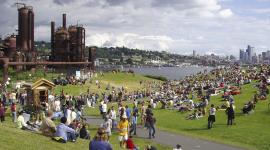
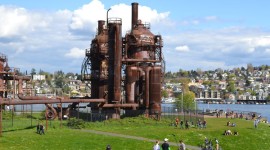
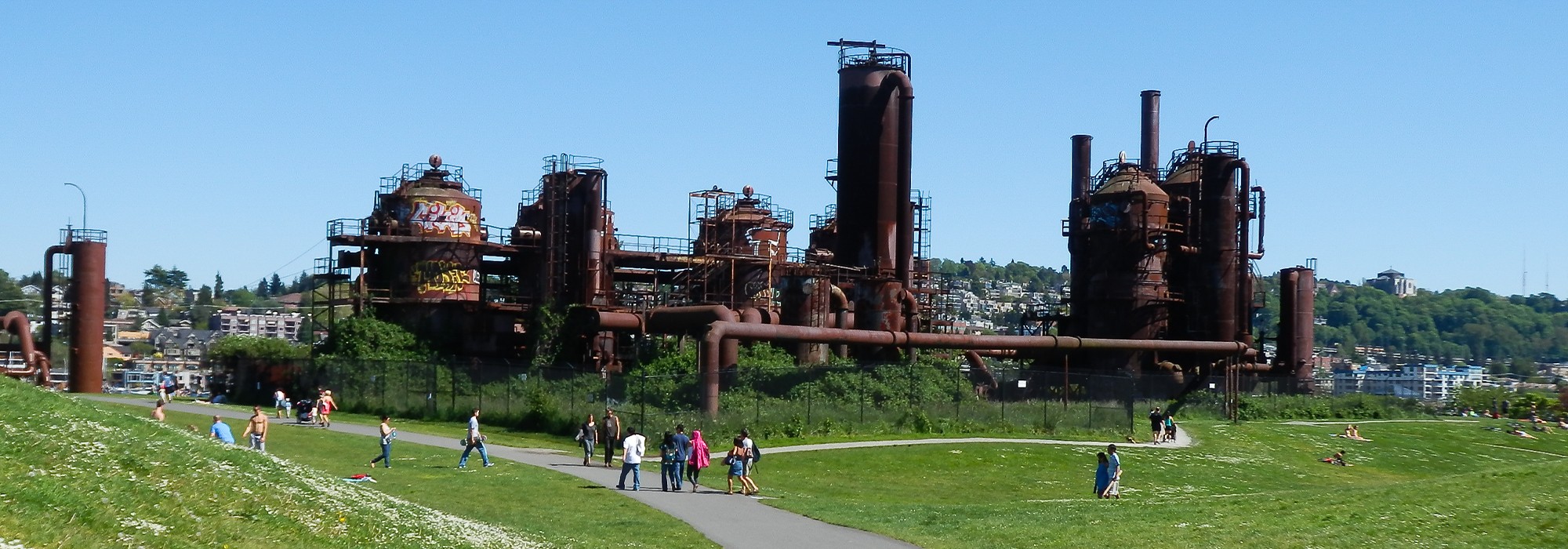
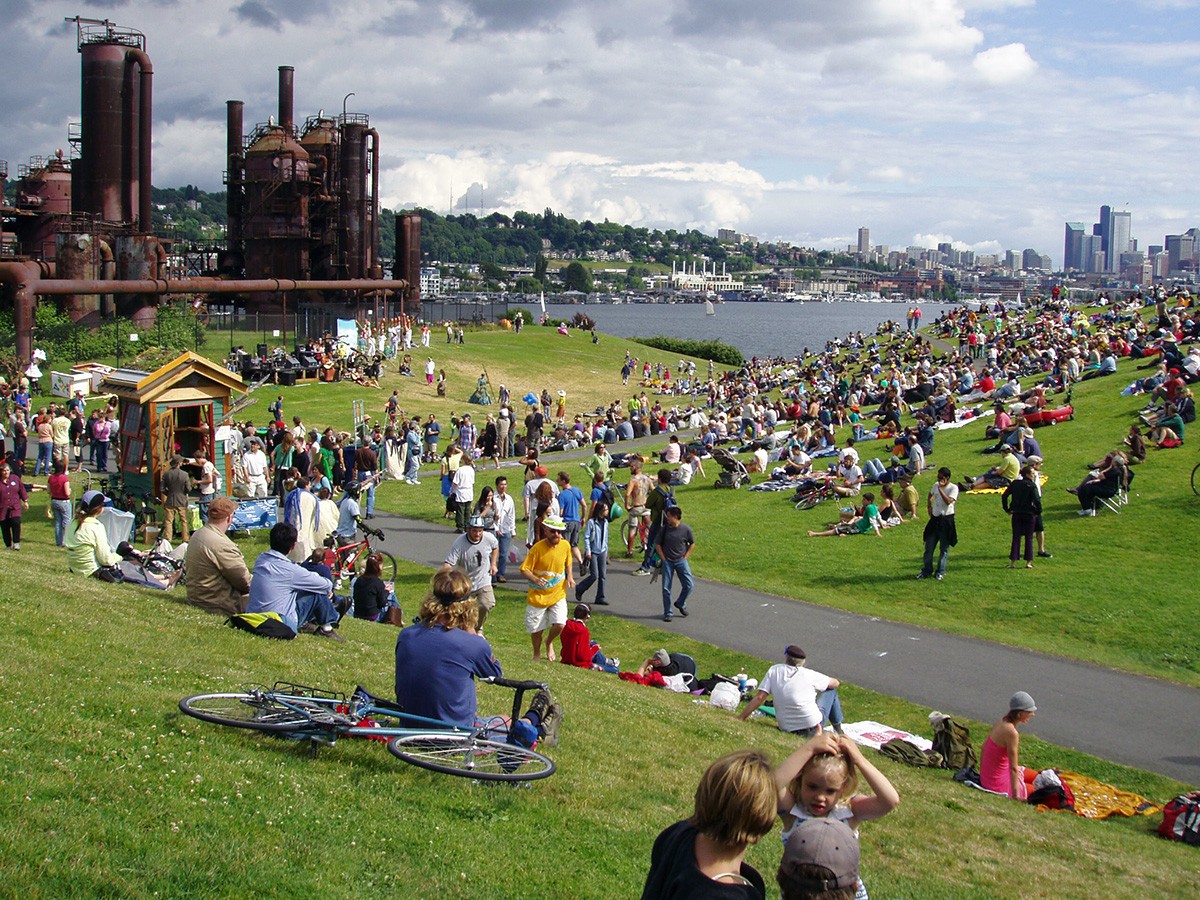
Efforts by Seattle Parks and Recreation (SPR) to completely strip multiple fenced-off towers in Gas Works Park of their character-defining catwalks, ladders, and other “pedestrian appurtenances” were again rebuffed by the Seattle Landmarks Preservation Board (LPB) on Wednesday, in a meeting (password: YkFYBv9u) on January 21, 2026, in a unanimous five-to-zero vote (with two recusals). The nineteen-acre Richard Haag-designed park, which is locally designated and listed in the National Register of Historic Places, was built on the location of a former coal gasification plant that operated for much of the first half of the twentieth century. The park, which opened in 1976, is a global icon of post-industrial design.
David Graves, a strategic advisor to SPR, presented on behalf of SPR and claimed the move to strip all the “pedestrian appurtenances” is necessary to prevent people from illegally climbing the towers, and cited several injuries and deaths. In this and previous hearings Graves claimed deterrents, including fencing and no trespassing signs, have not impeded illegal climbing and complete removal of the character-defining catwalks, ladders, etc. was the only option available.
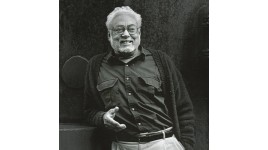
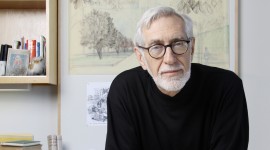
In advance of the meeting letters were sent by numerous practitioners including Michael Van Valkenburgh, Gary Hilderbrand, Weiss & Manfredi, and others. Landscape architect Anne James wrote: “Over the ten years I worked with Rich, I observed him working hard with others to prevent SPR efforts to diminish his vision of Gas Works; this happened time and time again, like they simply couldn’t/wouldn’t leave it alone. He was always greatly concerned about their efforts to make changes that would alter his design intent, including changes to the attachments/appurtenances, fences, etc. I know without any doubt that Rich would be incensed at the current proposal to remove the catwalks, connectors and other hardware. I know he would also be sympathetic to the death and injuries that have occurred and understand the need to protect the public and reduce risk, but he would have wanted people to work together to come to a consensus on any changes while preserving the soul of the place.”
And landscape architect Becca Hanson commented “Rich was a humanist" who would have been extremely sympathetic to the tragedies and protecting the public, "but he would have wanted people to work together to come to a consensus on any changes while preserving the soul of the place. If the elements the [SPR] proposes are stripped away, their efforts will diminish this landmark. Gas Works Park is an icon of adaptive reuse that has served as inspiration for many projects all over the world that have come after it. It should be left as intact as possible to retain Rich’s original brilliant design vision. I remain convinced, given the creativity that resides within this city, that a way forward can be found.”
In written comments, The Cultural Landscape Foundation (TCLF) acknowledged “the city’s need to secure the complex to prevent unsanctioned activities that could result in serious injury. TCLF is also sympathetic to the tragic death this past summer of a fifteen-year-old boy and the unspeakable grief his family must be enduring.
“TCLF always strives to be pragmatic and advocates for a sympathetic approach to managing change, recognizing that landscapes and landscape features often have to be adapted to address new and /or unforeseen needs, issues and circumstances. This can be done with National Register eligible and designated works; a prime example is Minneapolis’ Peavey Plaza, which had been slated for demolition and instead was thoughtfully rehabilitated.”
Graves and SPR are leaning heavily on a report by Guidance Engineering and Applied Research (GEAR), which Graves and SPR interpret to conclude that the only way to address safety concerns is the complete removal of the pedestrian appurtenances, and that no other options are available. Importantly, the GEAR report makes no recommendations about removal or any other remedial actions; they do assess the efficacy of different options. Nevertheless, on at least three separate occasions during the January 21 Landmarks meeting, Andy Sheffer, SPR’s Deputy Superintendent of Operations, made remarks strongly suggesting that GEAR “supported total removal of the pedestrian appurtenances” and similar language (TCLF has written to the authors of the GEAR report seeking clarification).
During the public comments period preceding Graves’ presentation, landscape architect Barbara Swift, a founding member of the Gas Works Parks Alliance (of which TCLF is a member), said: “The analysis by [GEAR] reflects a scope defined to result in a desired outcome, not an unbiased in depth evaluation by subject matter experts.” LPB Chair Ian MacLeod later noted: “I do feel that the report ... is very much framed in a zero tolerance for risk and zero consideration for what could potentially be saved.” Others wondered what the report’s outcome would have been if the preservation of character-defining features was a requirement.
Indeed, since October 2025 SPR has repeatedly been called upon to develop a preservation master plan for the site, which would provide a holistic approach to long term care and maintenance, and how to manage change at the site. Board member Becca Pheasant said: “it's very difficult for me with this idea that we need to do things for the safety and longevity of the park when there's no master plan, no long term planning for how we are going to make the entire park safe for the future.” Board chair McLeod stated he was “troubled that there is no master plan.”
SPR’s Andy Sheffer claimed “we're following the master plan by Rich Haag.” Graves said “a consent decree with the Department of Ecology ... is really the guiding document for the park.” Board member Pheasant clarified: “when I referred to the master plan, I was not referring to the original master plan of the site. I was referring to more of a preservation plan that identifies how you continue to maintain the site over time based on new information about how it is.”
As the Landmark Preservation Board’s meeting continued, Graves and SPR undercut their own rationale for why an extreme remedy—removal of all the pedestrian appurtenances—was warranted. For example, Graves stated that other towers on site that are not fenced off “have had all the pedestrian appurtenances removed up to a certain height” and that there have been no reported injuries or fatalities” [emphasis added]. Board chair McLeod referenced “removing everything below a specific point,” and then asked: “Was that specifically brought up to your consultants for analysis?” Graves deflected about the physical challenges of doing so. Importantly, the GEAR report makes no mention of a partial removal option.
It also surfaced in Graves’ presentation and in written comments to the Board that while SPR is concerned about illegal climbing, they seem willing to accept some level of risk and are focused largely on preventing inexperienced climbers from gaining access. However, Graves and SPR acknowledge that after the appurtenances are removed, “people will continue to climb the towers.” They offer the following qualification: “removing the pedestrian appurtenances that are the potential targets will likely limit the number and type of individuals who can climb the towers to those more skilled in climbing,” and added: “The towers outside the fence that have no appurtenances are climbed by more skilled individuals and there are no documented serious injuries or fatalities associated with those towers.”
Yet.
The next LPB meeting about this issue has not yet been scheduled. When one does occur, it remains to be seen if SPR will return with a preservation master plan, as LPB has called for on several occasions. TCLF will continue to closely monitor this situation.