Landscape Information
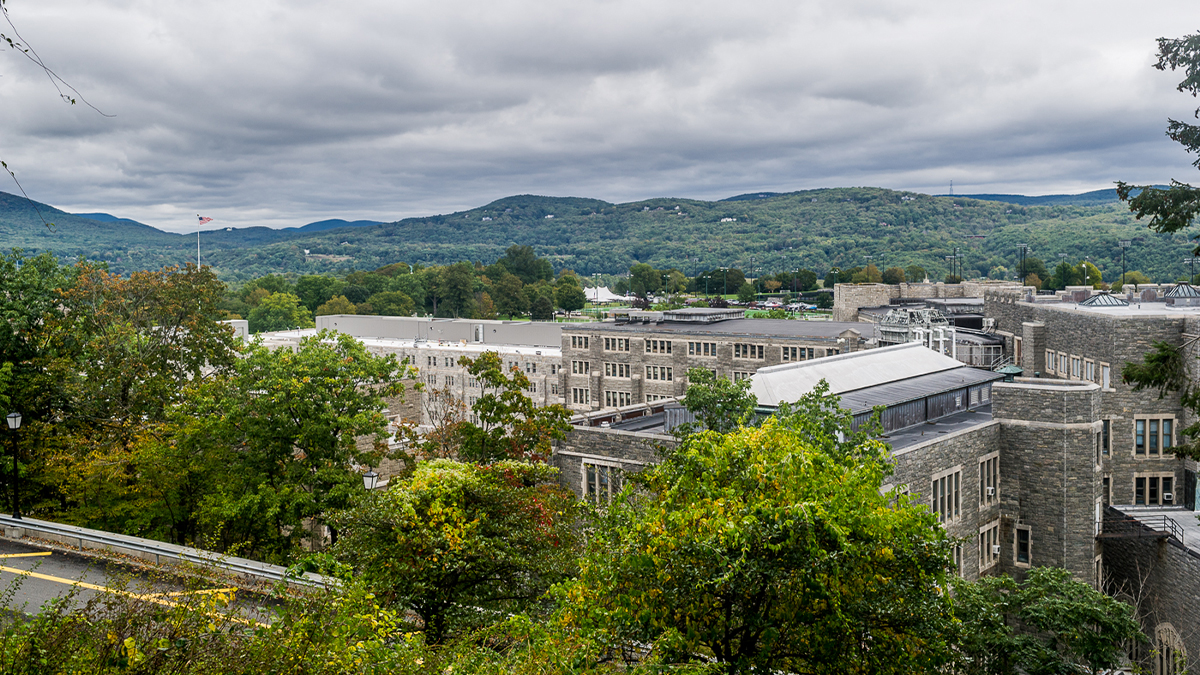
Located on the Hudson River’s western bank at a prominent bend, this approximately 16,000-acre, topographically varied campus is the oldest continuously occupied military post in the United States. Cliffs rise to meet plateau, affording expansive northern, eastern, and southern views.
As a strategic location, the stronghold was developed by Colonel Thaddeus Kosciuszko beginning in 1778. He established batteries, redoubts, and forts, and designed a secluded garden (now Kosciuszko's Garden) nestled on a terrace below the plateau. Congress purchased the land in 1790; in 1802 the academy opened. During the nineteenth century, landscape features that include a cemetery (1816), parade ground (now the Plain), and two reservoirs (1879, 1895) were constructed.
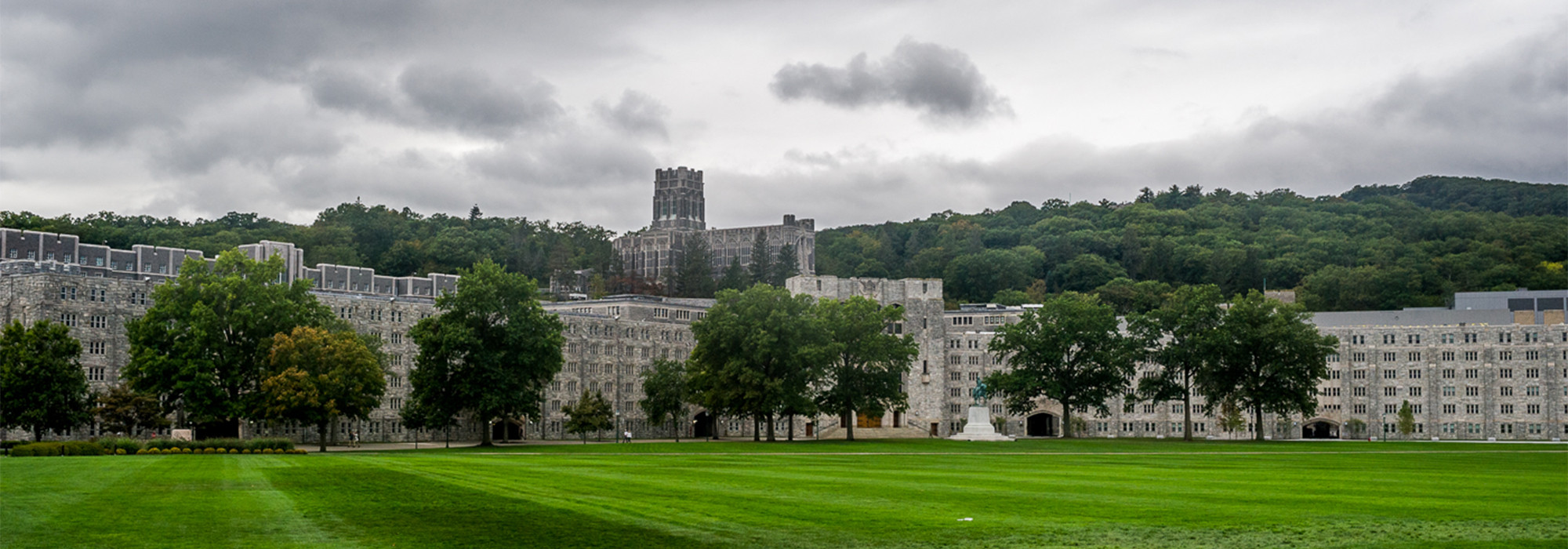
Following a design competition (1903), the academy engaged landscape architects Olmsted Brothers to design the grounds. The firm produced hundreds of drawings (1904–1906), prepared a general plan (1905–1911) and laid out curvilinear drives following the site’s topography and recommended strategies—informed by precedents (their own at Biltmore and those devised by the U.S. Forest Service)—to manage West Point’s expansive woodlands. For nearly ten years Olmsted Brothers collaborated with architects Cram, Goodhue & Ferguson to site Gothic-Revival buildings, minimize grading, and retain mature trees while honoring scenic views. Following the completion of the Olmsted Brothers planning efforts, the campus developed incrementally. Today its core contains a complex of academic buildings and barracks fronted by the turf plain and athletic fields. The latter are framed by a U-shaped drive and these buildings, including the Superintendent’s Residence (1820), which is flanked by a walled formal garden (1930s) by landscape architect Ellen Shipman. North of the Plain, Trophy Point—a slope traversed by curvilinear walkways and shaded by canopy trees—overlooks the river.
The United States Military Academy was designated a National Historic Landmark in 1960 and listed in the National Register of Historic Places in 1966. It is located within the Maurice D. Hinchey Hudson River Valley National Heritage Area.