Washington, D.C.'s Historic East Potomac Park is in the Crosshairs
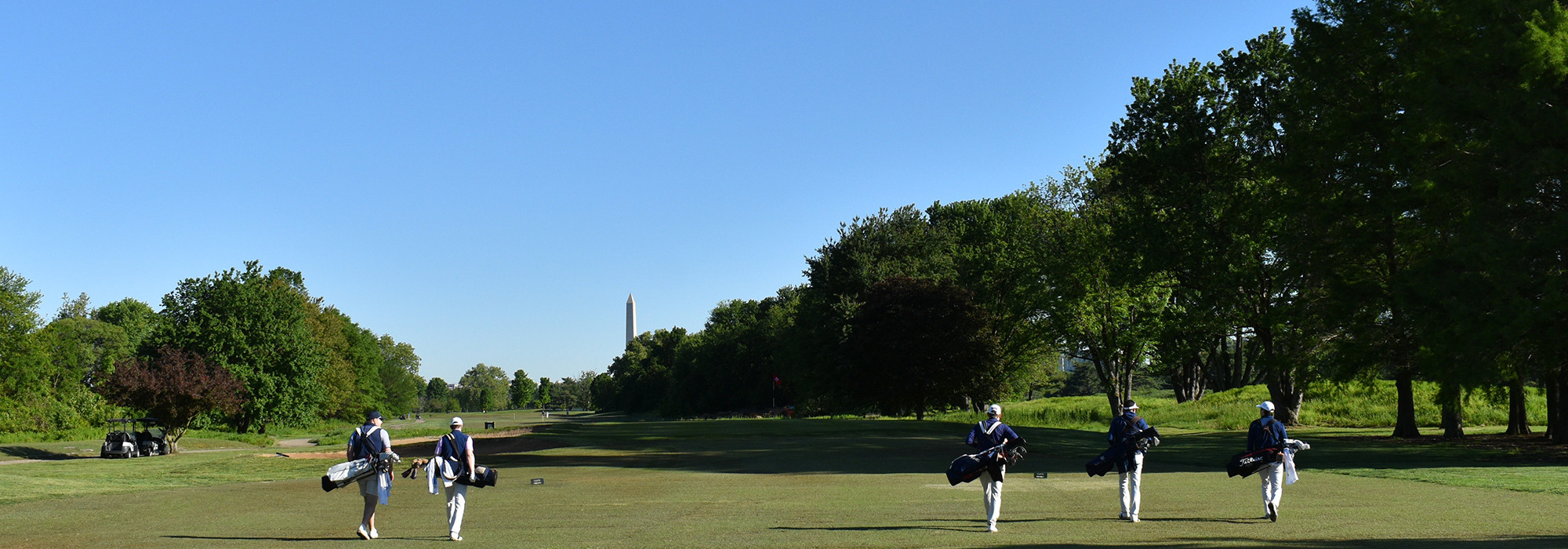
East Potomac Park is a 327-acre man-made island reclaimed from the Potomac River Flats by the U.S. Army Corps of Engineers. In 1897 Congress officially designated the land as a public park decreeing it be "forever held and used as a park for the recreation and pleasure of the people." A major feature of the attenuated wedge-shaped flat landscape is the 210-acre East Potomac Golf Course, a municipal course that opened in 1919. In October 2020, the National Links Trust signed a 50-year agreement with the National Park Service (NPS) to operate and renovate the course (along with two other courses on federal land in the D.C. area). In December 2025, NPS terminated the agreement, claiming the trust was in default. The site is threatened with a wholesale redesign. President Donald Trump has said that he wants the municipal course to be renovated into a “world-class, U.S. Open-caliber course.”
History
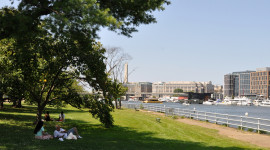
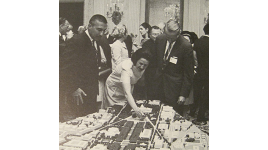
East Potomac Park occupies a man-made island south of the National Mall, reclaimed from the Potomac River Flats by the U.S. Army Corps of Engineers in the late nineteenth century. In 1897 Congress officially designated the land a public park, decreeing it be "forever held and used as a park for the recreation and pleasure of the people." The island was placed under the control of the Office of Public Park and Grounds, which established the land as a recreational space in accordance with the Senate Park Commission’s McMillian Plan of 1902. Today, the 327-acre park—an attenuated wedge-shaped flat landscape that was listed in the National Register of Historic Places in 1973—remains a vital recreational hub, featuring tennis courts, playgrounds, scenic trails, and the historic 210-acre East Potomac Golf Course. The one-way Ohio Drive, constructed by the U.S. Army Corps of Engineers between 1912 and 1916, loops around the park’s perimeter. Japanese cherry and other flowering trees—planted in 1966 as part of First Lady Claudia “Lady Bird” Johnson’s Beautification Project—frame both sides of the roadway, separating it from scenic walks that top the island’s sea walls.
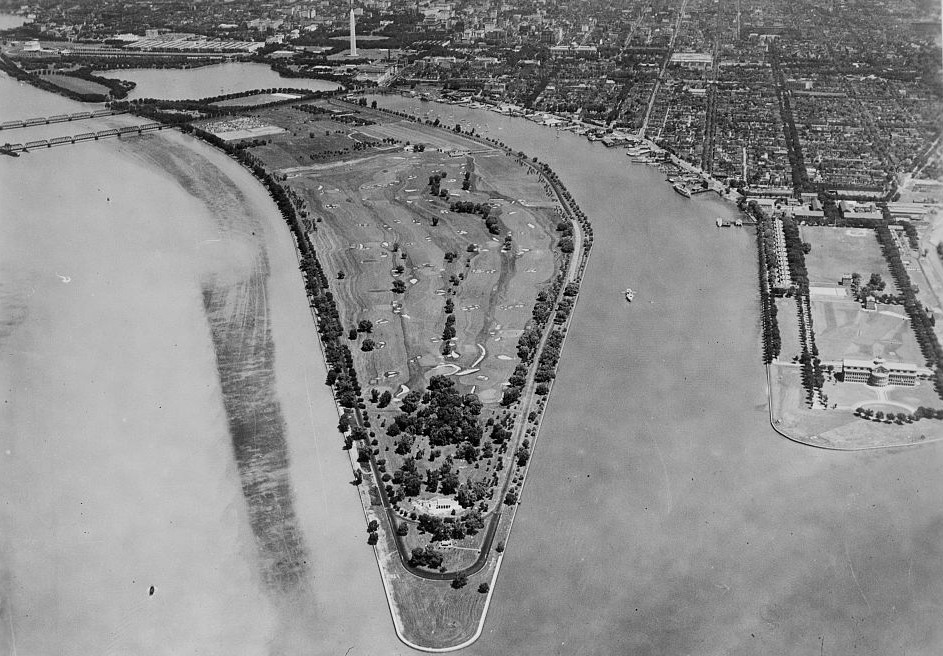
The golf course stands as an example of the "Golden Age" of American golf course design. In the early 1900s, golf course architects like Alister MacKenzie and Donald Ross moved away from the rigid Victorian styles of the nineteenth century toward a more minimalist, natural approach. Among these golf pioneers was Walter J. Travis, a three-time U.S. Amateur champion who popularized a style rooted in the game’s Scottish origins. Travis’s philosophy balanced strategic hazards with rugged mounding and complex greens. Crucially, his designs were "egalitarian"—offering a stern test for elite players while remaining playable for beginners by allowing for "ground-game" shots that accommodate mis-hits.
This "egalitarian" design philosophy was perfectly timed for the 1920s boom in municipal golf. As the sport’s popularity soared, high costs and private club memberships kept the game exclusive to society’s elite. Public, municipally owned courses provided the solution. East Potomac Golf Course opened in 1919 to immediate acclaim. Its original nine-hole layout, designed by Travis, was reversible—allowing it to be played both clockwise and counterclockwise, much like the Old Course at St. Andrews. The innovation was a massive success; by 1921, the course logged over 65,000 rounds at a fee of just 25 cents.
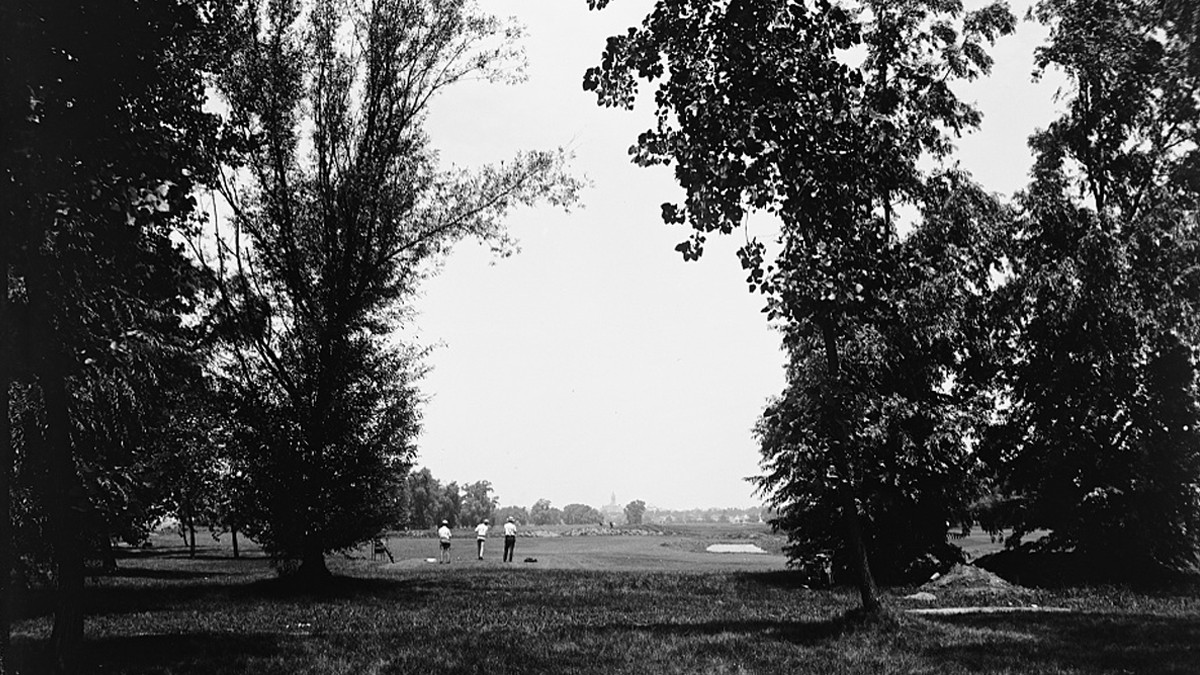
To meet overwhelming demand, Travis designed a second, reversible nine-hole loop in 1922. Together, these 18 holes form what is now known as the "Blue Course." Expansion continued with the opening in 1925 of the "White Course," likely designed by William Flynn. By 1927, annual play exceeded 155,000 rounds. The complex eventually grew to include the "Red Course"—a short par-3 layout for beginners—and one of the nation’s first miniature golf courses (opened in 1931), which still features replicas of D.C. landmarks today.
The course was originally segregated, restricted to white players except for limited windows. This changed in 1941 when Black golfers Asa Williams, George Williams, and Cecil R. Shamwell of the Royal Golf Club demanded the right to play. Despite harassment from white onlookers, they completed their round under police protection. The following day, Secretary of the Interior Harold Ickes ordered the course open to all. While intimidation persisted and other courses remained segregated until the mid-1950s, the 1941 protest at East Potomac served as a critical inflection point in the fight for equal access to public national parks.
Other recreational features at the park include a swimming pool designed by the Works Progress Administration (WPA) in 1936 (no longer extant) and the miniature golf course. The island is home to the National Park Service’s National Capital Region headquarters, constructed in 1963 by architect William Haussmann as part of the Mission 66 initiative.
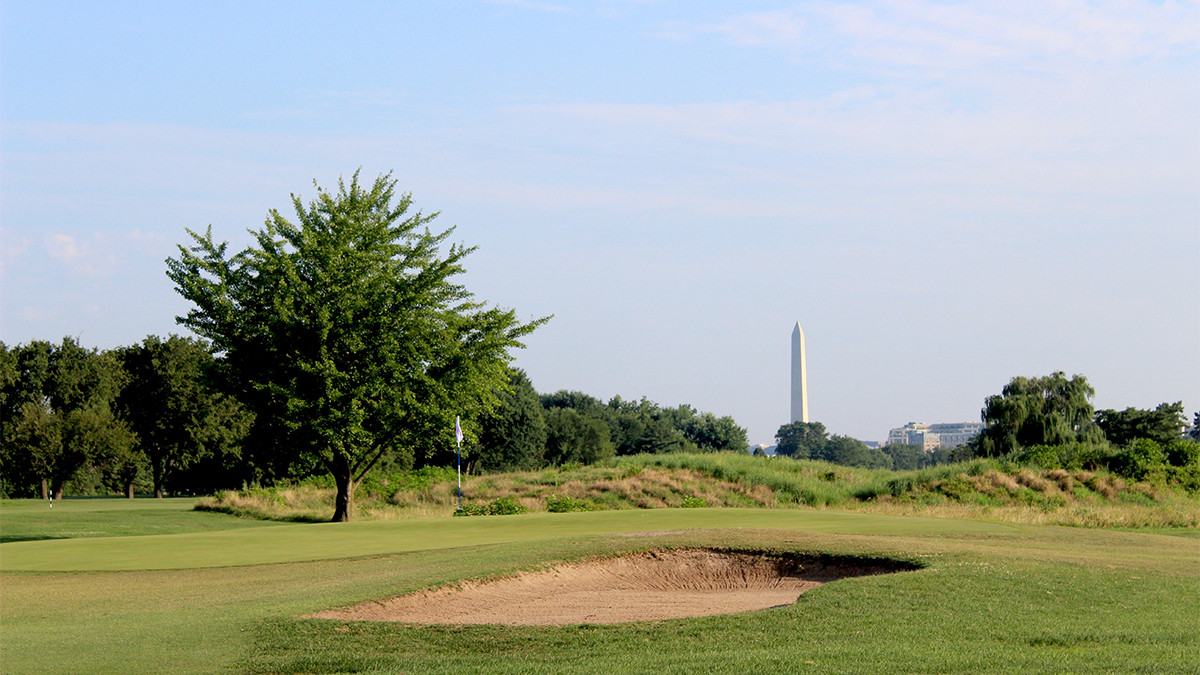
Today, East Potomac remains an irreplaceable historic and cultural asset offering affordable access in a region where private clubs, and even other municipal courses, often charge significantly higher fees. In 1973 the park was listed in the National Register of Historic Places; it continues serving as a sanctuary of "recreation and pleasure" for both local residents and visiting golf historians and aficionados alike.
Threat
In October 2020, the National Links Trust signed a 50-year agreement with the National Park Service to operate and renovate the course (along with two other courses on federal land in the D.C. area). In December 2025, NPS terminated the agreement claiming the trust was in default; the Trump administration wants to completely redesign the site. According to The Washington Post: “The 50-year lease between the National Park Service and nonprofit National Links Trust requires the government to identify specific violations and give the operator time to fix them before declaring a default. But the notice of default sent to the group Oct. 29—issued by the Interior Department’s Solicitor’s Office—did not list any violations or outline any path to address the situation.” In October 2025, according to The New York Times, some 30,000 cubic yards of debris from the demolished East Wing of the White House started to be dumped at the course. President Trump told The Times, “We’re going to make it a beautiful, world-class, U.S. Open-caliber course,” adding, “Ideally, we’re going to have major tournaments there and everything else.”
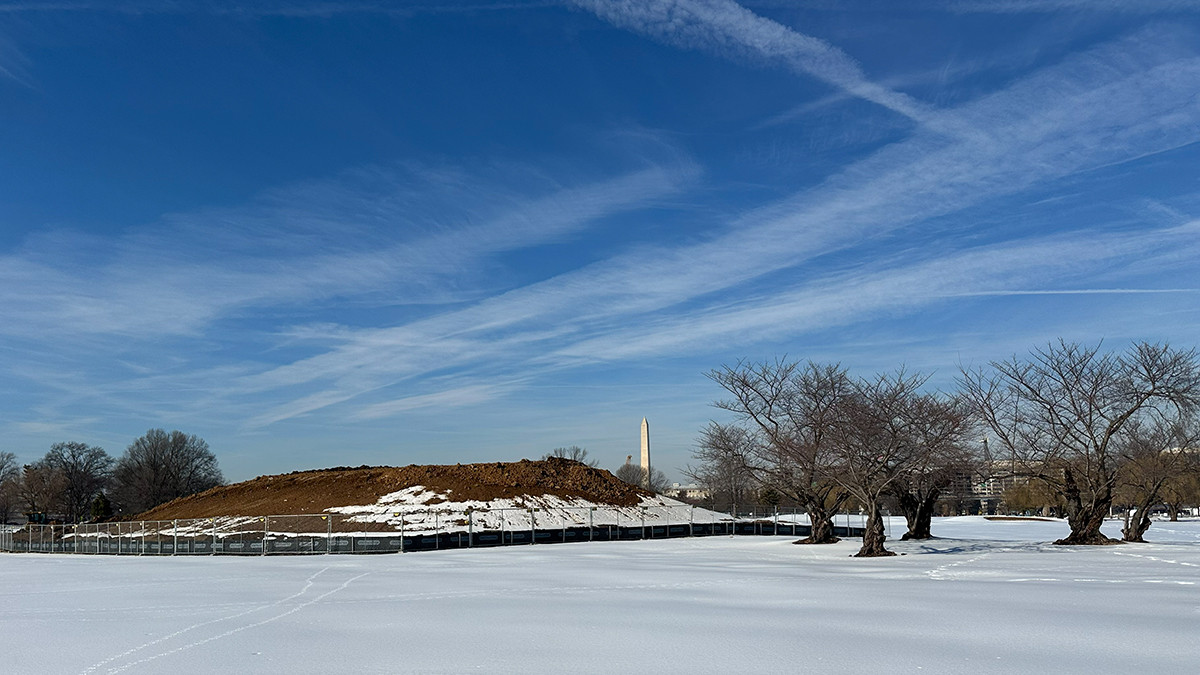
On February 13, 2026, the D.C. Preservation League and two area golfers filed suit against the Department of the Interior, citing violations of environmental and historic preservation regulations and illegal dumping. The plaintiffs are represented by Democracy Forward and Lowell & Associates, with support from Norm Eisen and the Democracy Defenders Fund.
What You Can Do To Help
Contact Secretary of the Interior Doug Burgum, your Member of Congress, your U.S. Senators, and others listed below to ask them to respect the history of the site. Tell them that the East Potomac Park Golf Course should not become an exclusive, high-end facility and that the dumping of 30,000 cubic yards of debris from the White House East Wing site is inappropriate and should be remedied.
Secretary Doug Burgum
Department of the Interior
1849 C Street, N.W.
Washington, D.C. 20240
Email: https://www.doi.gov/contact-us#no-back
Go to Congress.gov to find your Member of Congress and Senators: https://www.congress.gov/members/find-your-member
Jennifer T. Nersesian, Regional Director, National Capital Region
National Park Service
1849 C Street, N.W.
Washington, D.C. 20240
T: (202) 619-7021
E: jen_nersesian@nps.gov
David Maloney, Associate Director for Historic Preservation and State Historic Preservation Officer
District of Columbia State Historic Preservation Office
899 North Capitol Street, NE, Suite 7100
Washington, DC 20002
T: (202) 442-7600
E: planning@dc.gov