Landscape Information
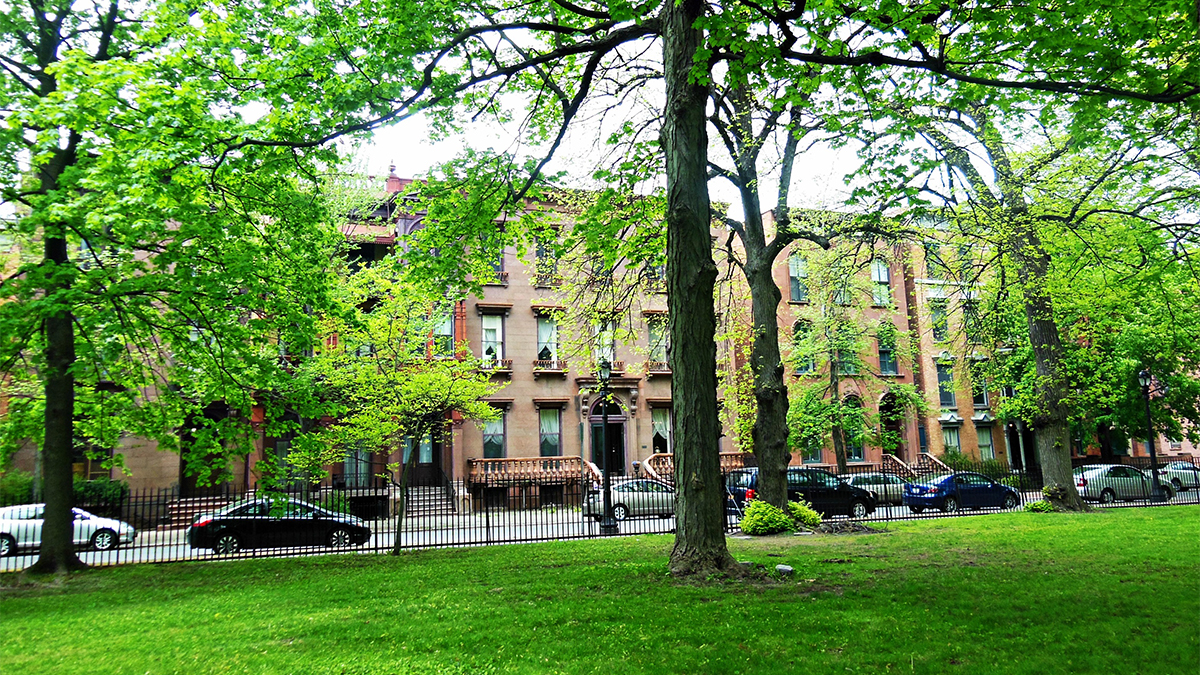
Situated less than a quarter mile east of the Hudson River, this eleven-acre historic district features an approximately two-acre rectilinear park framed on all sides by streets. Inspired by private residential squares in England—with common spaces managed by property owners—businessmen Thaddeus Bigelow and Sylvester Norton purchased fourteen acres in 1834 for the development of an exclusive neighborhood and park. Three years later the square was graded with soil excavated from nearby Mount Ida to the east and in 1840 it was fenced. That year, a group of six businessmen established the Washington Park Association to manage the park. A row of ten, three-story, Greek Revival-style townhomes (1838–1842) was constructed opposite the park’s southern edge along Washington Place. In the latter half of the nineteenth century, linear and curvilinear axial and diagonal paths were developed (no longer extant), with additional rowhouses and townhomes established on the remaining three streets.
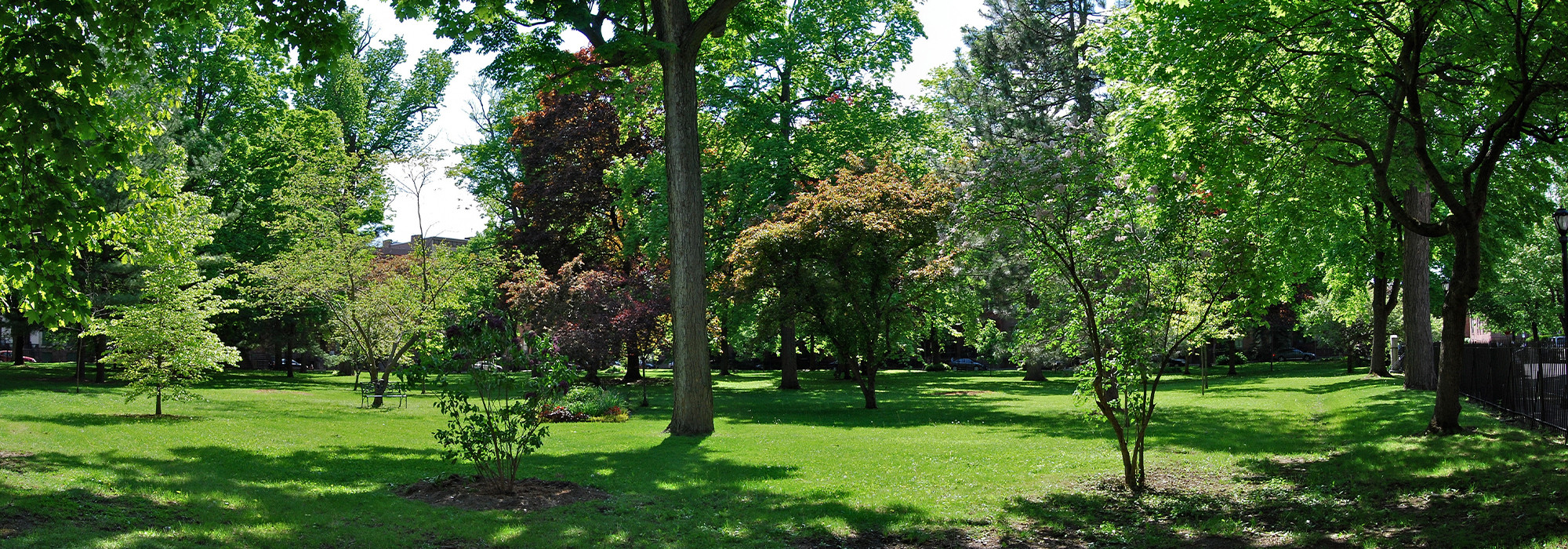
The square—still managed by the Washington Park Association—is characterized by a relatively level lawn shaded by irregular groupings of deciduous trees, including maple and oak. The openness affords borrowed views of the surrounding streets—paved with cobblestones and asphalt—and residences. Accessible only to neighborhood residents, the park is entered by way of gates located on each side of its cast iron perimeter fence. Inserted into the fence on Washington Street and Third Street, two stone markers commemorate World War I and II veterans. Stone slab sidewalks, with a herringbone brick border and granite curbing, surround the square and are illuminated by period-appropriate streetlamps; on the opposite side of the street, trees line the sidewalk.
The Washington Park Historic District was listed in the National Register of Historic Places in 1973. In 1992 Doell & Doell prepared a Historic Landscape Report for the park.