


Postmodernist
Beginning in the 1960s, Postmodernist design emerged as a departure from Modernism's ideological belief in a singular purpose and focus on form and function, seeking a more pluralistic approach that embraced multiple uses and contexts on a given site. Rather than a complete rejection of Modernist principles, Postmodernism is often seen as a fracturing of Modernist ideas to accommodate a diversity of viewpoints and histories.
Postmodernism's desire for plurality was influenced by the environmental and historic preservation movements and a change in the way project work was conceived, utilizing multidisciplinary teams of consultants and often engaging local citizens and constituents in the design process. Whereas Modernism's core philosophy sought to create the perfect form on an empty or open site with a fixed program, Postmodernism embraced wide-ranging social, economic, cultural and ecological histories of a site and the equally diverse needs of potential users. Instead of erasing the evidence of past uses in industrial or urban landscapes, Postmodernist landscape designs often maintained fragments of the past or recycled particular materials to evoke or reference a prior use. Postmodernist design is also distinct in its frequent integration of architecture, landscape and public art – often sculpture. In appearance, some Postmodernist landscapes are not radically different from Modernist ones, but broader programming and uses can reflect an underlying shift in their design intent.
-
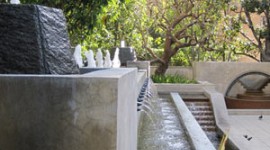
Maguire Gardens
Los Angeles, CA -
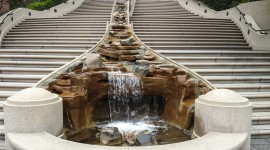
Bunker Hill Steps
Los Angeles, CA -
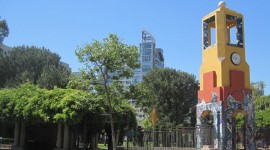
Grand Hope Park
Los Angeles, CA -
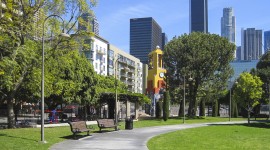
Los Angeles Open Space Network
Los Angeles, CA -
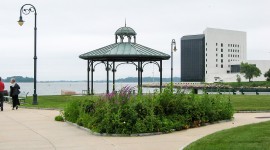
Old Harbor Park
Boston, MA -

Mary Livingston Ripley Garden
Washington, DC -
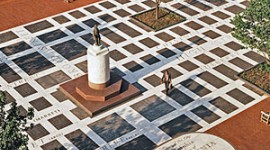
Welcome Park
Philadelphia, PA -
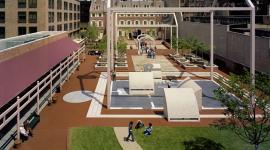
Franklin Court
Philadelphia, PA -
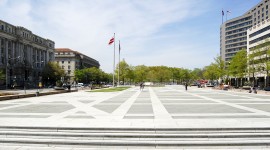
Freedom Plaza
Washington, DC -

Pershing Park
Washington, DC -
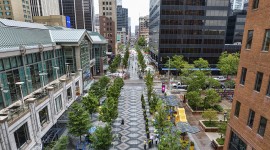
16th Street
Denver, CO -
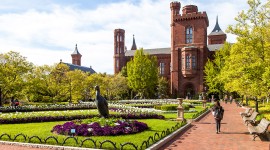
Enid A. Haupt Garden
Washington, DC