


Modernist
A style that arose in Europe as early as the 1920s as part of an avant-garde response to what artists and designers perceived as the cultural irrelevance of "styles," as well as the socio-political authoritarianism represented in the formal, rigid geometry of Beaux Arts neoclassicism. In the United States, this sense of irrelevance also extended to the nineteenth-century Picturesque, as neither style adequately addressed the massive social and economic changes brought on by urbanization, suburbanization, and ultimately by the Great Depression. Modernism embraced a diverse palette of contemporary and often experimental materials as well as using familiar materials in unconventional ways, and, in the absence of teams of gardeners, it strived for low maintenance. It also focused on clients’ desire to link house and garden to extend the living space outdoors. The Modernist garden frequently used irregular forms and asymmetry. Japanese gardens provided an inspiration, as did movements such as Dada in painting and sculpture. American practitioners James Rose, Dan Kiley, Garrett Eckbo, and others expressed their theories and concerns in articles published in Pencil Points magazine. Although Modernist design had largely fallen from favor by the Bicentennial, in recent years it has enjoyed a significant resurgence.
-
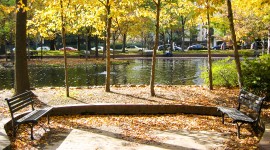
Southwest Duck Pond
Washington, DC -
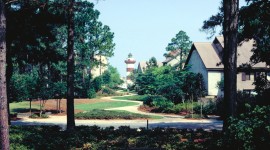
Sea Pines
Hilton Head, SC -
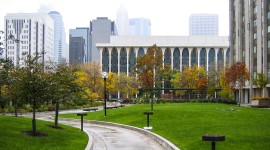
River Towers
Minneapolis, MN -
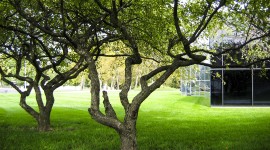
Cummins Health Center
Columbus, IN -
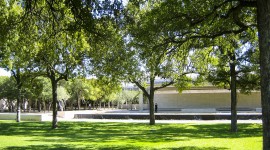
Kimbell Art Museum
Fort Worth, TX -
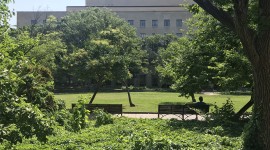
John Marshall Park
Washington, DC -
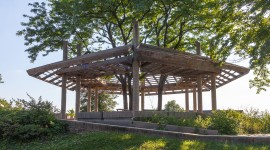
Fort Lincoln Park
Washington, DC -
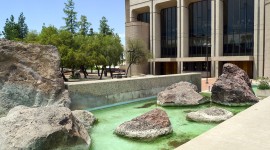
Tucson Convention Center
Tucson, AZ -
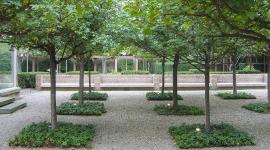
Hamilton Garden
Columbus, IN -
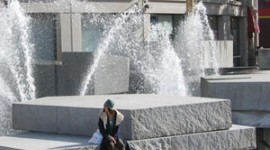
United Nations Plaza
San Francisco, CA -
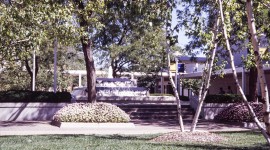
Oakbrook Center
Oakbrook, IL -
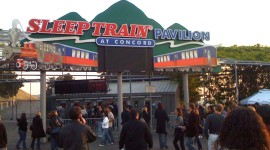
Sleep Train Pavilion
Concord, CA -
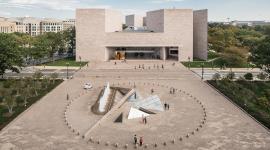
National Gallery of Art, East Building Plaza
Washington, DC -
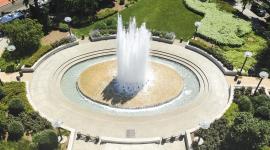
Federal Reserve Board Garden
Washington, DC -
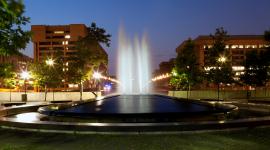
Banneker Park - Tenth Street Overlook
Washington, DC -
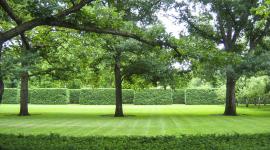
Miller Garden
Columbus, IN