Inspiring "Re: Search" conference & events honor 2025 Oberlander Prize laureate, Mario Schjetnan
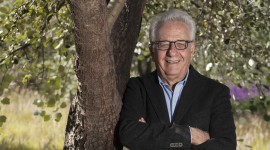
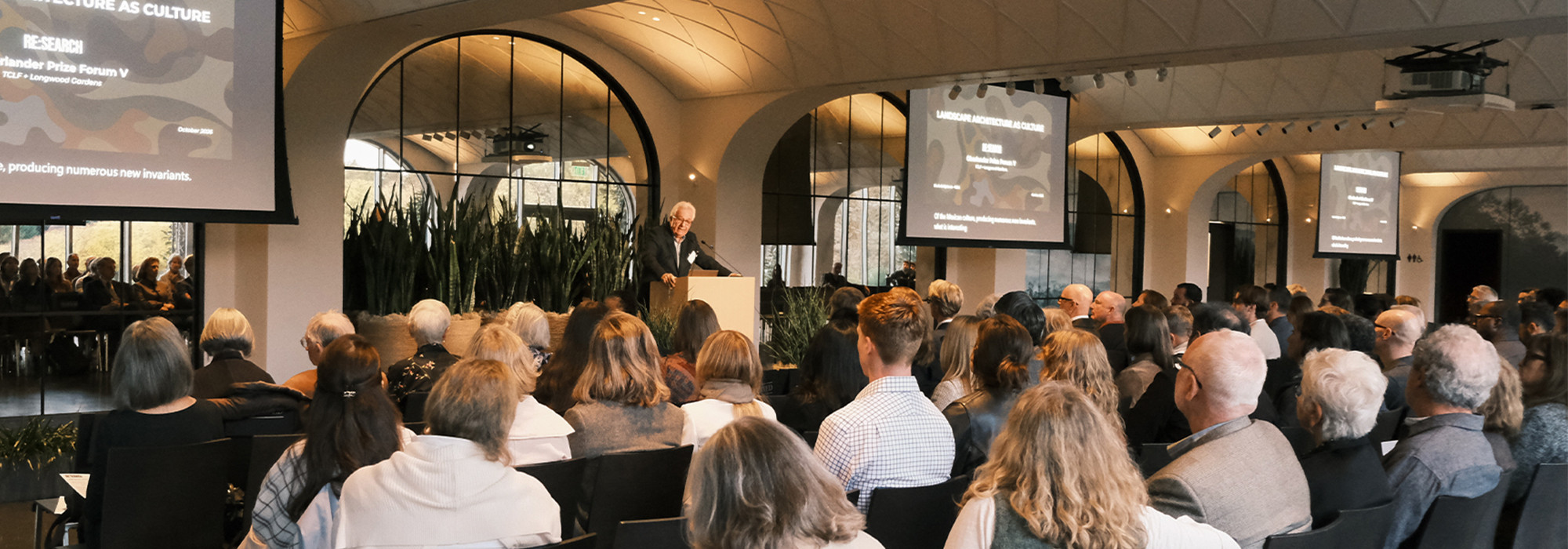
More than 300 people registered for the fifth Cornelia Hahn Oberlander International Landscape Architecture Prize Forum, Re: Search: Reclaiming and Redefining the Relationship Between Research and Design, held at Longwood Gardens in Kennett Square, Pennsylvania. Curated by Charles A. Birnbaum, FASLA, FAAR, Founding President and CEO of The Cultural Landscape Foundation (TCLF), the three-day program brought together landscape architects, scholars, educators, students and allied professionals to explore how research can inform, challenge, and transform design practice. The centerpiece was a daylong conference on Thursday, October 29, framed by an evening reception held the night before at Longwood Garden’s Patio of Oranges in the East Conservatory and a day of mobile workshops at significant regional gardens on Friday, October 30. Re: Search kicked off with a keynote presentation by 2025 Oberlander Prize laureate Mario Schjetnan, the Mexico-City-based landscape architect and founding principal of the firm Grupo de Diseño Urbano (GDU), focused on his deeply research-centric and integrated approach to landscape and urban design grounded in the identity of place. Video recordings of all the conference presentations will be produced and unveiled in 2027.
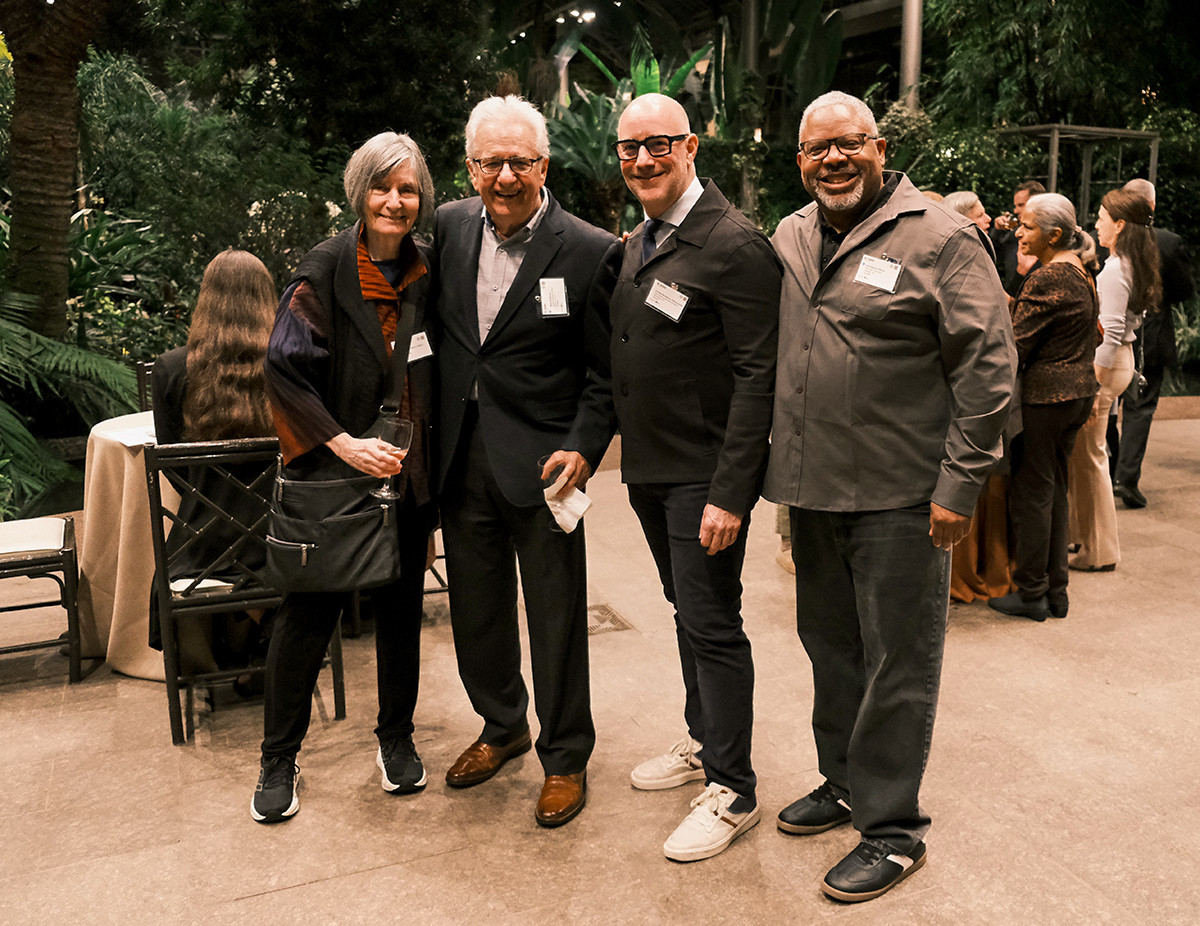
The proceedings began Wednesday evening in Longwood Gardens’ Fountain Room with welcoming remarks from Paul B. Redman, President and chief Executive Officer of Longwood Gardens, and Claire Agre, Principal of Unknown Studio and the 2025 Oberlander Prize Jury Chair. Schjetnan followed with his keynote, Landscape Architecture as Culture, exploring natural, historical, and human dimensions of landscape architecture. Drawing on the concept of cultural “invariants,” or enduring characteristics that shape identity of a place across time, Schjetnan examined how history, geography, cultural memory, and the natural environment inform GDU’s approach to design. His presentation framed the discussion that followed, positioning landscape architecture as both an ecological and cultural practice. Following the keynote, attendees gathered for a reception at the Patio of Oranges, surrounded by lush plantings and a seasonal chrysanthemum display.
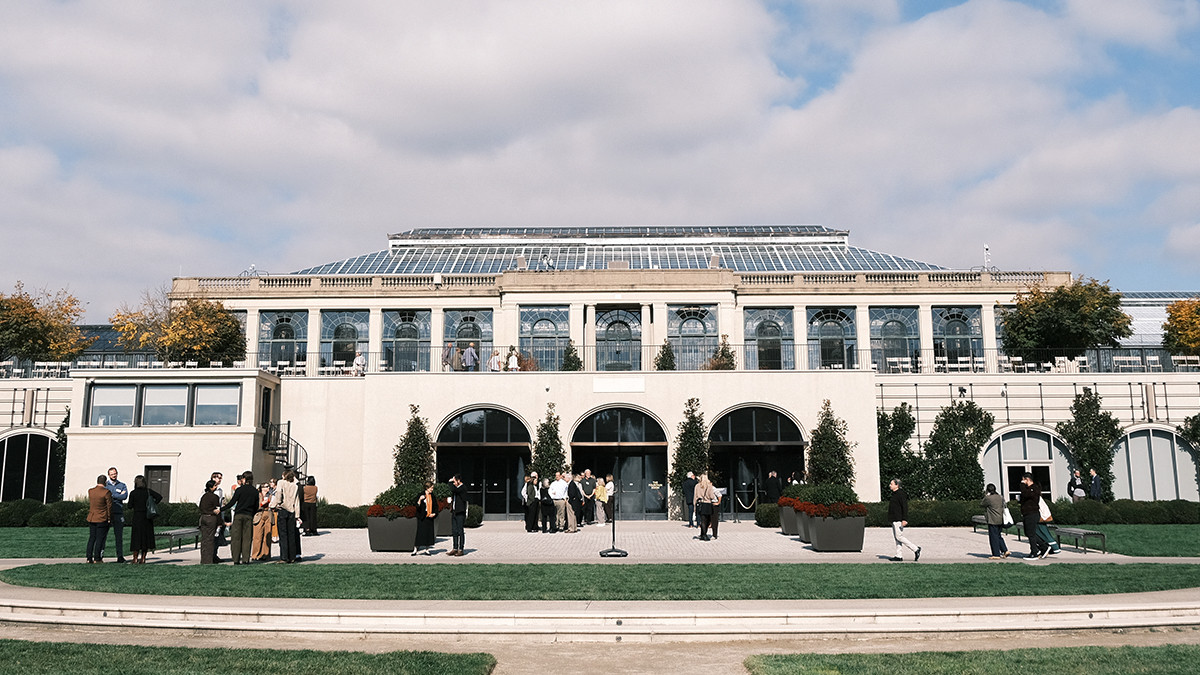
Crisp autumn weather and brilliant fall color greeted guests on Thursday morning as the daylong conference commenced. The audience included landscape architects, architects, educators, garden enthusiasts, and students from area universities. After welcoming remarks from Redman, Birnbaum delivered the opening keynote, introducing the conference’s central inquiry into the evolving relationship between research and design, examining the research-driven practices of Frederick Law Olmsted, Sr., prize namesake Cornelia Hahn Oberlander, and Lawrence Halprin.
The first panel, Research Into Practice: Re: Discover, Re: Appraise, and Re: Acknowledge, was moderated by Elizabeth K. Meyer, FASLA, Merrill D. Peterson Professor of Landscape Architecture at the University of Virginia. The presentations explored how designers might engage more deeply with the layered histories of places and the communities connected to them, particularly when those histories are contested, overlooked, or difficult to reconcile. Kofi Boone, FASLA, Joseph D. Moore Distinguished Professor and University Faculty Scholar at North Carolina State University, opened with Co-Authoring Cultural Landscape Futures. Drawing on his sustained engagement with Princeville, North Carolina, a historically African American community affected by repeated flooding, Boone emphasized the importance of trust, time, and reciprocal relationships in research design. Boone recognized TCLF’s efforts to raise the visibility of the community, which was featured in Landslide 2018: Grounds for Democracy.
Jenny Lauer, Project Designer and Cultural Landscape Historian at Nelson Byrd Woltz Landscape Architects, continued this examination of cultural memory and the limitations of conventional research methods, especially when addressing communities whose history and relationship to the land have often been obscured or marginalized. Through the firm’s work at Middleton Place and Angel Oak Park in South Carolina, she emphasized how culture and ecology constantly inform the firm’s design process, and that, while integral, archival research is just a starting place.
Lydia Gikas Cook, Senior Associate at Reed Hilderbrand, concluded the panel with the presentation Finding Closeness, a thoughtful and personal exploration of research as a process of observation, accumulation, and discovery. Drawing on the firm’s work at Franklin Park, in Boston, Massachusetts, and Live Oak, in Weyanoke, Louisiana, Cook discussed landscapes as “thin places,” where physical surroundings carry profound personal or spiritual significance, reinforcing the importance of trust when engaging with landscapes with sensitive histories.
The morning continued with the first of two plenary provocations, presented by Anne Whiston Spirn, FASLA, FCELA, and Cecil and Ida Green Distinguished Professor of Landscape and Planning at the Massachusetts Institute of Technology (MIT). Drawing on her research into Frank Lloyd Wright’s Taliesin, in Spring Green, Wisconsin, and her decades of research in West Philadelphia, Spirn demonstrated how field observation, photography and local knowledge inform and interpret archival investigation, and reveal the relationships between natural processes and human settlement.
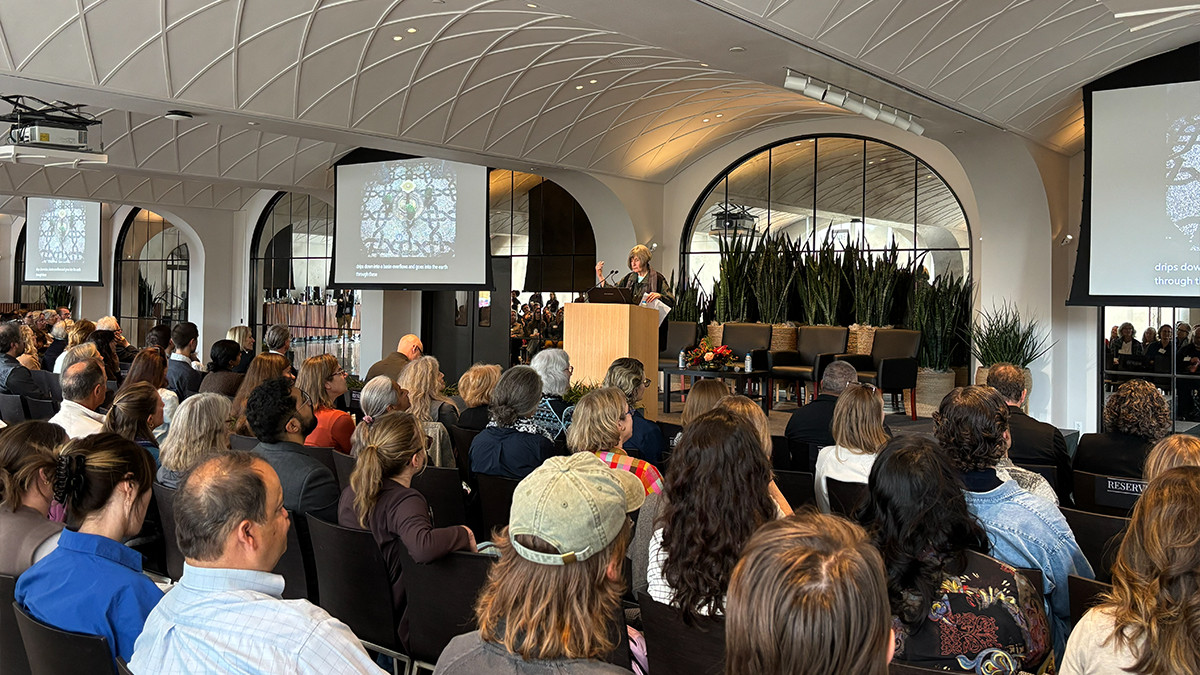
Following lunch, Walter Hood, artist, designer, educator, and founder of Hood Design Studio in Oakland, California, and Professor Emeritus of Landscape Architecture & Environmental Planning and Urban Design at the University of California, Berkeley, delivered the day’s second plenary provocation, Joy + Pain – Audacious Acts in Underdeveloped Landscapes. Hood examined the complex cultural meanings embedded in American landscapes shaped by segregation, displacement, and uneven development. Through projects at Lincoln Center in New York City and the historic La Villa neighborhood in Jacksonville, Florida, Hood challenged audiences to look beyond the physical surface of landscape to understand histories of exclusion and resilience that continue to shape them.
The second panel, Grounding Research: Re: Design, Re: New, and Re: Activate, was moderated by Eric Kramer, FASLA, Principal at Reed Hilderbrand, framed research as a practice of knowledge-building and knowledge-sharing. He introduced a framework for the following discussions shared by his colleagues as research performed through practices of intimacy (Merritt Chase), agency (TEN x TEN Studio) and pleasure (CCxA).
Chris Merritt, PLA, ASLA, and Nina Chase, PLA, ASLA, Founding Principles of Merritt Chase, explored the value of regional commitment and long-term relationships in Unlike Anywhere Else: Landscape Research Through Local Practice. Drawing on their work across Middle America, they emphasized regional commitment as a form of research practice through dedicated time and the act of returning.
In their presentation Counter-Practice: Design Research as Resistance, Ross Altheimer, PLA, FAAR, and Maura Rockcastle, PLA, Principals and Co-Founders of TEN x TEN Studio, examined how research can challenge dominant narratives and recover histories that have been silenced or erased. Through several projects, including Historic Fort Snelling at Bdote in St. Paul, Minnesota, and the Philando Castile Community Peace Garden in Falcon Heights, Minnesota, they illustrated how design research can become a form of advocacy, elevating community knowledge and reconsidering whose histories are represented in public space.
In The G-Spot, Marc Halle, Co-President and Partner at Montreal-based CCxA, explored the role of desire, intuition, and pleasure in landscape design. Drawing on the design theory and practice of CCxA founder, the late Claude Cormier, Halle asked the audience to consider the role experimentation can play in design research.
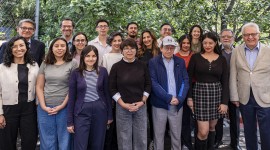
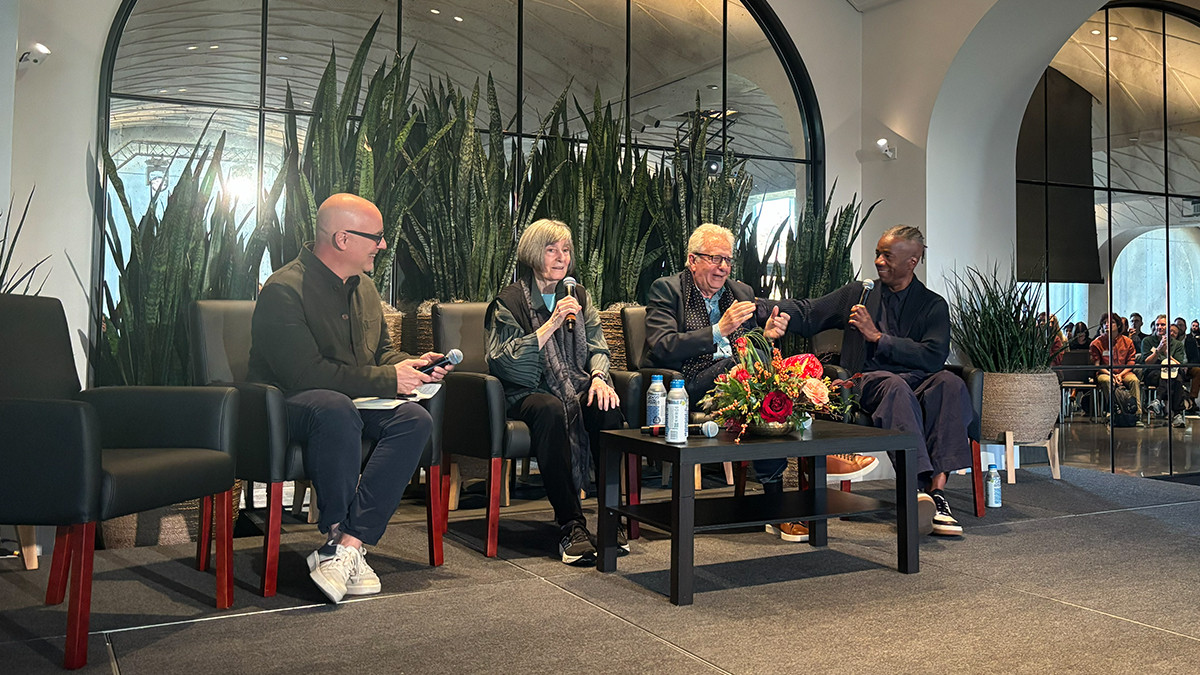
The day concluded with Reframing the Narrative, a conversation among Schjetnan, Sprin, and Hood moderated by Birnbaum. Bringing together perspectives from their respective presentations, the discussion returned to the Forum’s central proposition: that research is not merely a preliminary stage of design, but an ongoing and evolving means of interpreting landscapes and informing change. As one attendee stated, "This was one of the best professional events that I have ever attended. Broad and deep - I think this is the beginning of an emerging way of practicing."
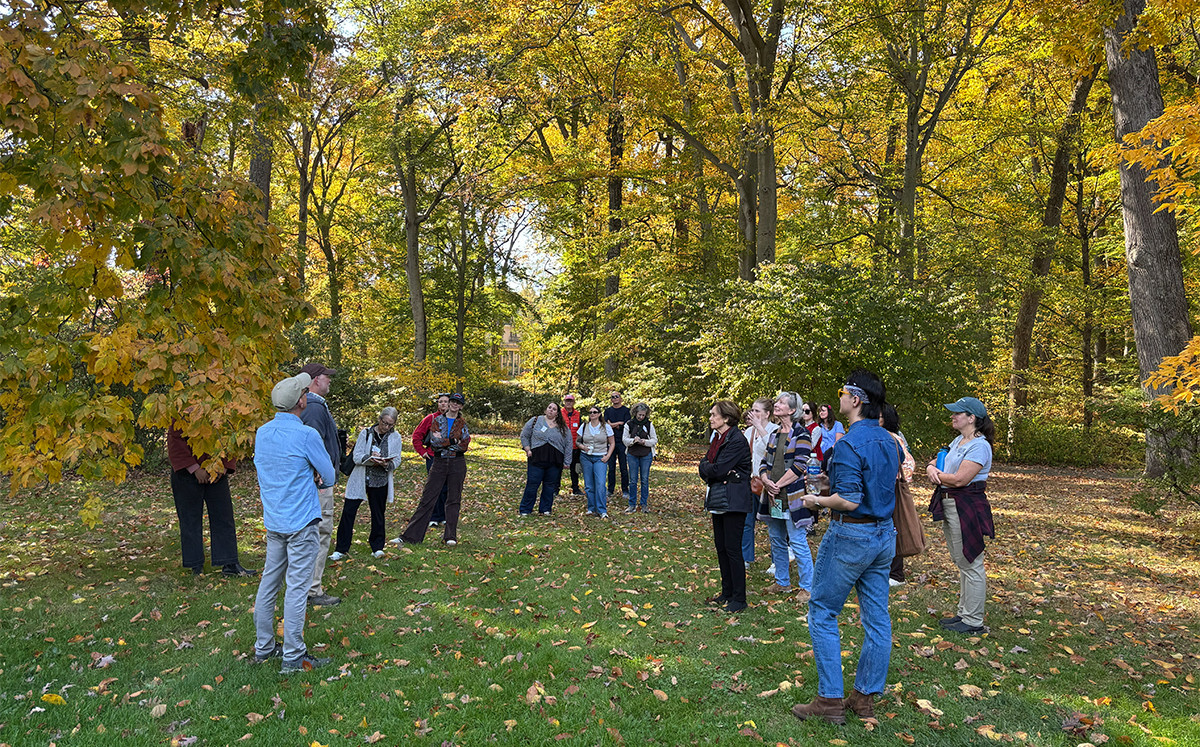
The following day, attendees had the opportunity to explore the conference themes in depth at mobile workshops throughout the region including: Longwood Gardens at Granogue; Winterthur Museum, Garden, and Library; Mt. Cuba Center; and Chanticleer. Led by landscape architects, horticulturalists, and garden stewards, the workshops focused on how historical investigation and holistic site analysis inform the management and transformation of culturally significant landscapes. Collectively, the presentations revealed research as a continuous process of observation, listening, relationship-building, and critical inquiry—one capable of illuminating overlooked histories, strengthening community agency, and informing more culturally responsive and ecologically grounded design. An attendee described the conference as an "Energizing, meaningful, and engaging call to action for cultural landscape practitioners and landscape architects approaching projects from various perspectives and practice types."
The Forum was presented in partnership with Longwood Gardens, with support from: Lead Sponsor PlayCore; Presenting Sponsors Bartlett Tree Experts, Landscape Forms, Maglin Site Furniture, and Select Trees; and Educational Partner the Pennsylvania-Delaware Chapter of the American Society of Landscape Architects.