


Botanical Garden
An institutional garden which grows and displays a wide range of native and exotic plant material and exhibits a few key characteristics: plantings are scientifically ordered (eg: phylogeny, geography of origin, functional use, or biome); the provenance of the plants is well documented and labeled in situ; the site is open to the public for recreation, education, and research; and the arboretum is in exchange relationships with other botanical gardens.
The notion of a garden for educational and research purposes is well documented in ancient Greece and Rome, medieval European monasteries, and Renaissance-era Italy and Mexico. Initially focused on plants’ medicinal usefulness, the Age of Exploration saw the advent of wide-spread gardens attempting to understand, germinate, and maintain plants far from their native context.
The oldest surviving botanic garden in the U.S. is the Missouri Botanic Garden. Founded by Henry Shaw in 1859, it has a Picturesque core, with serial renovations of the periphery exploring a variety of design styles including Japanese and Chinese. These styles are evident in the layout of circulation routes, the spatial relationship of planted areas to each other, and in the choices of material, furnishings, lighting fixtures, and more.
The terms “botanic garden” and “botanical garden” are used interchangeably.
-
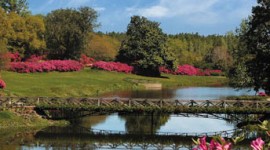
Bellingrath Gardens
Theodore, AL -
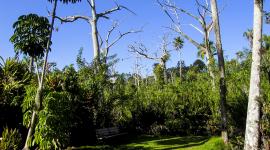
Caribbean Gardens
Naples, FL -
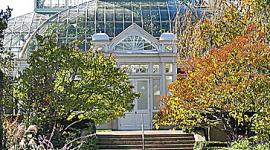
New York Botanical Garden
Bronx, NY -
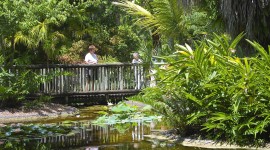
McKee Botanic Gardens
Vero Beach, FL -
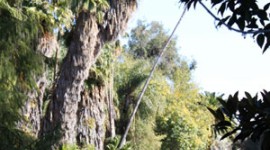
Los Angeles County Arboretum & Botanic Garden
Arcadia, CA -
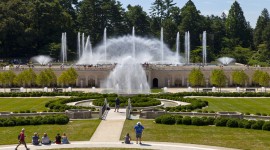
Longwood Gardens
Kennett Square, PA -

Huntington Library and Botanical Gardens
San Marino, CA -
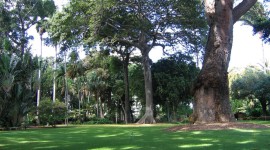
Foster Botanical Garden
Honolulu, HI -
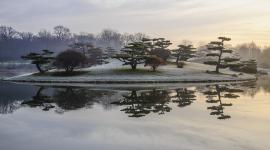
Chicago Botanic Garden
Glencoe, IL -
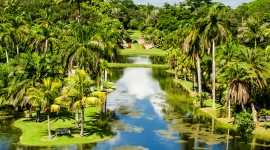
Fairchild Tropical Botanic Garden
Coral Gables, FL -

New Orleans Botanical Garden
New Orleans, LA -
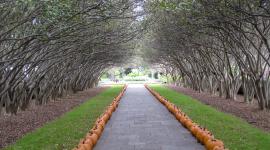
Dallas Arboretum and Botanical Garden
Dallas, TX -
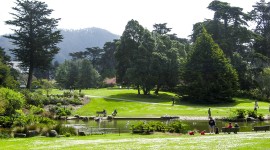
Strybing Arboretum
San Francisco, CA -
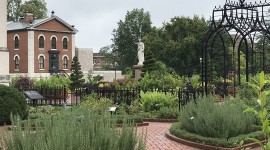
Missouri Botanical Garden
St. Louis, MO