Pioneer Information
Born in Narita, Japan, Iida received little formal education. As a young man he cleared trees for new construction and development but, disheartened, decided instead to create and preserve landscapes. In approximately 1911 Iida trained under Katsugoro Iwamoto and worked on Chinzan-sō Garden, Tokyo, and Odawara Kokei-an Garden, Odawara City. He later became acquainted with garden designer Jirokichi Suzuki, eventually becoming a skilled horticulturist and master of Japanese garden design. In 1918 Iida opened the Iida Landscape Engineering Company in Tokyo, while also owning a stone quarry—where craftsmen created lanterns—and overseeing several plant nurseries. His training further extended to such traditional Japanese arts as ikebana (flower arranging), bonsai (growing potted miniature trees), and shodo (calligraphy).
Iida’s signature landscape style incorporated shizen (naturalness) and shakkei (borrowed scenery) to create sites of quietude. He designed more than 1,000 public and private gardens in his native country and abroad, including the garden at the former residence of Shigeru Yoshida in Oiso, Japan (1930), the Ippakutei Tea House and Garden (1959) for the Japanese Embassy in Washington, DC, and the Japanese Garden (1961) for the Embassy of Japan in Canberra, Australia.
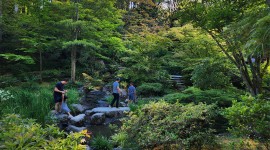
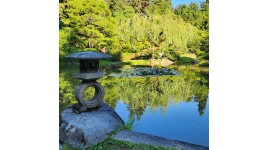
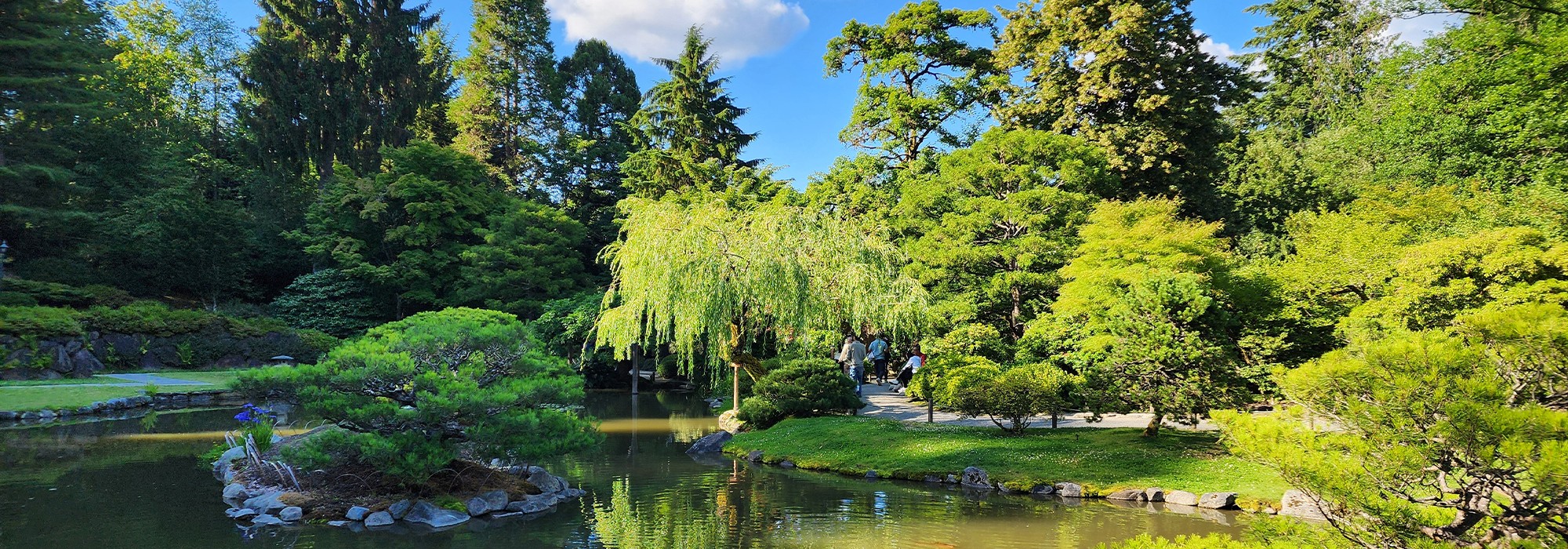
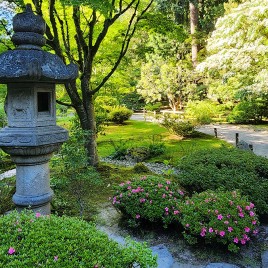
For a project initiated by the University of Washington, in 1959, Iida was appointed by the Tokyo Metropolitan Park Department and the Japanese Institute of Landscape Architecture to help design the Japanese Garden in Seattle’s Washington Park Arboretum. Leading an international team with landscape architect Kiyoshi Inoshita, Iida rapidly finalized plans, surveyed the site, and selected granite boulders from the quarry at Bandera Mountain in the Cascades and hundreds of plants from local nurseries. He engaged three second-generation Japanese Americans to implement the plan: William S. Yorozu (plantings), Kei Ishimitsu (structures), and Richard Iwao Yamasaki (stonework).
In 1966 Iida was honored with the Japanese Order of the Rising Sun (Fifth Class) and, in 1969, was recognized by the Japanese Institute of Landscape Architecture for his accomplishments. He died in Tokyo at the age of 88.