Landscape Information
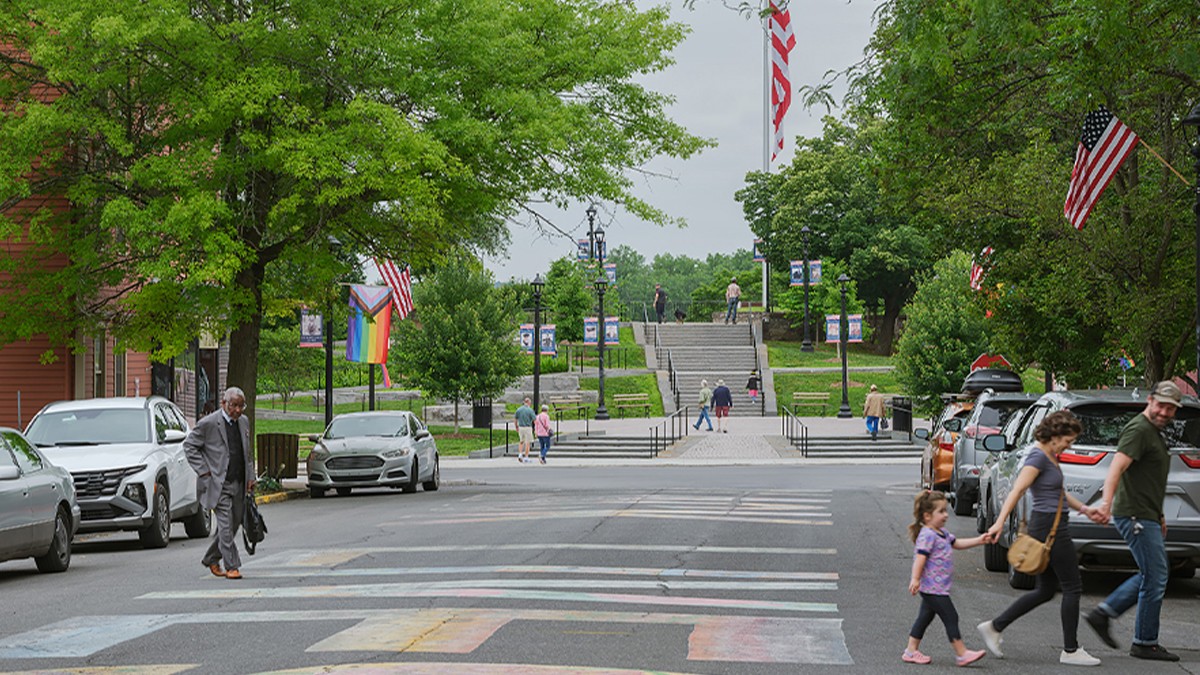
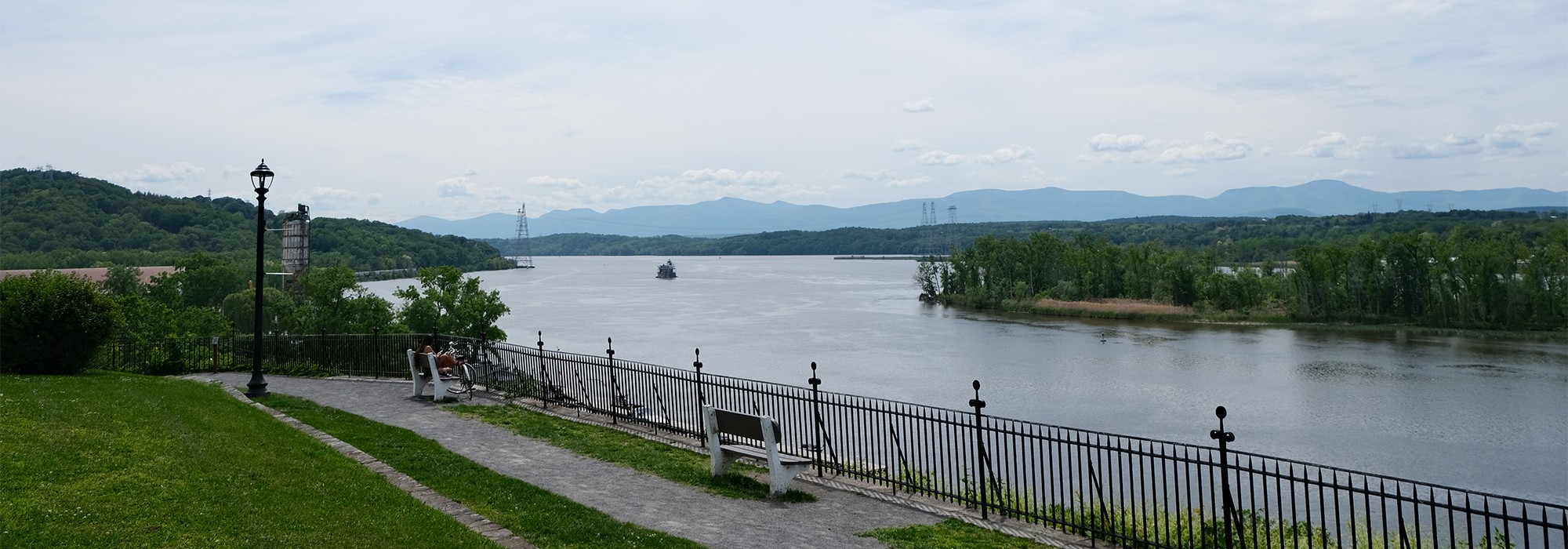
Established in 1795 by the town’s Common Council, this approximately one-acre, T-shaped park is located along Front Street at the terminating axis of Warren Street. The park is characterized by a linear promenade set upon a steep bluff that affords sweeping, borrowed views of the Hudson River and the Catskill Mountains.
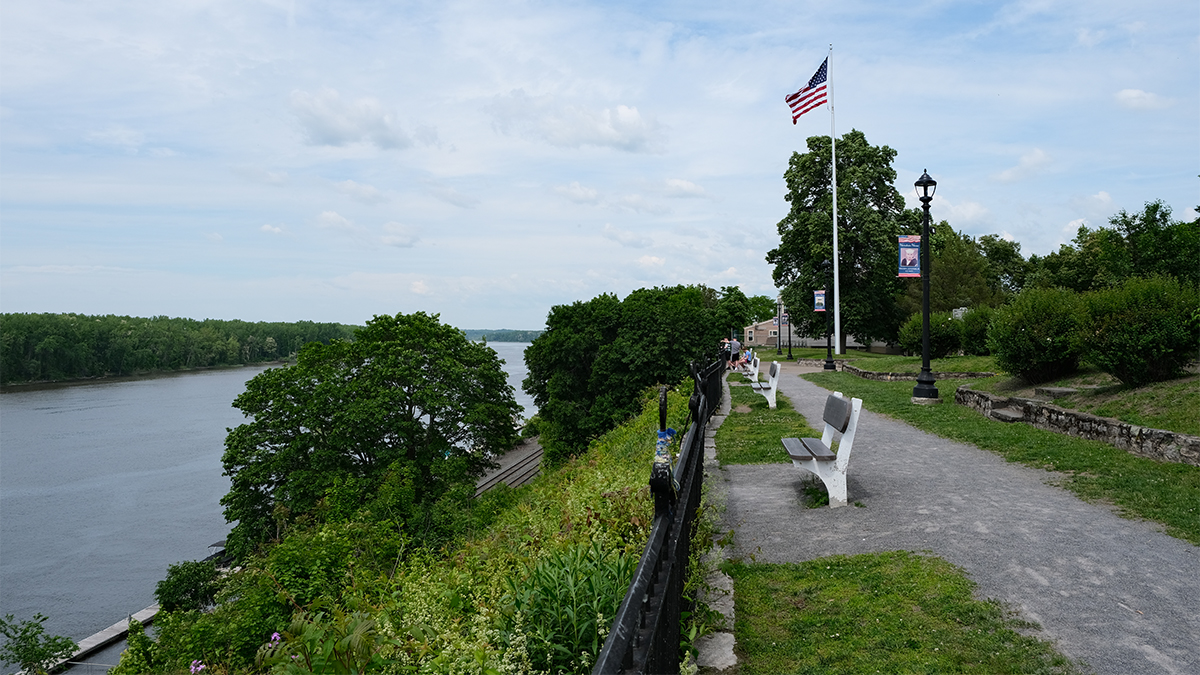
The park, originally linear, was initially used by the city’s militia as a parade ground. It was improved in the early 1830s with paths and perimeter fencing. In the second half of the nineteenth century, parallel paths separated by lawn panels were laid out at the bluff’s edge, delineated by a wrought iron fence. Irregular rows of deciduous shade trees and benches were introduced throughout, and by the early twentieth century, the lawn panels were elevated and edged with stone curbs. The park's enlarged footprint is the result of the addition of a parcel perpendicular to the bluff, which was added in the 1970s.
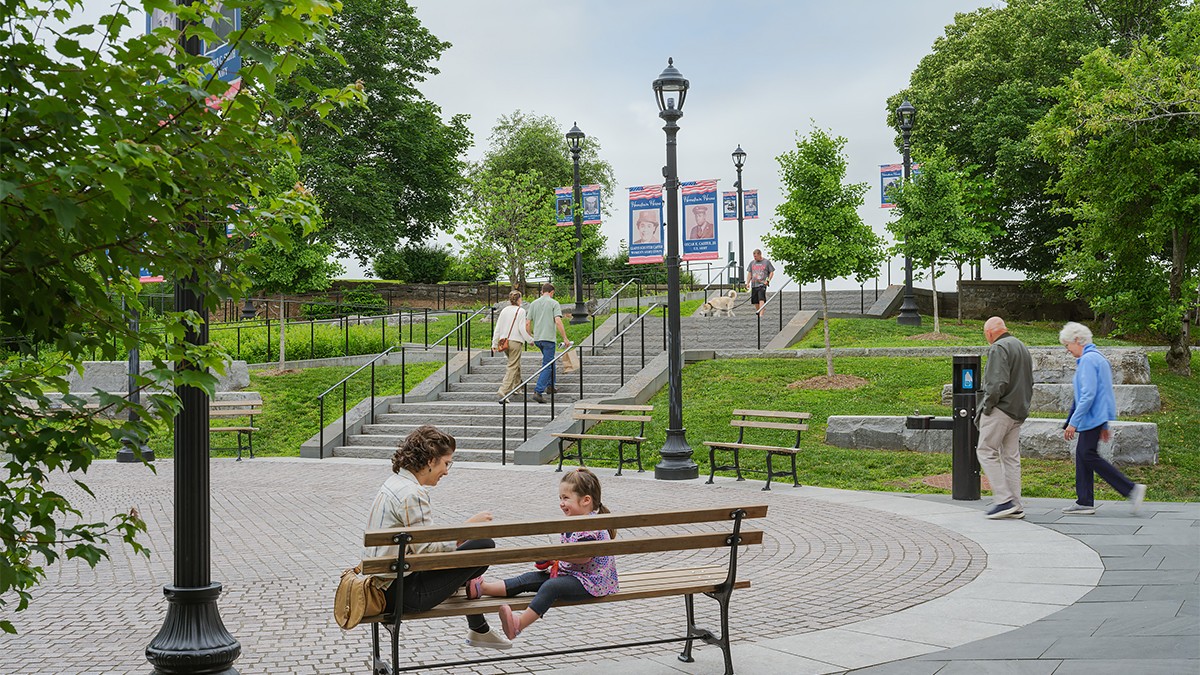
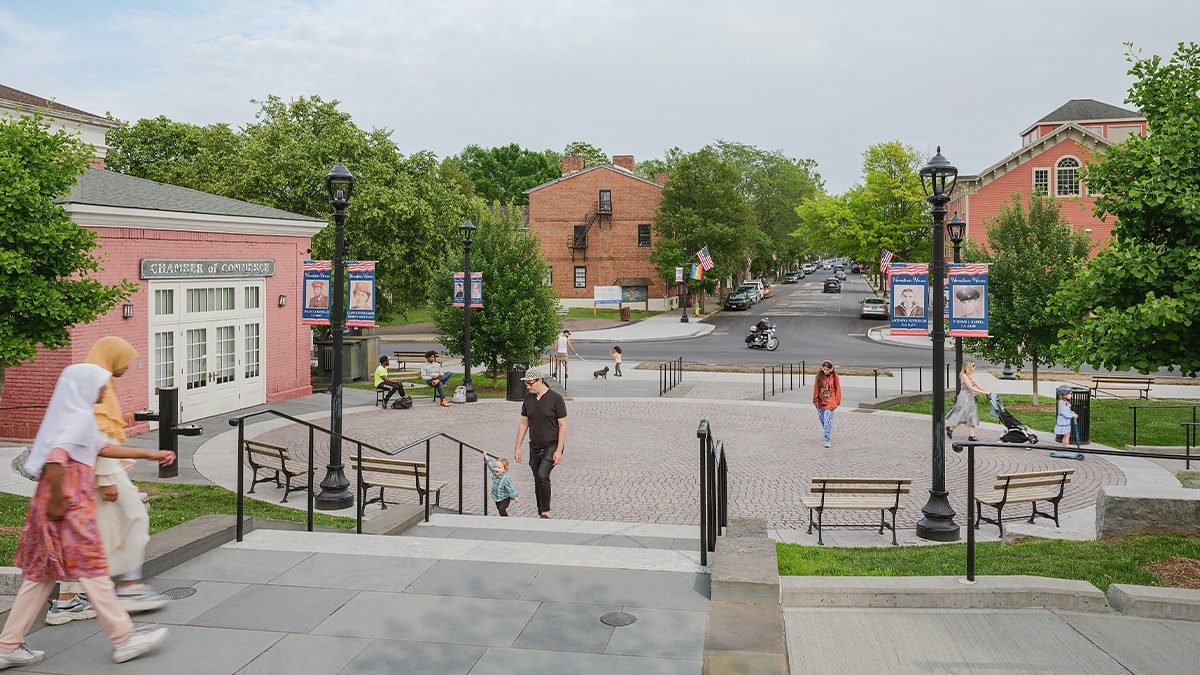
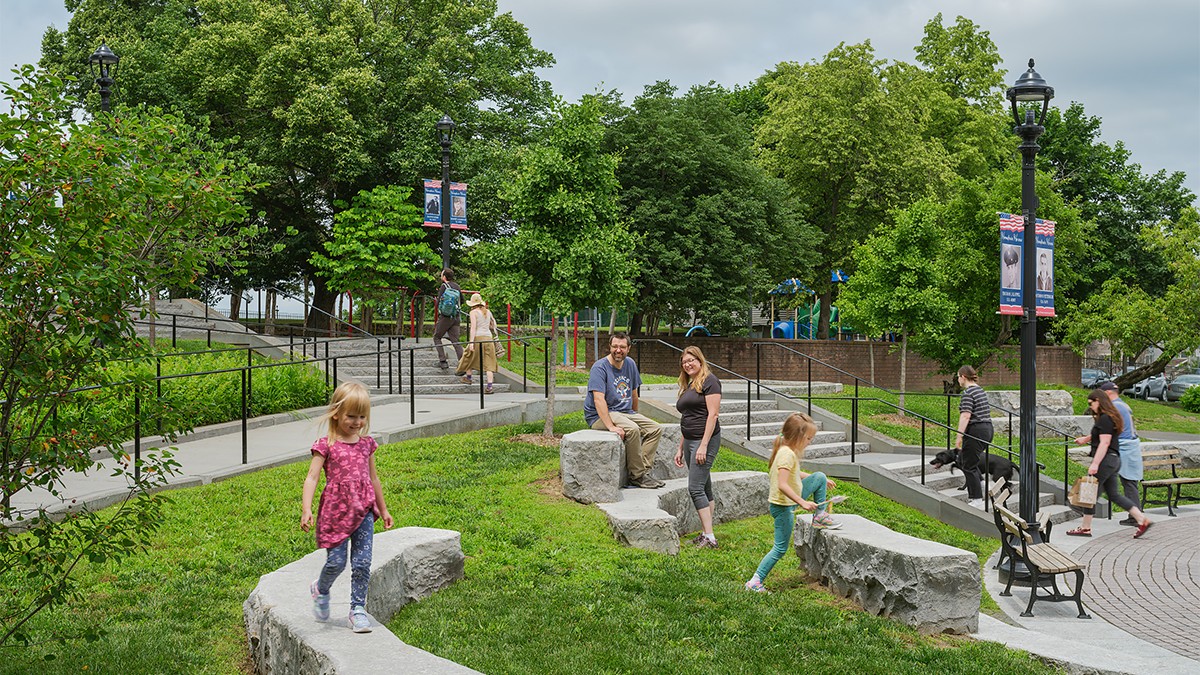
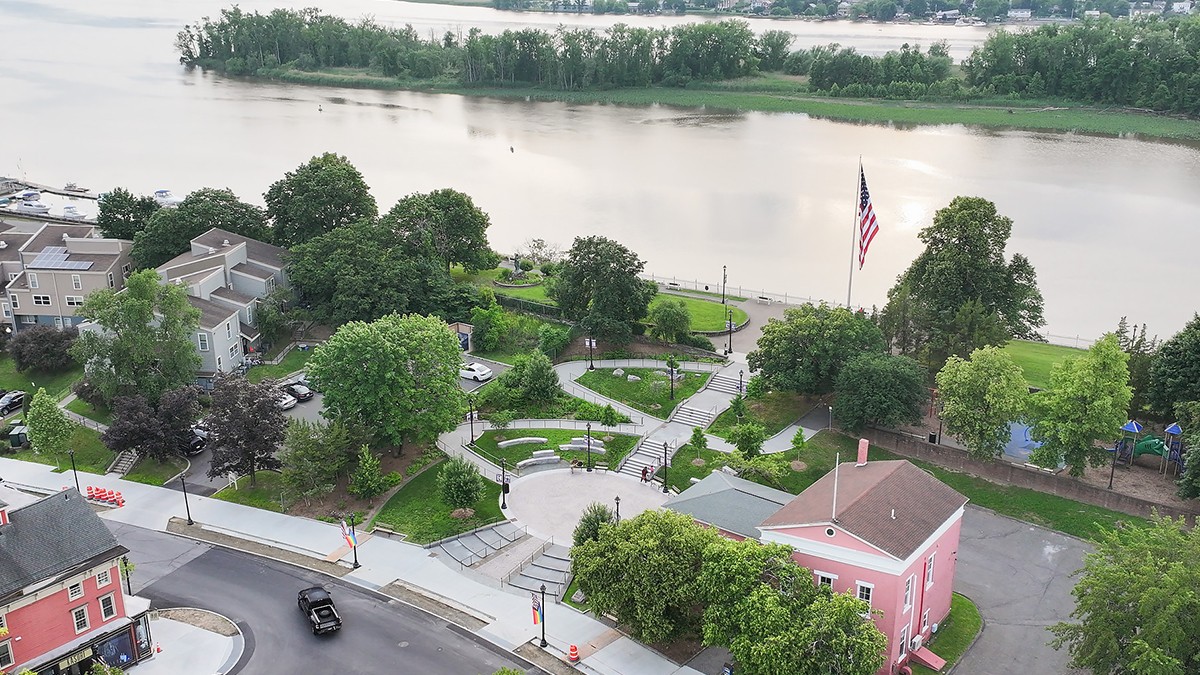
Today the park is accessed via a plaza, designed in 2021 by Starr Whitehouse landscape architects, which abuts the city’s Chamber of Commerce and features a central linear staircase and curvilinear, ramped paths that frame lawn panels embellished with terraced stone benches. At the top of the stairs, distinguished by a flagpole oriented off axis with Warren Street, a linear crushed stone path parallels the bluff’s edge and historic fence. Modest stone steps ascend a raised lawn panel southwest of the flagpole to meet a statue of St. Winnifred (1896) by sculptor George Edwin Bissell. The statue, located in a circular basin, is set atop a naturalistic plinth and is shaded by linden trees.
Located in the Front Street—Parade Hill—Lower Warren Street Historic District, the park was listed in the National Register of Historic Places (1970) and included in the Hudson Historic District in 1985.