


Spanish Colonial Revival (Hispano-Moorish)
Unlike Mission Revival Art and Crafts era gardens, Spanish Colonial Revival gardens were a variant of the Southwest’s high-style Mediterranean neoclassical Beaux Arts garden tradition. Generally dating from 1900 to 1940 and typically associated with large estates and public projects, these gardens employed powerful axial organization, extensive, crisply edged hedging, and colorful and/or ornate geometric fountains and pools to celebrate the region’s aristocratic Spanish heritage. Prototypes for this style came from the Spanish-Islamic and Persian garden precursors rather than Spanish Colonial or Mexican traditions.
Garden “rooms” and patios often featured Spanish or Persian ceramics, tiles and motifs, as well as ornamental “Mediterranean” plants introduced from Asia, Africa and South America as well as from the Mediterranean. Formality of line typically was tempered by the exuberant growth of well-watered plantings. Spanish Colonial Revival Gardens graced both Spanish Colonial and Spanish Baroque architecture.
-
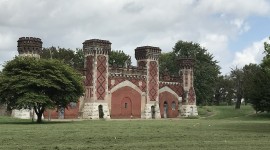
Fairground Park
St. Louis, MO -
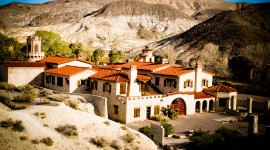
Death Valley Scotty Historic District
Stovepipe Wells, CA -
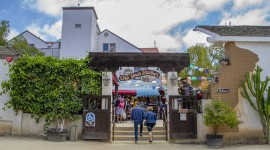
Old Town San Diego State Historic Park
San Diego, CA -
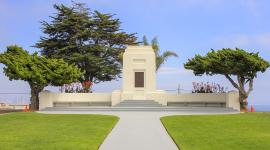
Fort Rosecrans National Cemetery
San Diego, CA -
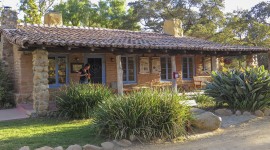
Leo Carrillo Ranch Historic Park
Carlsbad, CA -
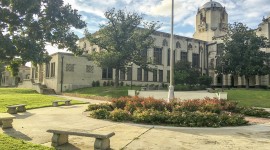
Thomas Jefferson High School
San Antonio, TX -
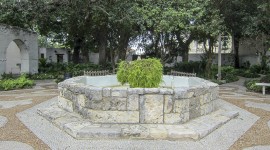
Spanish Governor's Palace
San Antonio, TX -
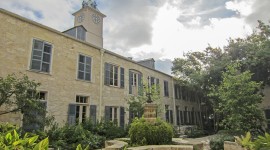
Southwest School of Art - Ursuline Academy
San Antonio, TX -
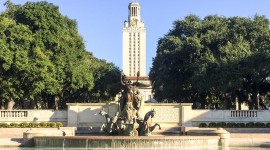
University of Texas at Austin
Austin, TX -
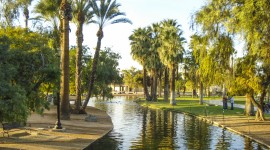
Encanto Park
Phoenix, AZ -

Highland Park Village
Dallas, TX -
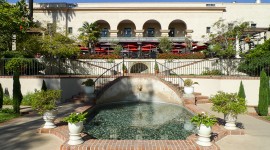
Casa del Rey Moro Garden
San Diego, CA -

House of Hospitality Patio
San Diego, CA -
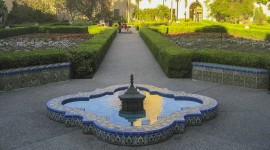
Alcazar Garden
San Diego, CA -
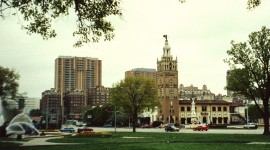
The Country Club Plaza
Kansas City, MO -
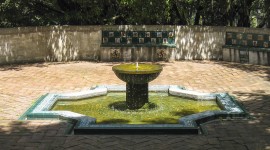
Don Quixote Courtyard
Montecito, CA