


Beaux-Arts / Neoclassical
The American adaptation of French-led Beaux-Arts architectural movement provided the basis for much American architectural and landscape architectural design in the late-nineteenth and early-twentieth century during the American Country Place Era. This style emulated European Renaissance and Baroque landscapes, as well as the gardens of Islamic-era Spain. It endured into the Great Depression, falling out of favor before the 1940s. Linked together by formal geometry within an over-all landscape design, Beaux-Arts garden “rooms” were defined by linear allées and hedges, as well as by walls and neoclassical garden pavilions. Classical sculptures often served as focal points and lined the sides of long vistas. Fountains, water chains, oblong reflecting pools, and details such as arbors and seating relied upon symmetry, balance, and elegance of detail. However, forms and details often were selected or adapted from multiple eras (typically Arabic, Renaissance, and Baroque) and European traditions (usually Italian, French, or British), resulting in an eclectic mix of historical references. This grand and formal style was popular throughout the country for large estates, as well as in City Beautiful era urban design.
-
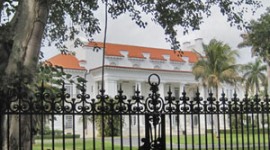
Henry M. Flagler Museum
Palm Beach, FL -
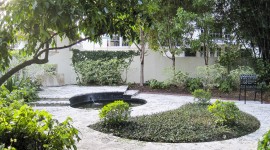
Four Arts Botanical Gardens
Palm Beach, FL -
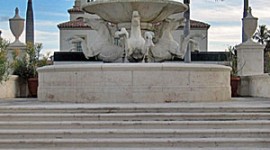
Memorial Fountain Park
Palm Beach, FL -
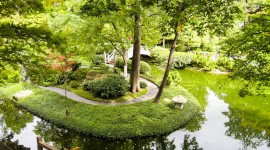
Fort Worth Botanic Garden
Fort Worth, TX -

University of Florida
Gainesville, FL -

McMillan Park
Washington, DC -
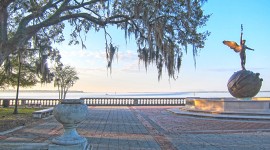
Memorial Park - FL
Jacksonville, FL -
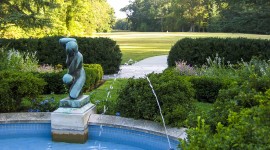
Reynolda House Museum of American Art
Winston-Salem, NC -

Allerton
Monticello, IL -

Marble House
Newport, RI -
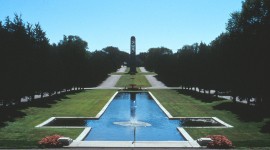
Sunset Memorial Park
Minneapolis, MN -
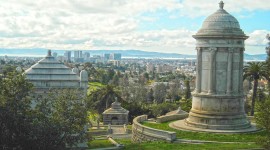
Mountain View Cemetery
Oakland, CA -
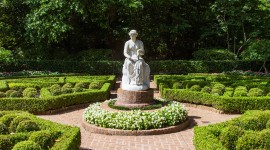
Bayou Bend
Houston, TX -
Bayshore Boulevard
Tampa, FL -
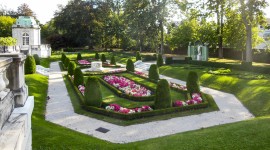
The Elms
Newport, RI -

Arthur Ross Terrace Garden
New York, NY