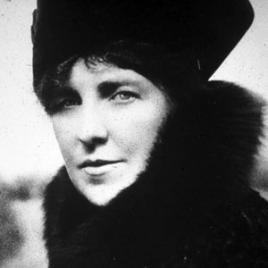
Pioneer Information
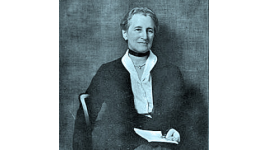
Born Effie Brooks Pope in Salem, Ohio, and raised primarily in Cleveland, she was educated at exclusive girls’ schools. At nineteen Pope changed her name to Theodate, in honor of her grandmother, Theodate Stackpole, and enrolled in Miss Porter’s School in Farmington, Connecticut. The experience shaped Pope greatly, fostering an appreciation of rural landscapes and seventeenth- and eighteenth-century architecture. After graduating in 1888, she embarked on a European Grand Tour, where she was exposed more generally to art, architecture, and landscape design. Enamored by the English countryside and the Arts and Crafts aesthetic, Pope was inspired to become an architect.
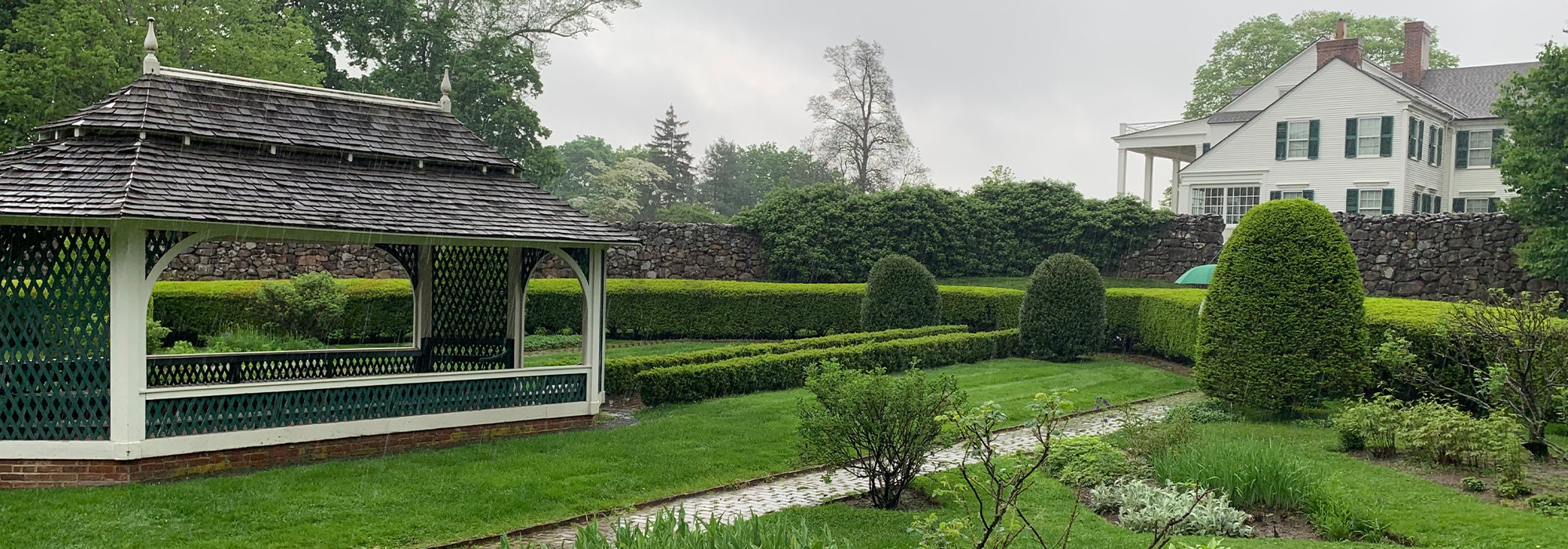
Returning to Farmington in 1890, Pope undertook the restoration of an eighteenth-century saltbox house: “The O’Rourkery.” She subsequently designed for her parents a 152-acre estate in Farmington called Hill-Stead (1901). The Popes hired McKim, Mead & White and landscape architect Warren H. Manning, but their daughter led the design process, creating a Colonial Revival residence that embraced the landscape’s naturalistic character. Pope designed other country homes, including Highfield (1911) in Middlebury, Connecticut, and Dormer House (1916) in Locust Valley, Long Island. In 1913 she opened an architectural office in New York City and, three years later, became one of the first women to receive an architecture license. That same year she married John Wallace Riddle, a former Russian diplomat. In 1920 the Woman’s Roosevelt Memorial Association commissioned her to reconstruct and add to Theodore Roosevelt’s birthplace in New York City. By 1927, expanding upon earlier design experience with the Westover School (Middlebury, 1906), she founded and designed the Pope School for Boys (now Avon Old Farms School) as a memorial to her father.
Riddle had a lifelong devotion to social reform. She passed away in Farmington at the age of 79. Her will stipulated that Hill-Stead be converted into a museum.