Landslide Update: Skyline Park
The legacy—both built and conceived—of Modernist landscape architecture has been an active topic for several decades and thoughts about it continue to evolve. Issues of stewardship and managing change are scrutinized in city councils, by design professionals, and among the users of these landscapes. Works by notable landscape architects are undergoing change. Take for example, the Dan Kiley-designed L'Esplanade du Général de Gaulle at Paris’ La Défense, which was featured in Landslide 2013: The Landscape Architecture Legacy of Dan Kiley and now is being redesigned by MDP Michel Desvigne Paysagiste. Last week in Denver, the groundbreaking took place for the redesign of the Lawrence Halprin-designed Skyline Park, which was first enrolled in The Cultural Landscape Foundation’s (TCLF) Landslide program in 2002.
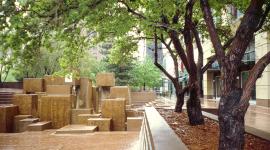
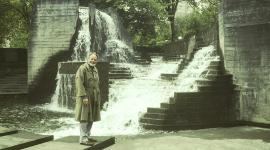
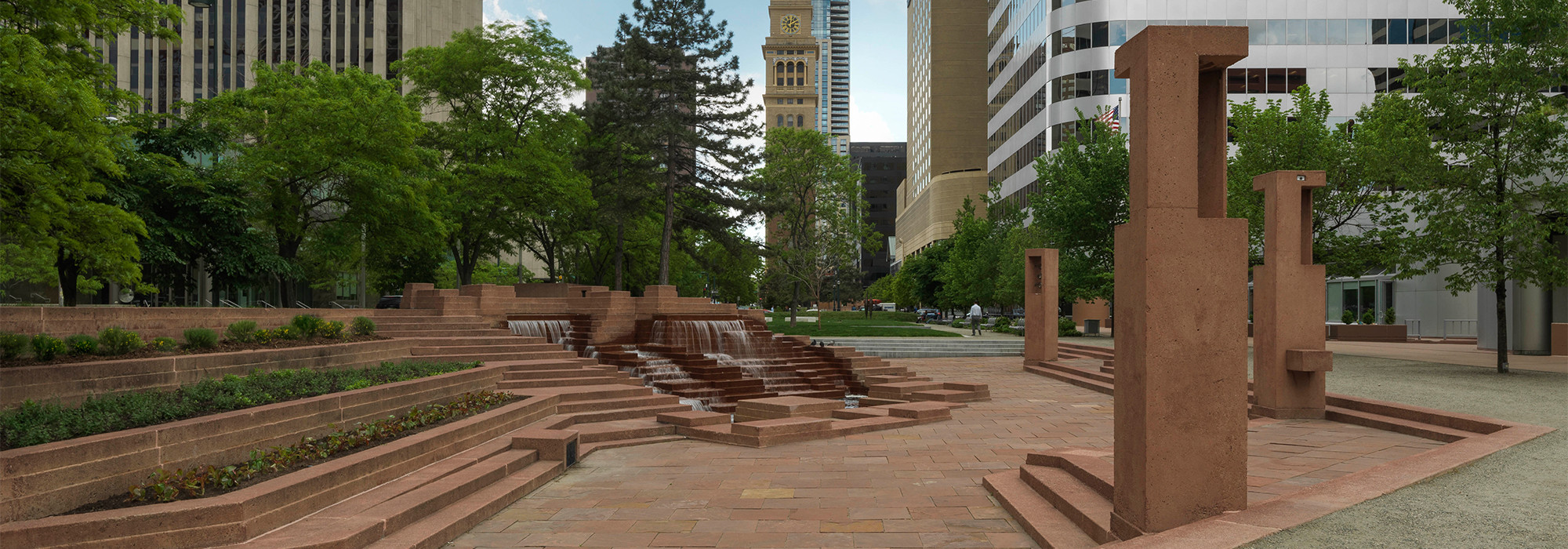
Planned and constructed between 1970 and 1975, Skyline Park was intended to serve as an urban oasis and gateway to the city’s central downtown. Measuring one acre and extending three blocks, it was recessed below street level, heavily planted along the edges, and punctuated by three canyon-like fountains inspired by arroyos (water channels) found in the city’s surrounding foothills. The park was initially successful, but by the late 1980s—slightly more than a decade after its completion—it was already suffering from deferred maintenance and neglect, a common affliction of Modernist landscapes. In 2003 Thomas Balsley Associates (now SWA/Balsley) redesigned the park, retaining two of Halprin’s original fountains.
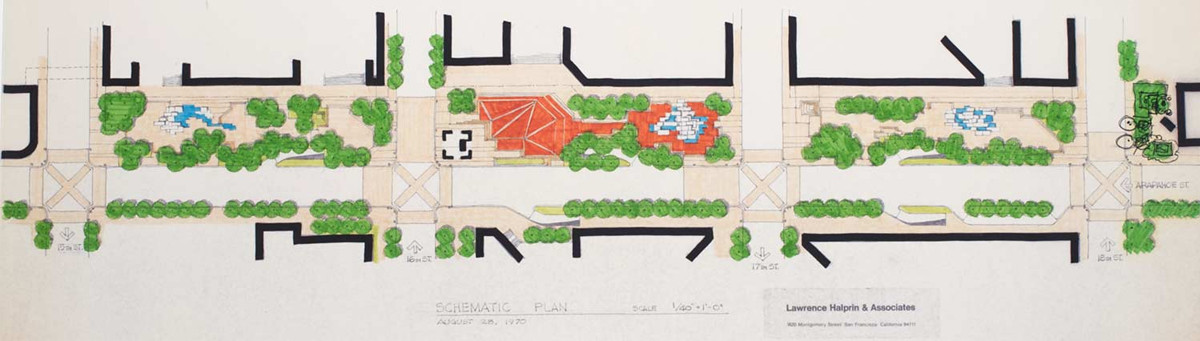
The award-winning monograph Lawrence Halprin’s Skyline Park, by Ann Komara, was published in 2012 as part of a three-volume series from Princeton Architectural Press and LSU Press, Modern Landscapes: Transition & Transformation (edited by TCLF’s Charles A. Birnbaum). With an essay by Laurie Olin and epilogue by Halprin himself, Komara’s book provides the most complete documentation available of the park’s conception, construction, and use before its first redesign in 2003. The park was also featured in the thematic report and traveling photographic exhibition Landslide 2016: The Landscape Architecture of Lawrence Halprin that debuted at the National Building Museum in Washington, D.C., in conjunction with the centennial of Halprin’s birth.
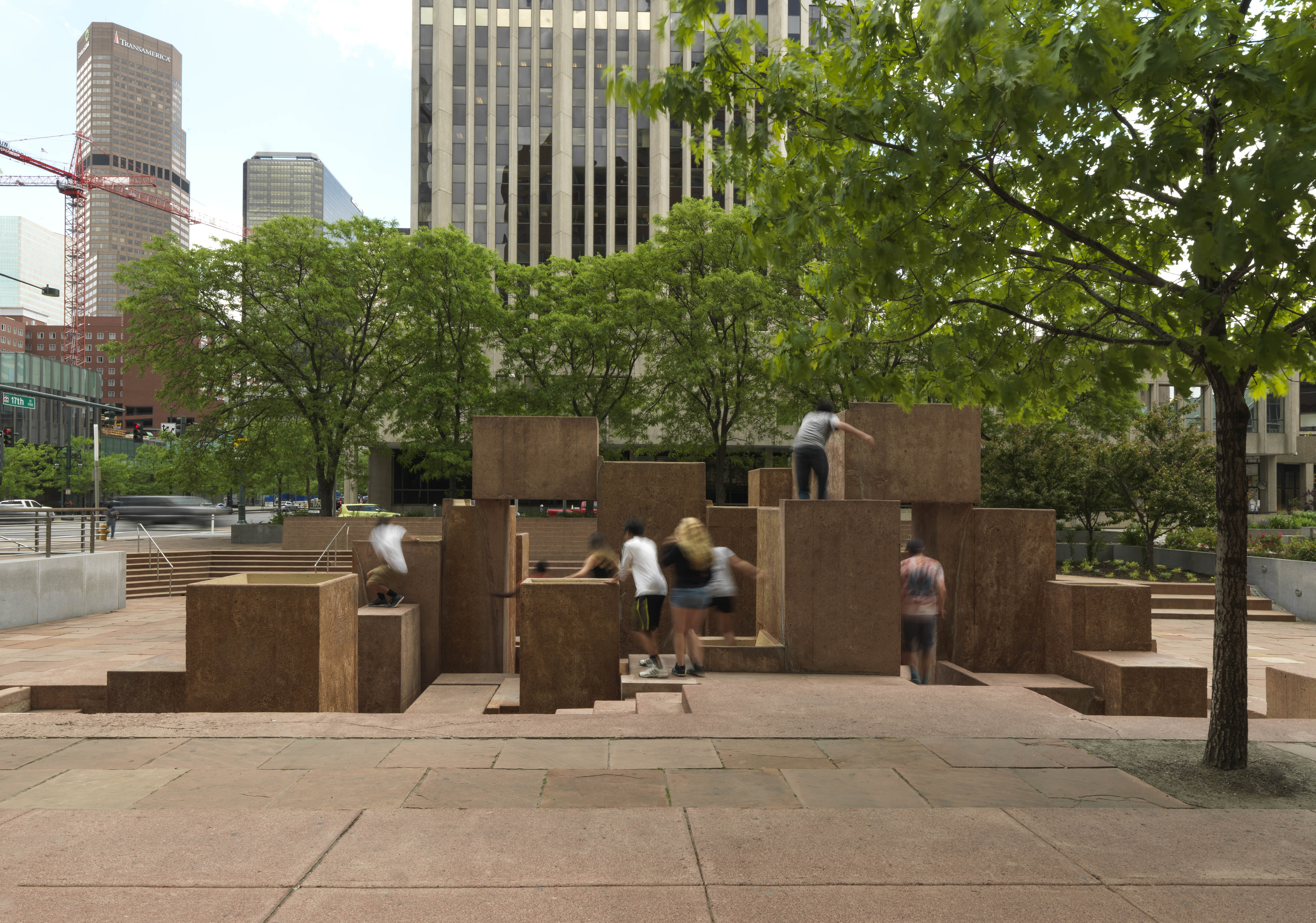
When new work was once again proposed in 2021, the city engaged Los Angeles-based landscape architecture firm RIOS and fountain consultant Fluidity—whose founder, James Garland, has written for TCLF about other Modernist works. In September of that year, TCLF urged the design team “to prioritize protecting and rehabilitating the two remaining fountains, which are likely eligible for listing in the National Register of Historic Places.”
Now, more than five years later, as reported by Denverite, the first phase of the project has begun and will focus on the park’s central section: Block 2 (located along Arapahoe Street between the 16th Street Mall and 17th Street). The design by RIOS retains the section’s remaining Halprin-designed fountain, which will be planted with, and surrounded by, native Colorado species. In addition to this “tiered garden,” Block 2 will include a café, stage, and central plaza—animated by a splash pad in the warmer months and by a skating rink in the colder season.
Recently, the city has announced that Block 1, the park’s westernmost section, will feature a synthetic turf soccer field, among other attributes. But Block 3, in the concept plan of 2021 (see pp. 28–29) does not reference the second Halprin-designed fountain at all. Is it safe to assume that the design of this block will eradicate it, rather than include it in the new plan?
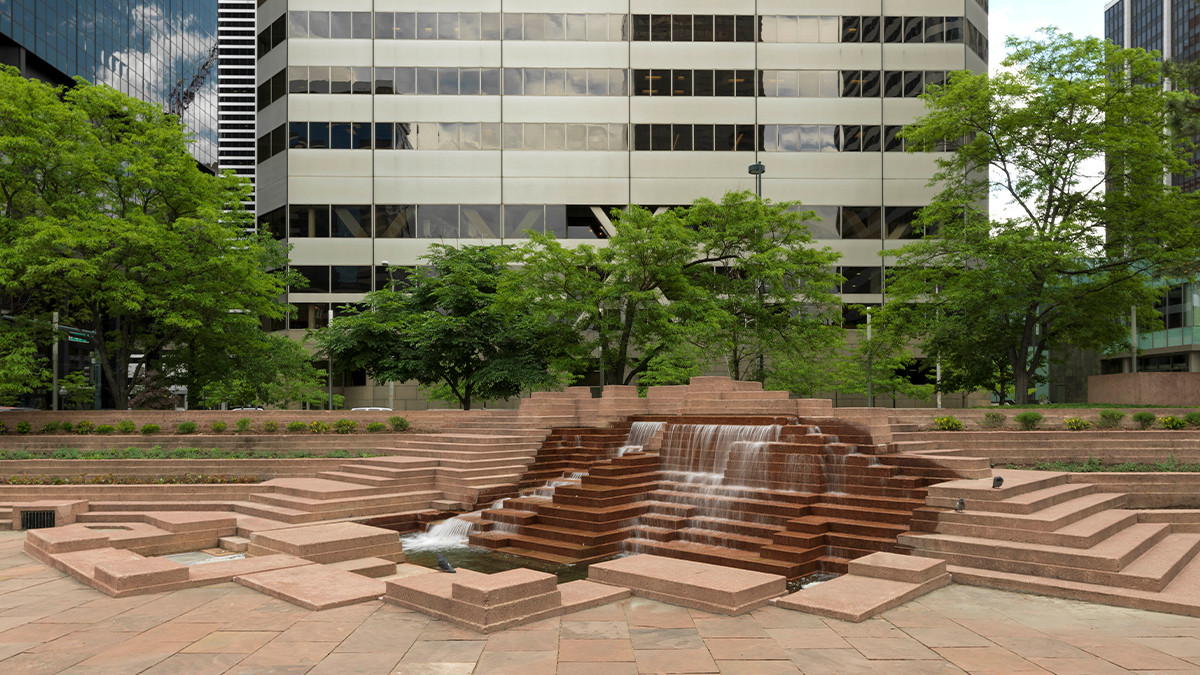
With the uncertainty of the design of Block 3, your voice can make a difference in the fountain's rehabilitation. The signature fountain, like the one in Block 2, retains a high degree of integrity and is worthy of stewardship that balances design with historic preservation. TCLF encourages letters of support to the organizations listed below.