Landscape Information
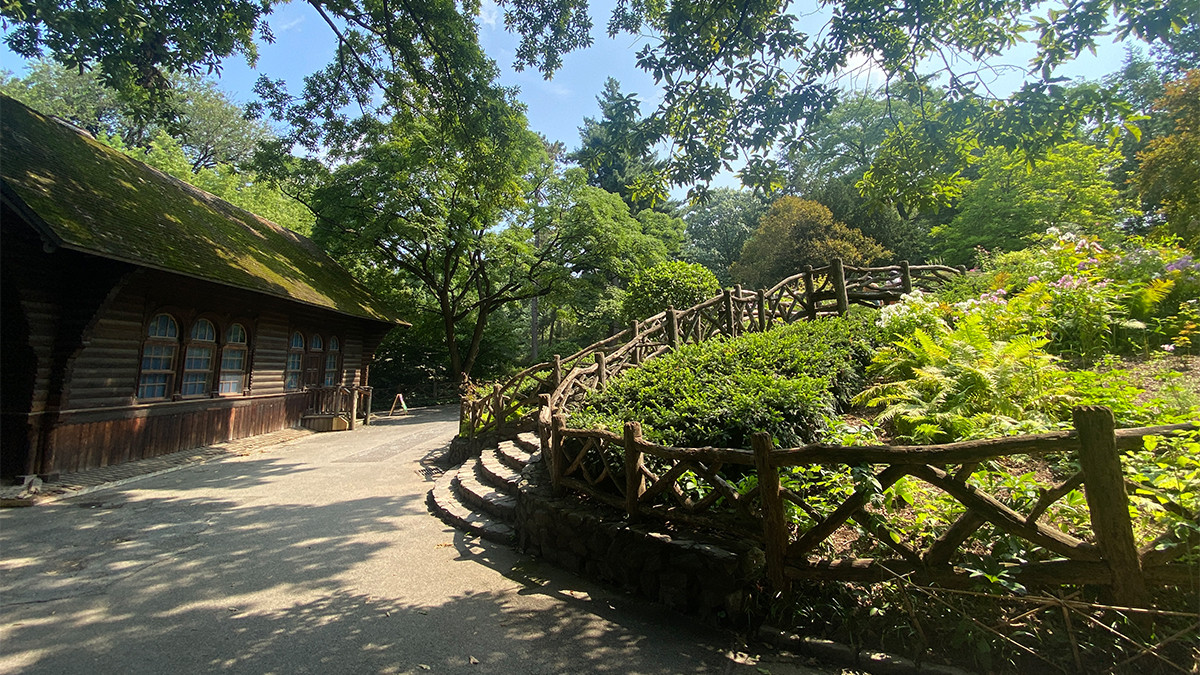
Perched above the 79th Street Transverse in Central Park, this four-acre, tear-drop shaped garden occupies a steep, rocky hillside that rises from the Swedish Cottage to Belvedere Castle. Envisioned by Parks Commissioner Charles B. Stover and created by botanist and entomologist Dr. Edmond Bronk Southwick in 1913 to educate schoolchildren, the site was originally planted with more than 100 flowering herbaceous species identified in the plays and sonnets of William Shakespeare. Three years later the garden was renamed to commemorate the Bard on the tercentenary of his death—an anniversary that sparked an international craze for such designs. By the 1980s the garden had suffered from neglect and deferred maintenance; in 1986 the Central Park Conservatory engaged landscape architect Bruce Kelly of the firm Bruce Kelly/David Varnell to rehabilitate it.
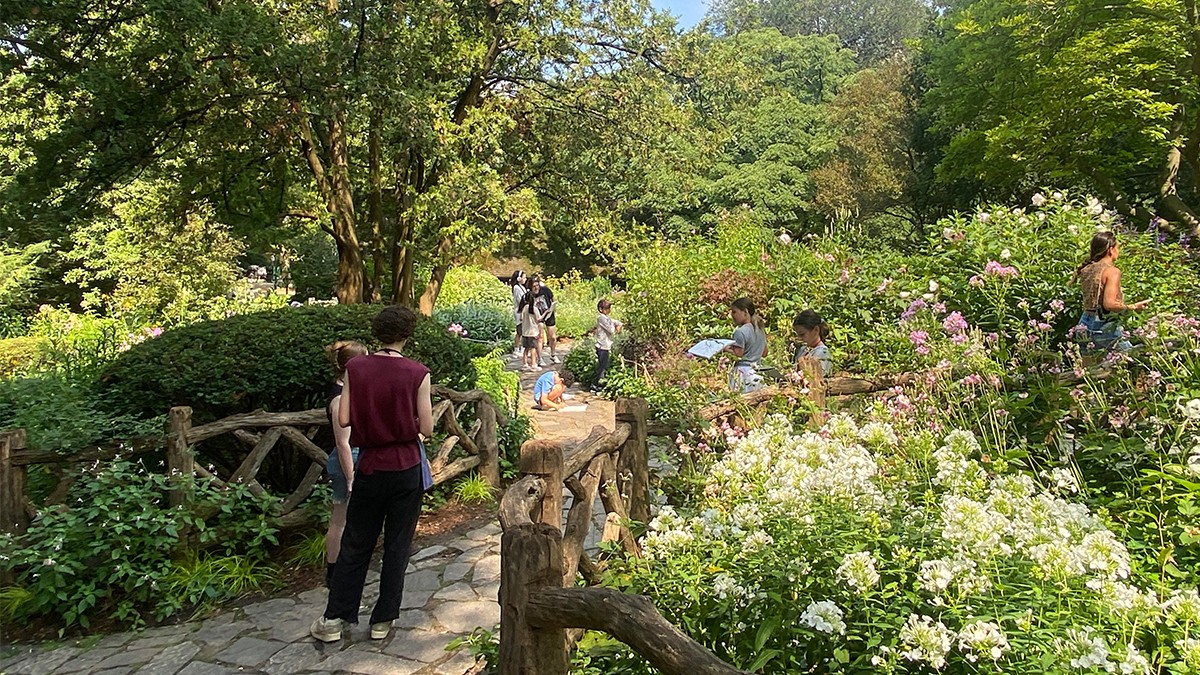
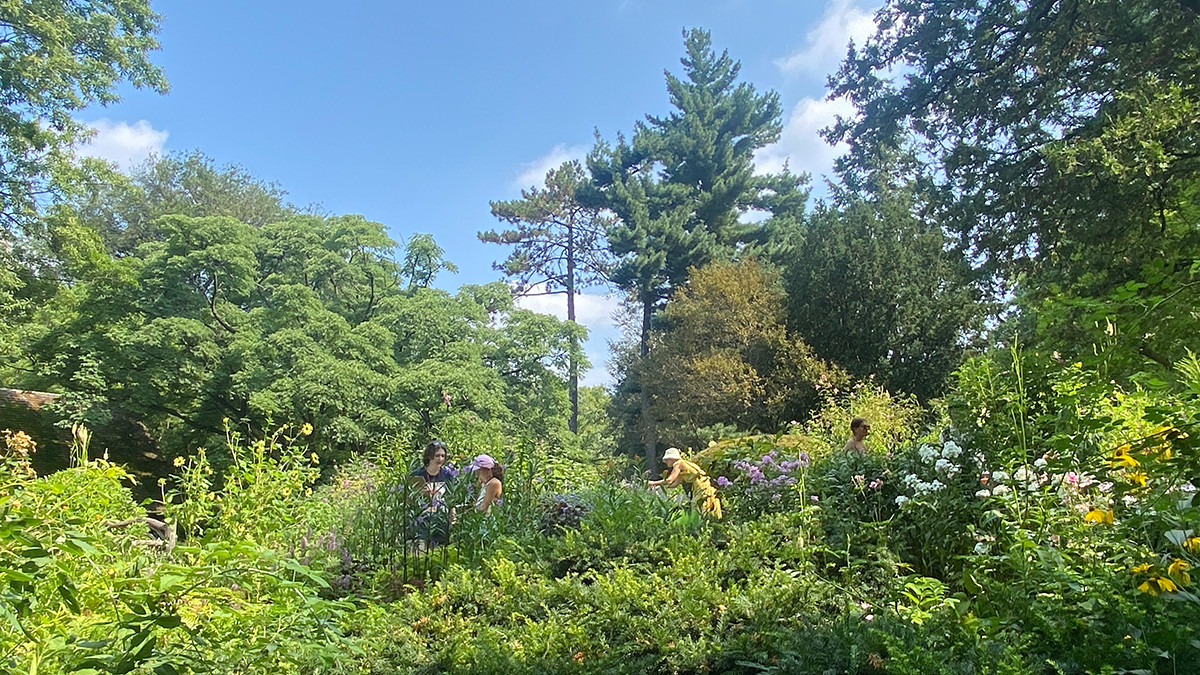
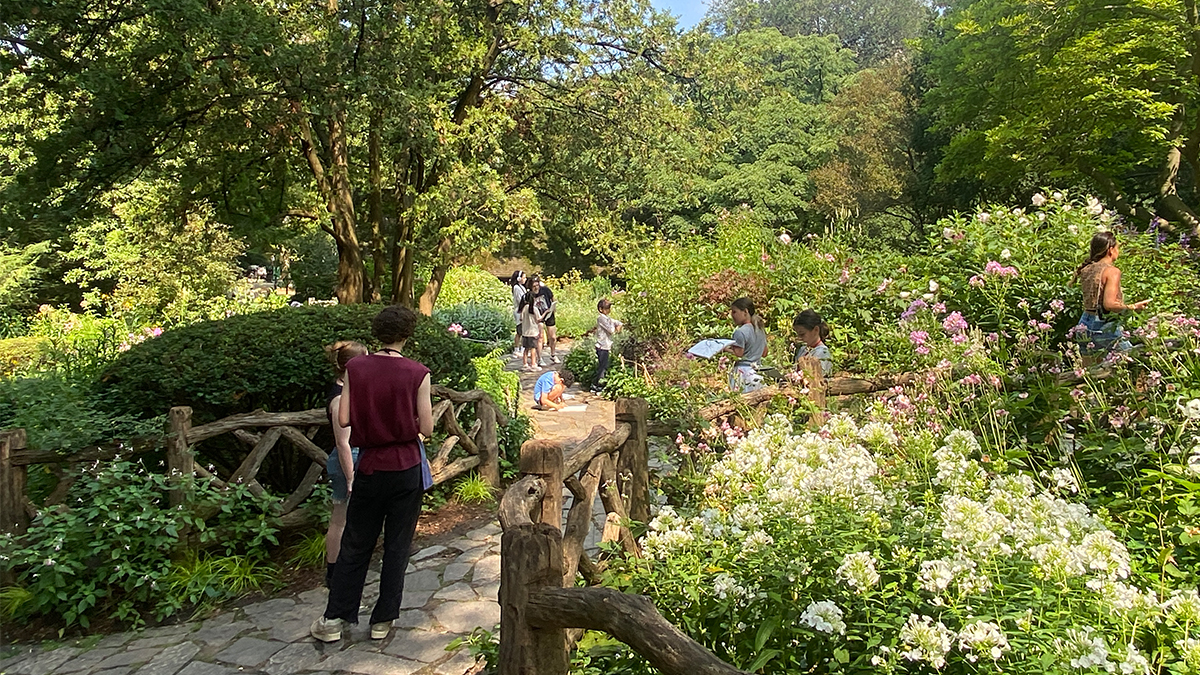
Kelly’s design preserved existing plant specimens—including a historic Mulberry (no longer extant), apple, and hawthorn trees—and established 160 varieties of trees, shrubs, perennials, and herbs mentioned in the works of Shakespeare or known in Elizabethan England. Kelly located plaques throughout—each inscribed with botany-related quotations by Shakespeare—and created rustic wooden fences and benches.
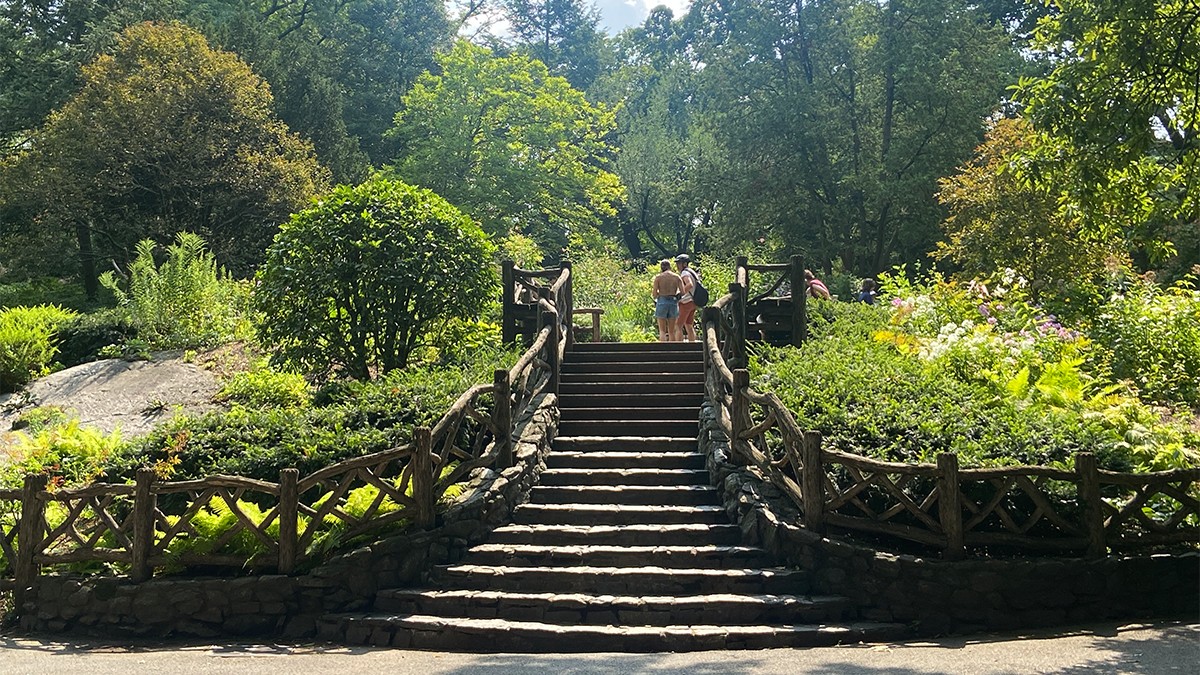
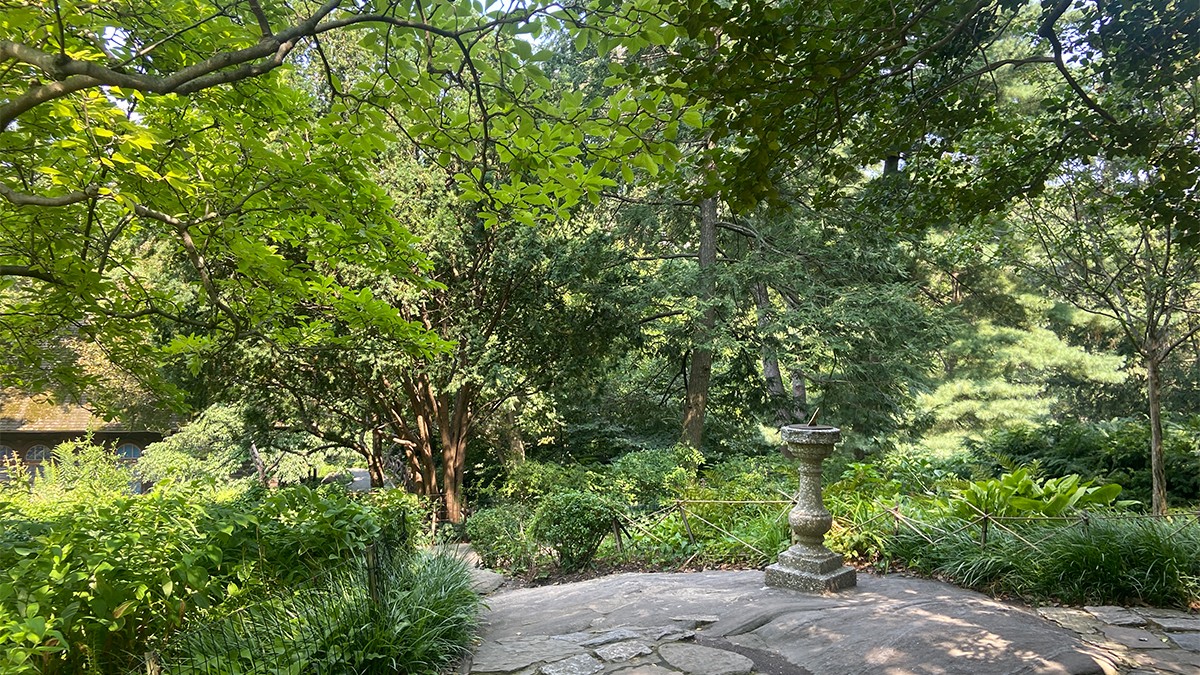
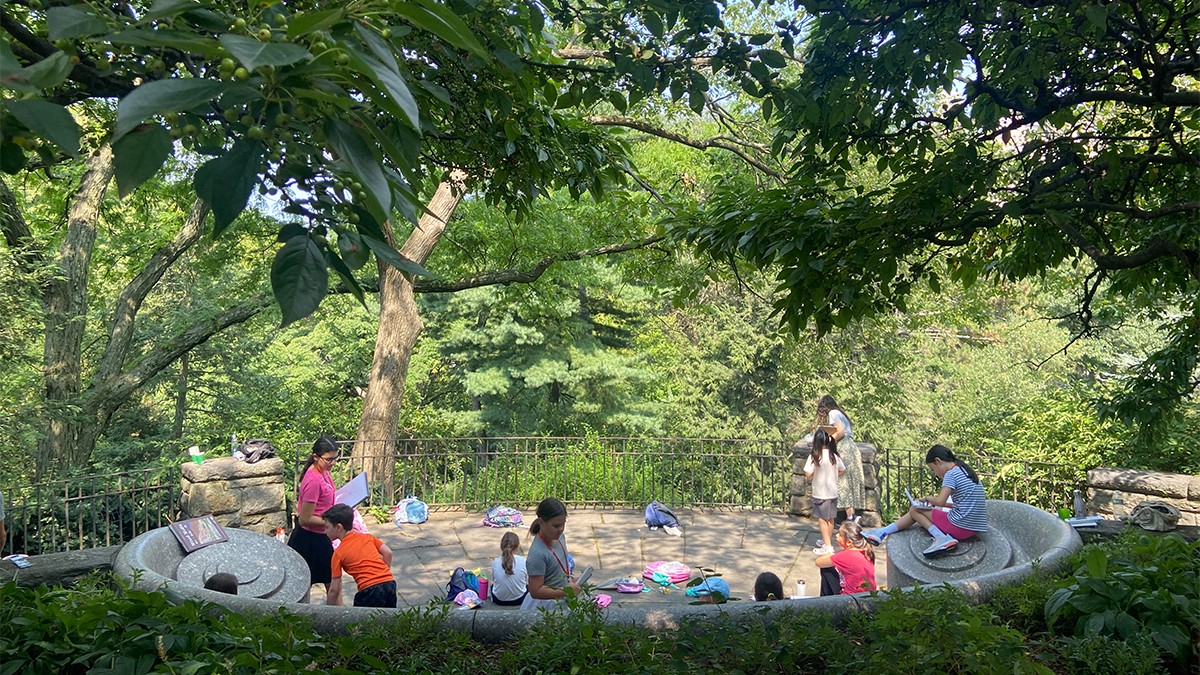
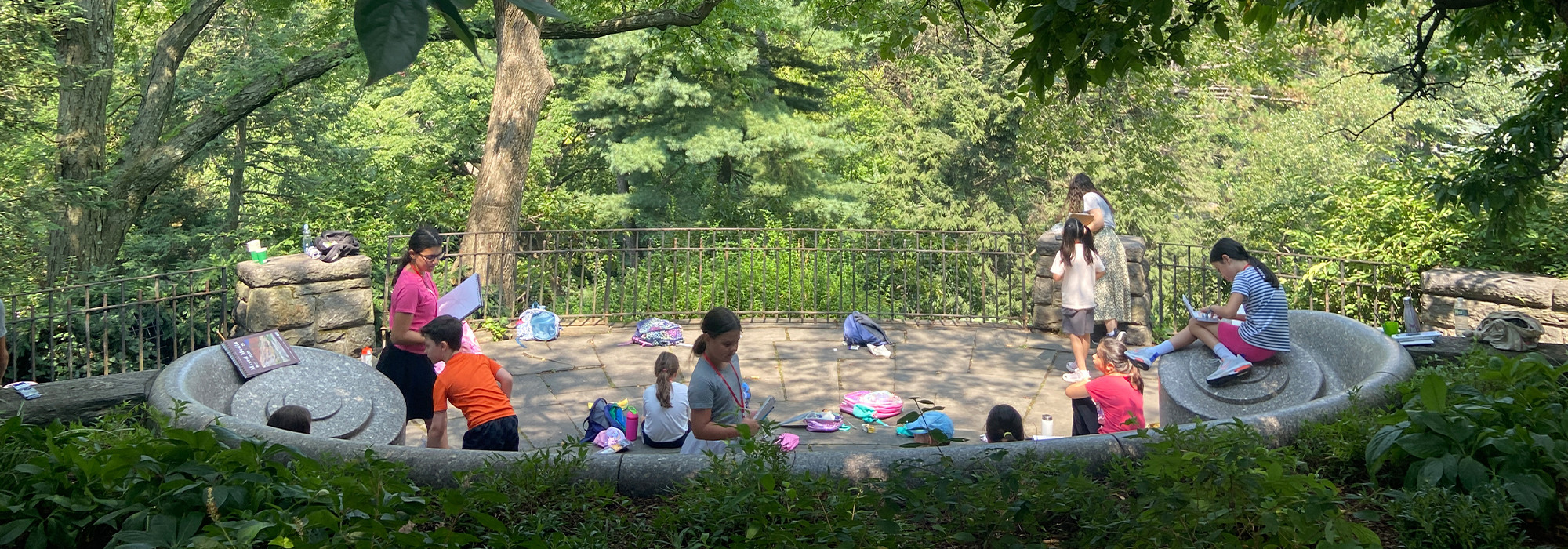
Retaining the existing perimeter path, Kelly redesigned the garden’s interior, laying out irregularly shaped planting beds, stone stairways, and curvilinear walkways paved with granite flagstone. Accessed from the west, a generous staircase leads to wending walkways that ascend the steep slope and terminates at a circular terrace. The latter offers views of the garden below and features a semi-circular granite bench (1936) dedicated to Stover. East of the terrace are borrowed views of Belvedere Castle, evoking imagery from several of Shakespeare’s plays, including King Lear, Richard III, Hamlet, and Macbeth.
The project received a Merit Award in Design from the American Society of Landscape Architects in 1991.