The Landscape Legacy of the Mid-and Upper Hudson Valley
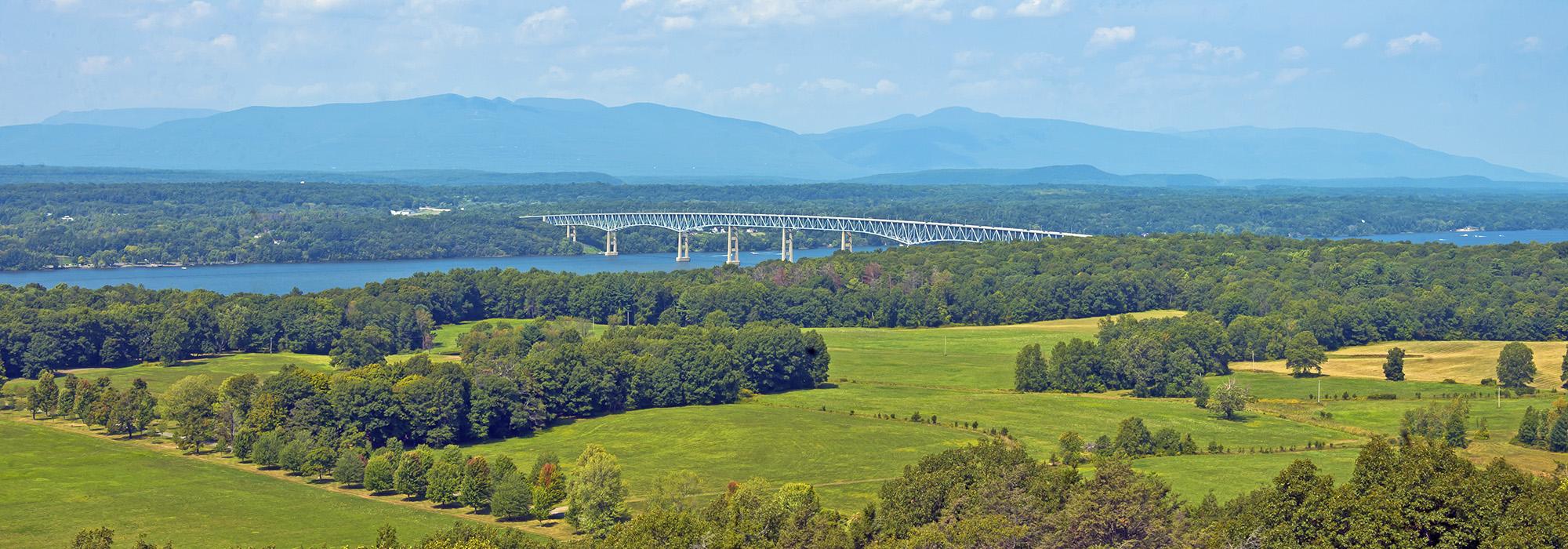
The Hudson River forms the backbone of the Hudson Valley, extending from Westchester County, north of Manhattan, to Albany’s Capital District, approximately 150 miles upstream. First created in 2023, this expanded guide includes sites located in the Upper Hudson Valley (Columbia, Greene, Albany, and Rensselaer Counties) and the Middle Hudson Valley (Dutchess, Orange, Putnam, and Ulster). This iteration makes visible and instills value in the region’s distinctive and unrivaled cultural landscape legacy. It is anticipated that in the coming years the guide will be expanded to include a diversity of sites in the Lower Hudson Valley.
From Glaciation to Revolution
When Henry Hudson was engaged by the Dutch to find a faster route to the Orient in 1609, the English explorer instead stumbled upon a tidal river and valley that now bears his name. Physically shaped during and after the most recent glaciation event that ended approximately 10,000 years ago, the region impressed Hudson’s first mate, who wrote about its abundant natural resources and land ideal for cultivation. Hardly a tabula rasa, the landscape was shaped over centuries by members of the Algonquin Federation, the Haudenosaunee Confederacy, and the Munsee Lenape, who employed controlled-burning techniques to create agricultural fields and established trails that were ultimately utilized and developed by non-native settlers. The first of these to claim land were the Dutch, who called the region New Netherland. In 1614 they established both a military stronghold at present-day Albany and a base for fur trading operations.
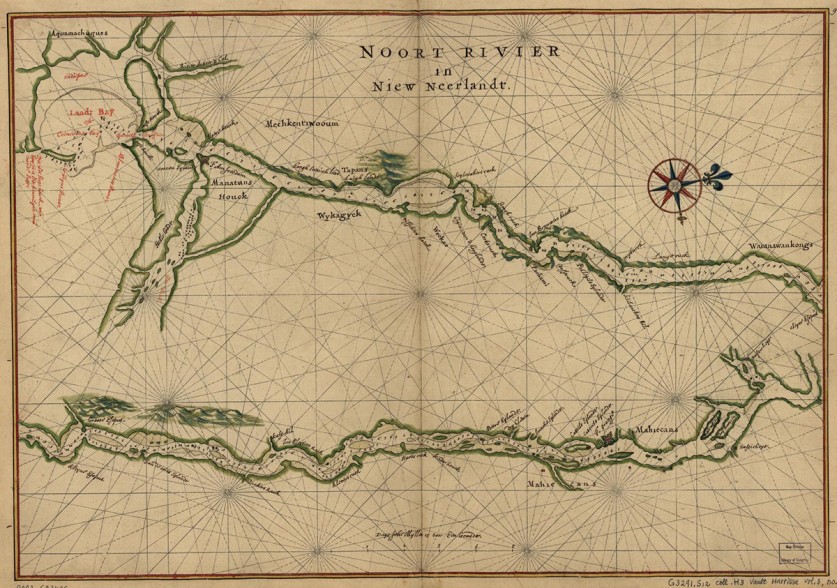
By 1664 Dutch rule had come to an end (except for a brief period from 1672 to 1674) and the Hudson Valley passed to the British, who designated the colony as part of the Province of New York. In 1683 the British established twelve counties in the region and settlements were established along the river between Manhattan and Albany. Under English rule men could acquire a grant—or patent—which they could then lease to tenants. This manorial system gave a relatively small number of landlords (or manor lords) control over their tenants, much like a feudal system.
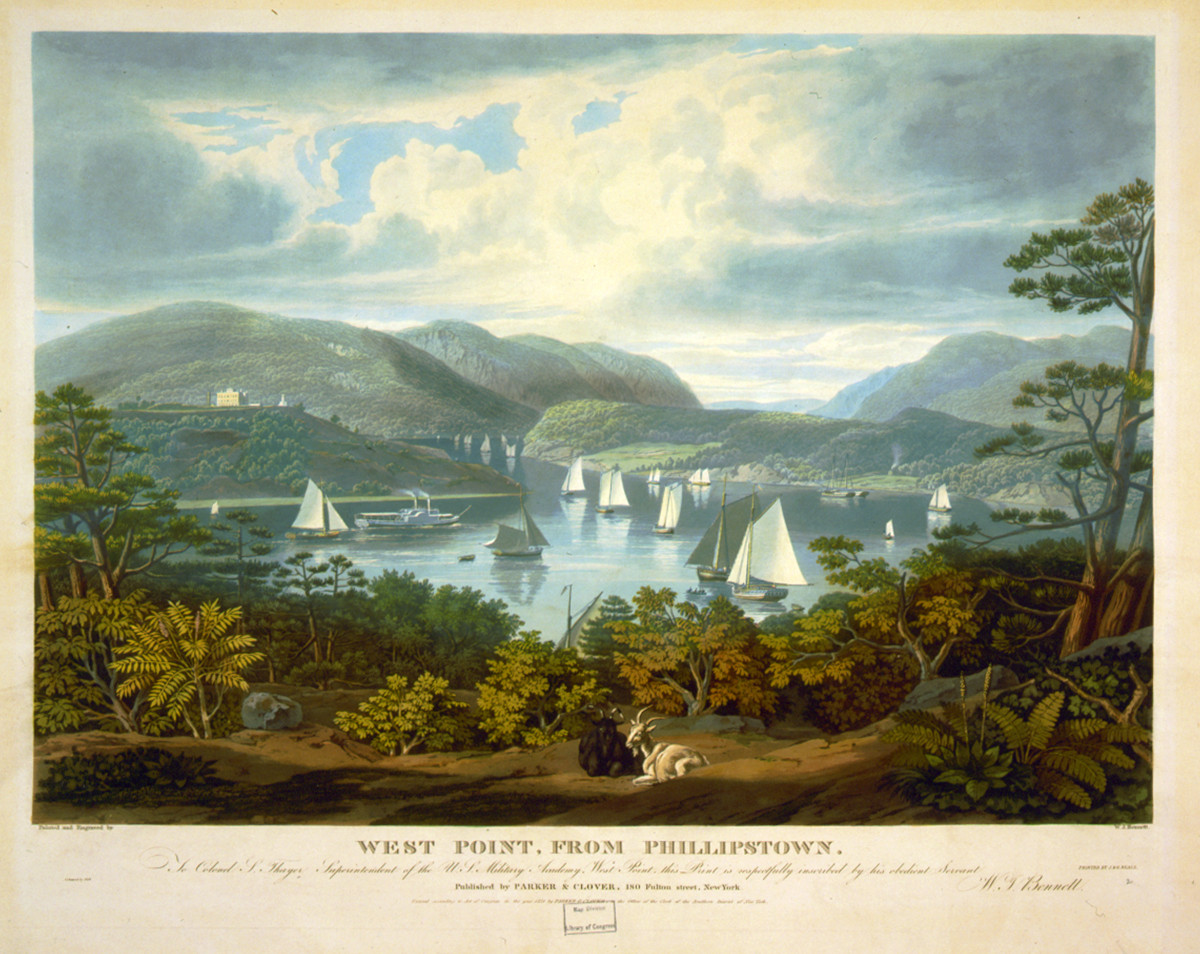
During the Revolutionary War, several sites in the Hudson Valley were valued for their strategic locations and as agricultural hubs, leading George Washington to refer to the region as the “key to victory.” The Hudson River played an integral role throughout the war, with significant sites established along its banks. Washington positioned his headquarters on a prominent hill at Newburgh, and approximately eight miles downstream developed a stronghold (now United States Military Academy West Point).
Many enslaved Africans fought during the national struggle for independence and were often sent into battle. Although the New York Manumission Society was founded after the war in 1785, slavery was still prevalent. Among the slaveowners were members of the New York elite who inherited or purchased property on the eastern shore of the Hudson River, displacing yeoman farmers.
Against the backdrop of general acceptance of slavery in the late-eighteenth century, a community of free African Americans and emancipated individuals developed in present-day Hyde Park (Hackett Hill Park). Referred to as the New Guinea Community, the settlement provided refuge through the early to mid-nineteenth century, eventually disbanding following the Civil War.
In the nineteenth century African Americans shaped several estate landscapes throughout the region, including Montgomery Place and Mount Gulian Historic Site. At the former property, Alexander Gilson—born into enslavement—oversaw the nurseries for more than 50 years. At the latter James F. Brown—manumitted by the Verplanck family—managed the site’s garden for decades.
Landscape as Art
Just as the valley helped determine the outcome of the War for Independence, it influenced national taste throughout the subsequent century. Artists and writers came: Thomas Cole—who made his home (now the Thomas Cole National Historic Site) in Catskill—championed the river and the Catskill Mountains, establishing the Hudson River School artistic movement. He and others, including students Frederic Edwin Church and Asher Durand, painted vivid and dramatic scenes inspired by or depicting the region. Such writers as Washington Irving and James Fenimore Cooper drew from local history and folklore. The many artists and writers who depicted the region helped shape public taste and attitudes toward scenic resources and the natural world, making the Hudson Valley a must-visit destination and place to live.
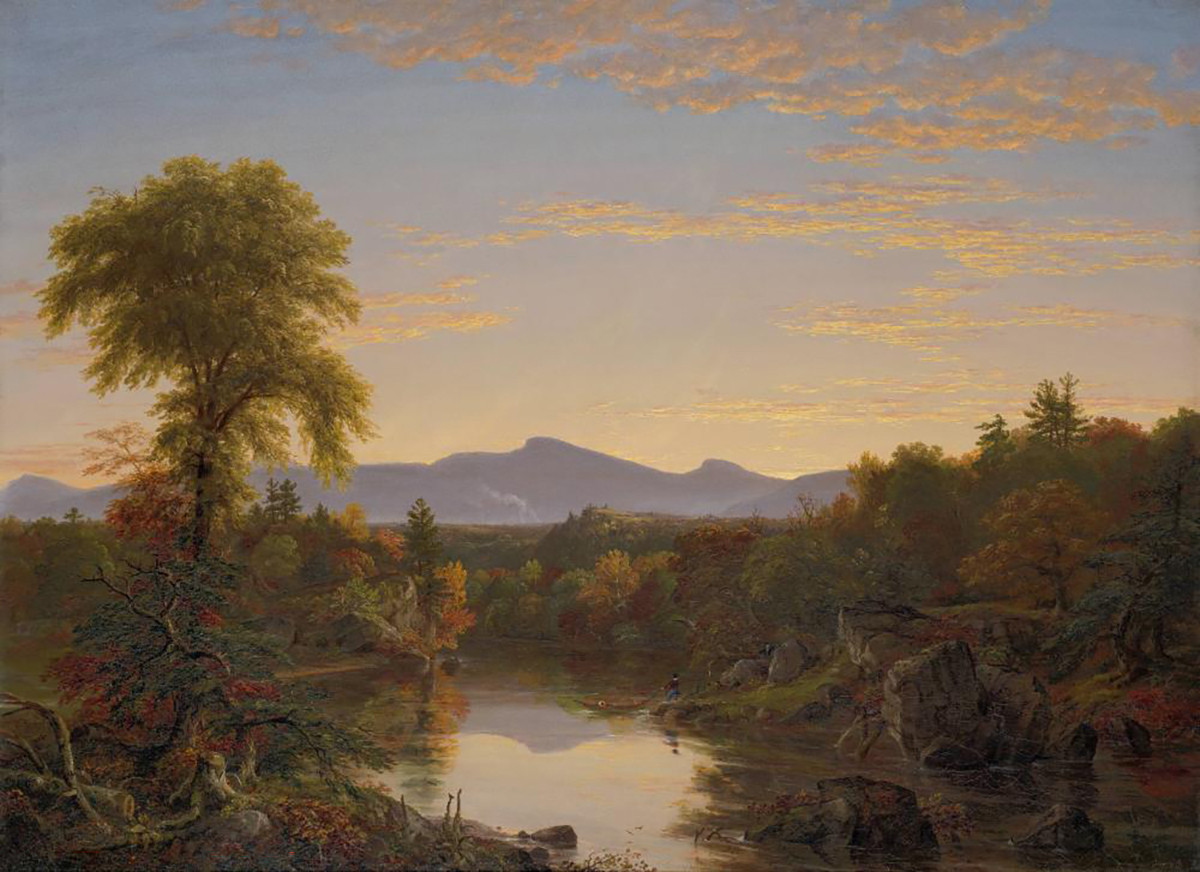
American aesthetics were shaped not only by the region’s novelists, poets, and painters, but also by landscape gardeners, and horticulturists.
In 1828, four years after he emigrated to the United States from Belgium, André Parmentier introduced the European Picturesque style to an American audience with his design for professor, physician, and botanist Dr. David Hosack’s Hyde Park estate. There, Parmentier laid out walks and drives following the site’s topography and strategically sited vantage points to afford expansive, borrowed views. The estate survives today as the Vanderbilt Mansion NHS, one of the earliest extant Picturesque style landscapes in America.
Hudson Valley native Andrew Jackson Downing inspired and influenced national taste through his practice and his writing. He edited The Horticulturist magazine (1846–1952) and published four books in nine years, including the influential Treatise on the Theory and Practice of Landscape Gardening (1841) and The Architecture of Country Houses (1850). In 1850 he traveled to England and returned to the Hudson Valley with architect Calvert Vaux. The pair collaborated on projects throughout the region, including Matthew Vassar’s ornamental farm, Springside, in Poughkeepsie.

Downing’s writings and built landscapes established the Hudson Valley as the pastoral ideal, serving as a model for his readers’ own villa residences and home grounds, shifting the culture away from classical architecture and geometric gardens to less formal ones, which he described as “Beautiful” and “Picturesque” in character.
Downing’s aesthetic ideals had a profound impact on his peers. His friend Henry Winthrop Sargent, for instance, practiced landscape gardening and horticulture at his Woodenethe estate, designed the grounds of St. Luke’s (now St. Andrew and St. Luke Episcopal Church), and penned a supplement to the 1859 edition of Downing’s Treatise.
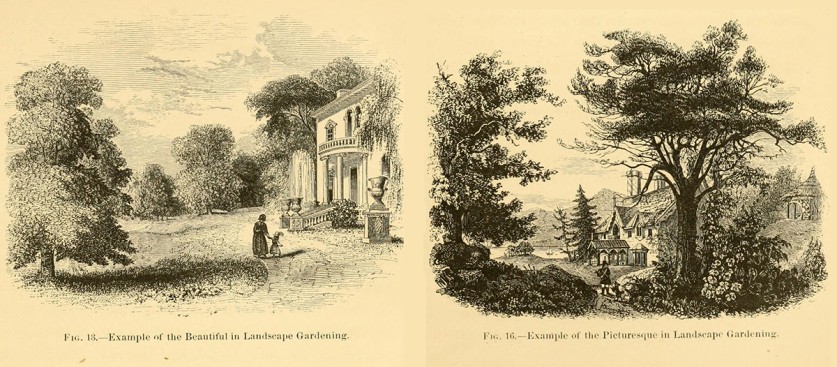
Downing also collaborated with architect Alexander Jackson Davis, who designed estates throughout the Hudson Valley, including Lyndhurst in Tarrytown and Montgomery Place in Annandale-on-Hudson. At the latter, landscape gardener Hans Jacob Ehlers established an arboretum in 1849 and also improved the grounds of Rokeby in nearby Barrytown. Ehlers purportedly designed the initial layout of the Ferncliff estate in Rhinebeck, which was later developed by his son Louis Augustus Ehlers.
In Poughkeepsie, Davis collaborated with the painter and inventor Samuel F. B. Morse to develop Locust Grove, according to Picturesque principles. There, Morse selectively established pastures and wooded lots to create a painterly scene visible from his Italianate villa perched atop a riverside bluff.
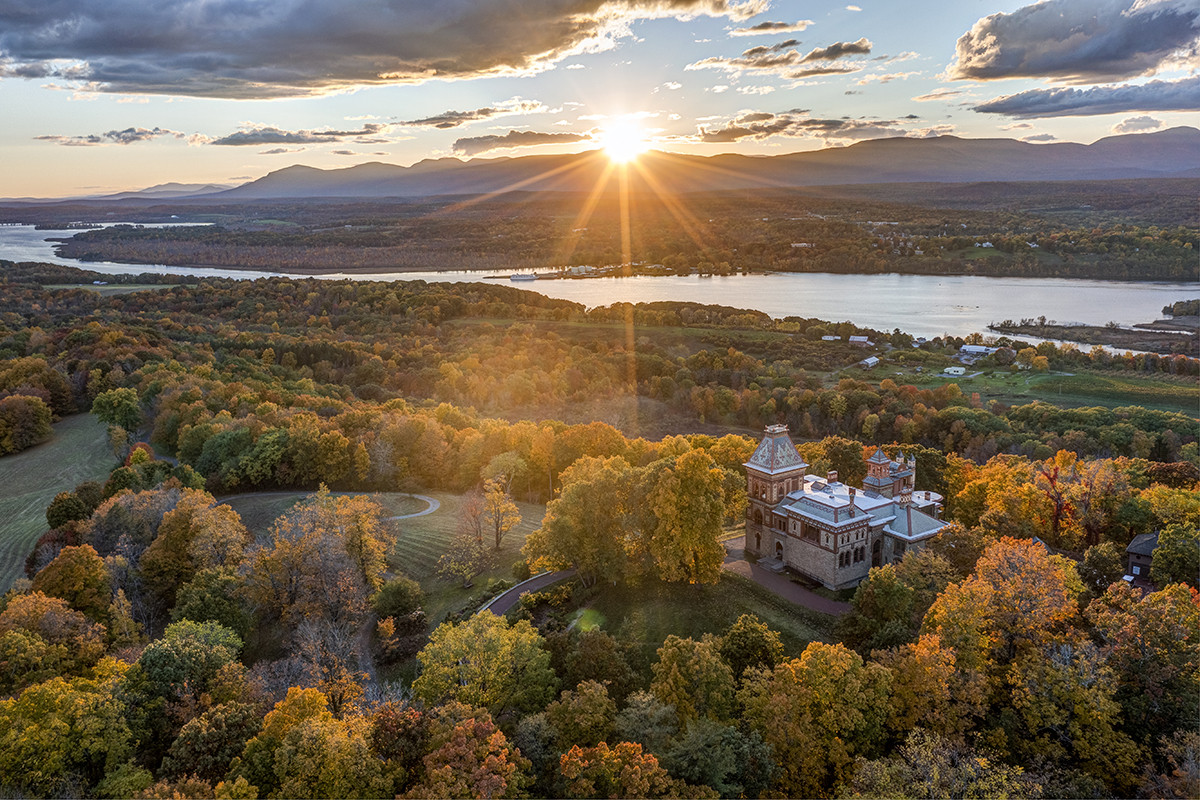
After Downing perished in a steamboat fire in 1852, Vaux continued to practice in the Hudson Valley, partnering with architect Frederick Clarke Withers. In 1855 Vaux designed the estate of Lydig Hoyt and his wife Blanche Livingston, located on a Hudson River promontory in the hamlet of Staatsburg (Hoyt House), and in 1869 was engaged by Frederic Edwin Church to collaborate on the design of the painter’s hilltop residence, Olana, showcasing not just the estate’s cultivated fields and woodlands, but also “borrowed” views to the river and mountainscape.
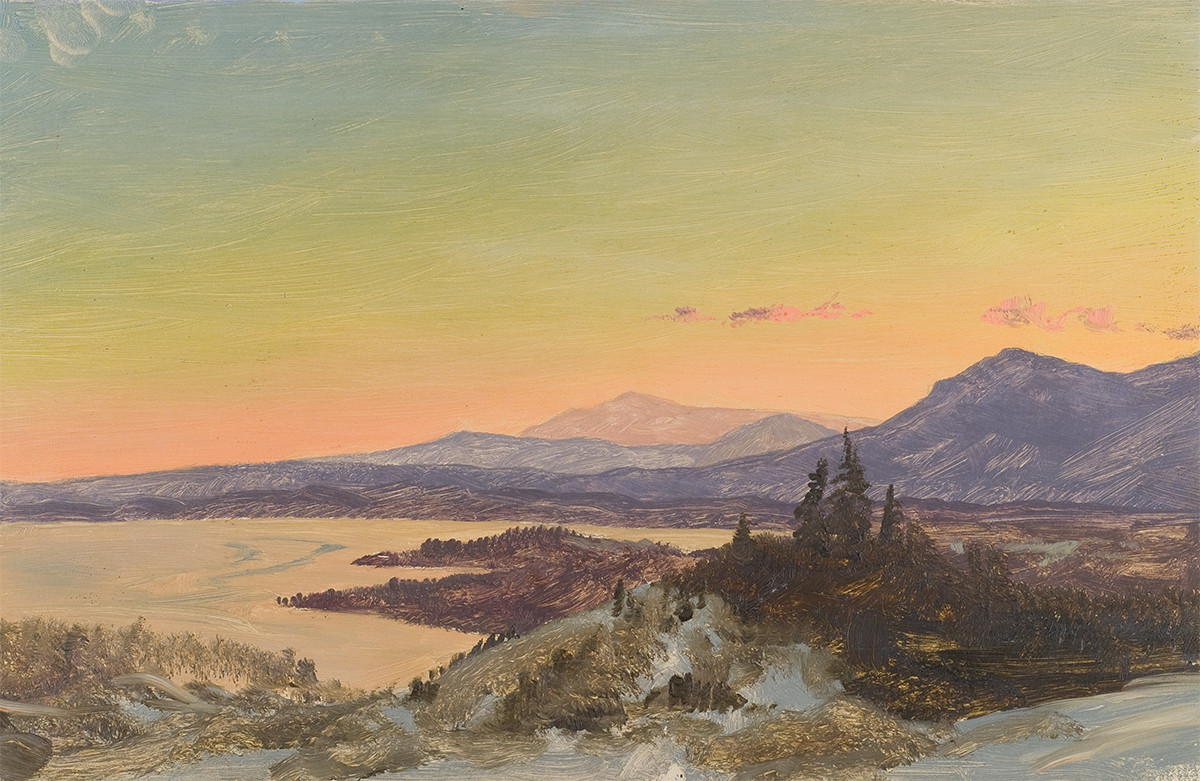
The Picturesque tradition continued to be advanced by a new generation of practitioners by the late nineteenth century and into the twentieth, particularly in parks in and around Albany. In 1859, Washington Park was transformed from a military parade ground into a predominantly naturalistic park. Newburgh native and landscape architect Charles Downing Lay designed Swinburne Park in 1913 and in the same year worked closely with architect Arnold Brunner to create a master plan for Lincoln Park. Six years later, Lay created curvilinear drives and lakes in Frear Park, advancing an earlier configuration that included the city’s waterworks.
Commemoration in the Hudson Valley
The region abounds with eighteenth- and nineteenth-century vernacular cemeteries and burial grounds, several of which bear witness to the region’s African American population, including the Persons of Color Cemetery at Kinderhook and the Slave Cemetery of the Storm Family in Stormville. Following the 1831 opening of Mount Auburn Cemetery in Cambridge, Massachusetts, several Picturesque cemeteries developed in the Hudson Valley, including Albany Rural Cemetery by David Bates Douglass and John Hillhouse in the 1840s; Poughkeepsie Rural Cemetery (1853) by Howard Daniels; and Hillside Cemetery in Middletown, designed by Vaux and Frederick Law Olmsted, Sr., in the 1860s.
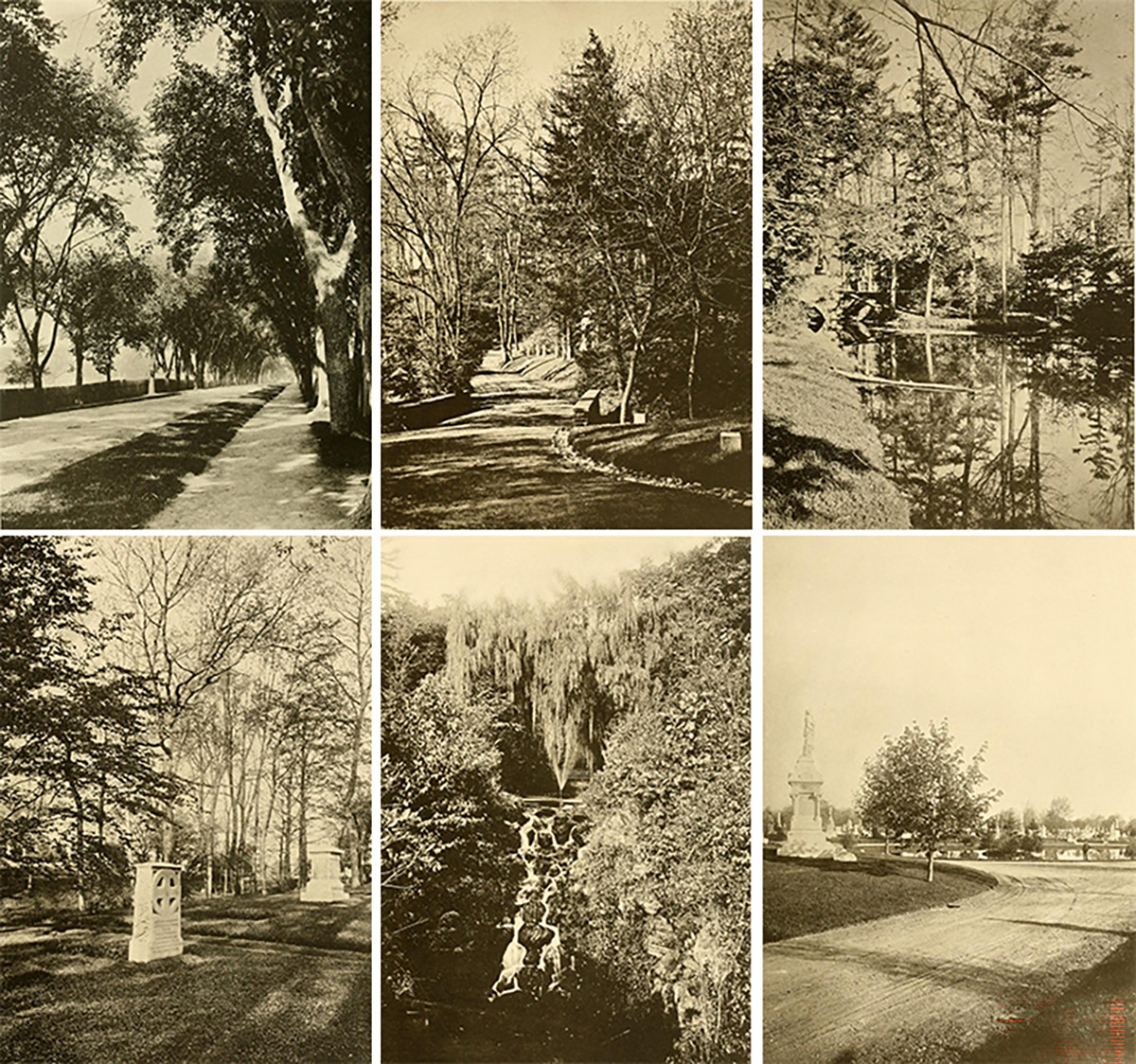
After the Civil War, monuments were erected throughout the region to commemorate the fallen. In Poughkeepsie a decorative fountain inscribed with the words, “To The Patriot Dead,” was sited in a modest triangular green (Soldiers' Memorial Fountain and Park) and at The United States Military Academy West Point, the architectural firm of McKim, Mead & White designed a prominent monument to remember fallen Civil War soldiers.
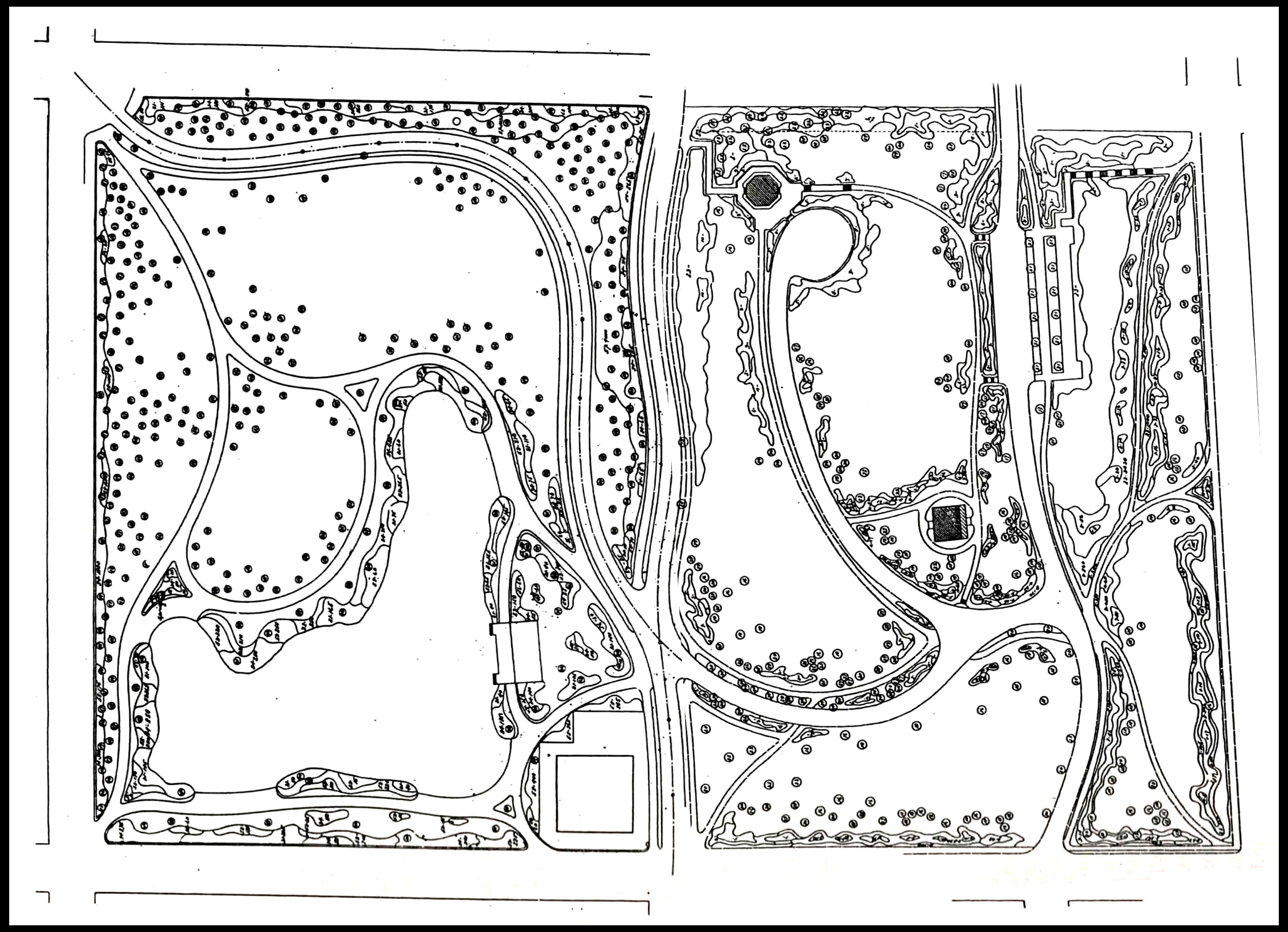
In the 1890s Vaux and Olmsted again returned to the region, donating their time to design a commemorative landscape in honor of Andrew Jackson Downing. Located in Newburgh, Downing Park is distinctive as the duos’ last collaboration and the only project that included their sons, Downing Vaux and John Charles Olmsted.
Changing Tides
Up and down the river, the nineteenth century was also marked by industrial and technological innovation that shaped the regional and national economy. In 1807 inventor Robert Fulton launched the world’s first viable steamboat off the West Side of Manhattan, revolutionizing trade and travel. The Erie Canal (1825) hastened the settlement of Midwestern territories, facilitating the movement of goods and people. The Croton Aqueduct (1842) provided Manhattan with potable drinking water, and, by 1851, a railroad skirted the eastern shore of the Hudson River, connecting Manhattan with Albany’s Capital District.
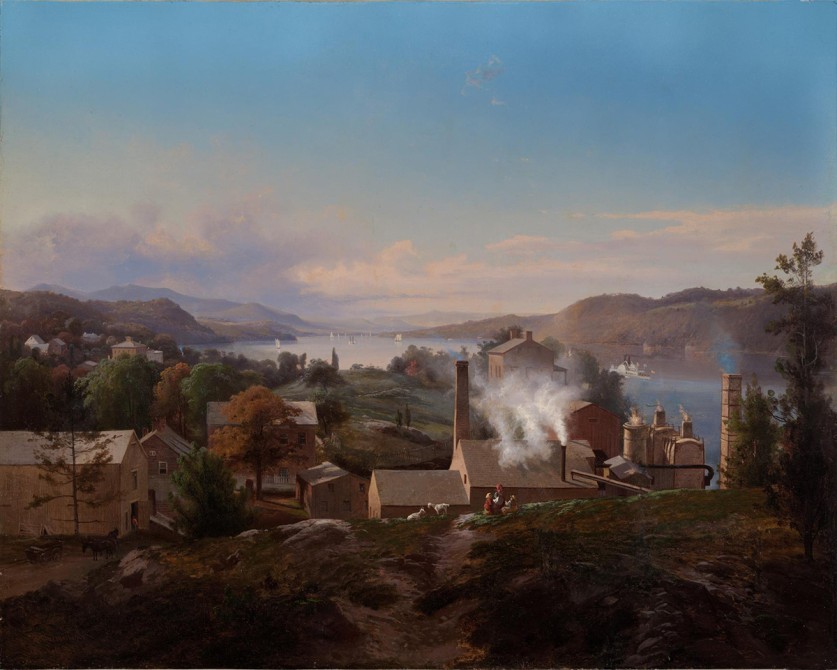
The manorial system was abolished in 1846 and the advancements in trade and technology transformed the formerly agrarian economy. In the late-nineteenth and early twentieth century, robber barons and their heirs acquired riverfront properties, and engaged prominent architects to either redesign existing structures or create new, palatial mansions atop rises and riverfront bluffs --affording panoramic views while simultaneously showcasing wealth and status.
By the late 1920s, more than 30 grand mansions were sited near the river, primarily on its eastern shore and often accompanied by formal gardens. One such estate, Riverby, was established by essayist and nature writer John Burroughs in 1873. However, two decades later, he established a nearby secluded, woodland retreat, Slabsides. There, he wrote about nature, hosting such luminaries as John Muir and President Theodore Roosevelt.
Theodore Roosevelt’s fifth cousin, Franklin Delano Roosevelt, was born and raised just two miles south of Riverby at the Springwood Estate (now Home of Franklin D. Roosevelt National Historic Site) in Hyde Park. Like Burroughs, Roosevelt was shaped by cultural landscape encounters, instilling in him a love of nature that shaped his conservation ethic. In 1915, as an adult, Roosevelt and his mother engaged the architecture firm Hoppin & Koen to redesign the estate. The firm transformed the residence—the birthplace, and home of the future President—from an Italianate villa to a Georgian-Revival mansion.
Roosevelt followed a tradition of gentleman farmers while also nurturing a passion for agroforestry. Over a 35-year period he planted nearly half a million trees, forming a commitment to forestry and conservation that he maintained throughout his life. As New York governor and subsequently as Commander in chief, Roosevelt, with wife Eleanor, championed forestry and its public benefits. In 1933, shortly after becoming President, Roosevelt formed the Civilian Conservation Corps (CCC) to create jobs and lift the nation out of the Depression. Known as “Roosevelt’s Tree Army,” the CCC employed more than 2.5 million young men for nearly ten years, establishing roads and trails, and reforesting large swaths of land including Mills-Norrie State Park in Staatsburg.
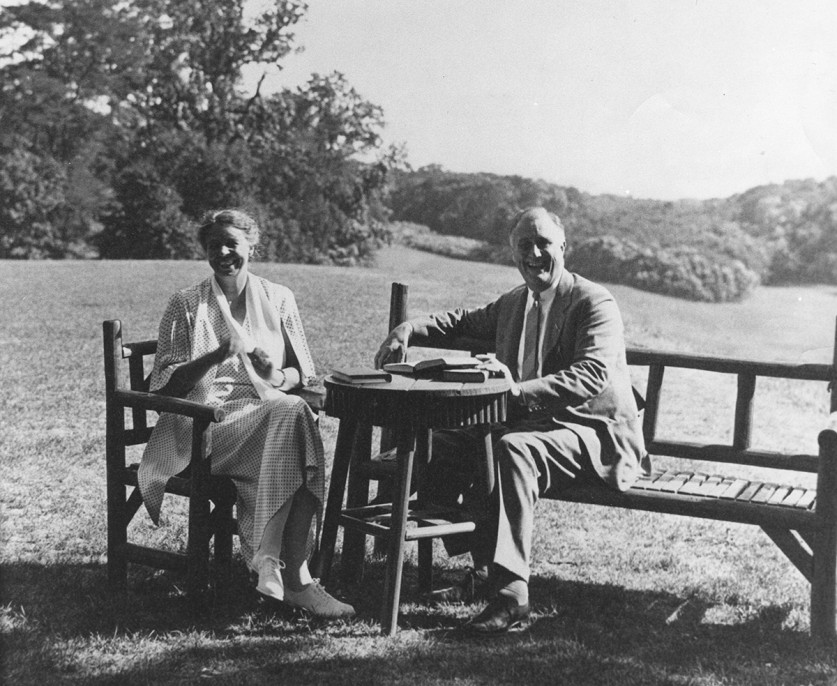
Eleanor Roosevelt similarly found solace in, and inspiration in the region’s bucolic surroundings at Val Kill (Eleanor Roosevelt National Historic Site). There she formed a joint business venture with friends Marion Dickerman and Nancy Cook, employing local farmers and craftsmen. At Val Kill, Eleanor routinely walked the tree canopied roads and trails, which inspired her influential newspaper column, "My Day."
The Roosevelts also advocated for the democratization of Hudson Valley landscapes. In 1938, after the death of Frederick Vanderbilt, who had purchased the former-Hosack family’s Hyde Park, Roosevelt expressed his long-held desire that the property “might be made into an arboretum for the public.” He was instrumental in the acquisition of the property and its designation as a National Historic Site (now Vanderbilt Mansion National Historic Site). Upon his death in 1945, Roosevelt similarly deeded his home to the federal government for public access.
Landscape Patronage Takes Hold
As with the Livingstons, Van Rensselaers, and Rockefellers, the Roosevelts' legacy of patronage found fertile grounds for patronage, as testified by the examples of formerly private or industrial landscapes that were gifted for their scenic and cultural enjoyment, including the Astor estate (now Ferncliff Forest Game Refuge and Forest Preserve), the Verplanck estate (now Stony Kill Farm Environmental Center and part of Farmingdale State College / SUNY), and Alice Delafield Clarkson Livingston’s estate Clermont (now Clermont State Historic Site).
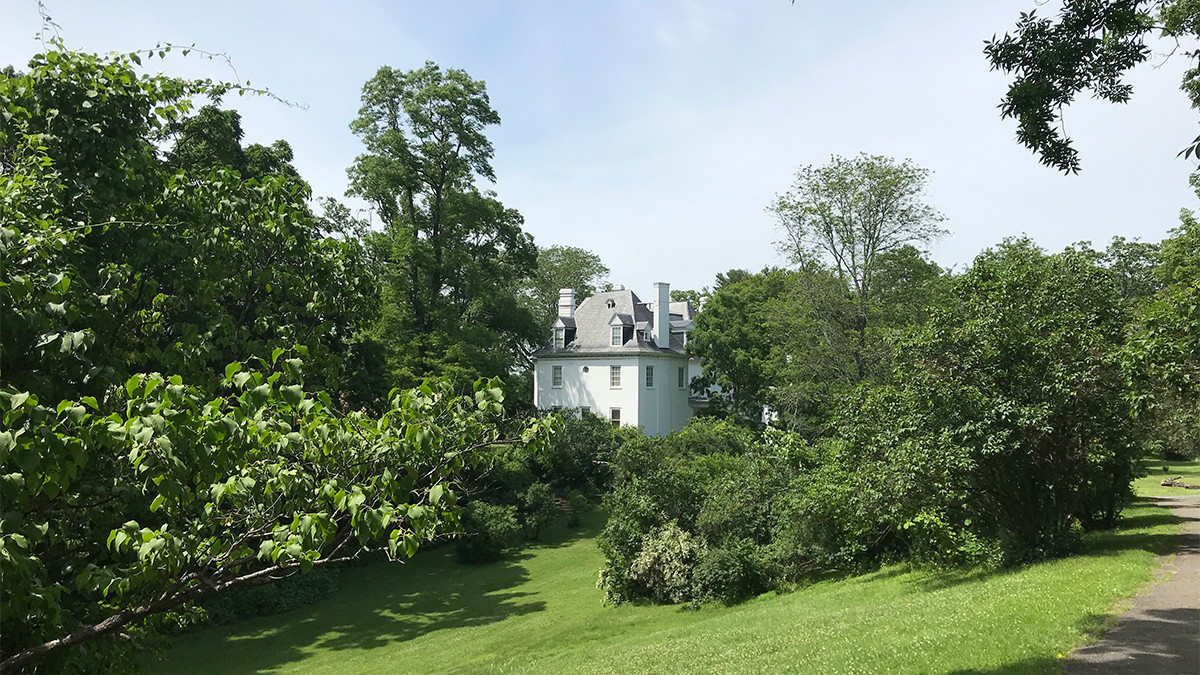
In addition to these estate transformations for the public’s benefit, patronage in the Mid- and Upper Hudson Valley extended to the establishment of libraries, schools, universities, and commemorative landscapes. Multiple colleges were established in the region during the nineteenth century, including Rensselaer Polytechnic Institute, Vassar College, Poughkeepsie Collegiate School (College Hill Park), Emma Willard School, Russell Sage College, and Bard College (a campus assembled through the acquisition of several estates, including Blithewood, Montgomery Place, and Ward Manor). At Vassar College, the Dutchess County Outdoor Educational Laboratory was established in the 1920s by Botany Chair Edith Roberts. Roberts and Elsa Rehmann, a landscape architect and Vassar instructor, were among the first to promote the use of native plants in American gardens.
Modernism Comes to the Valley
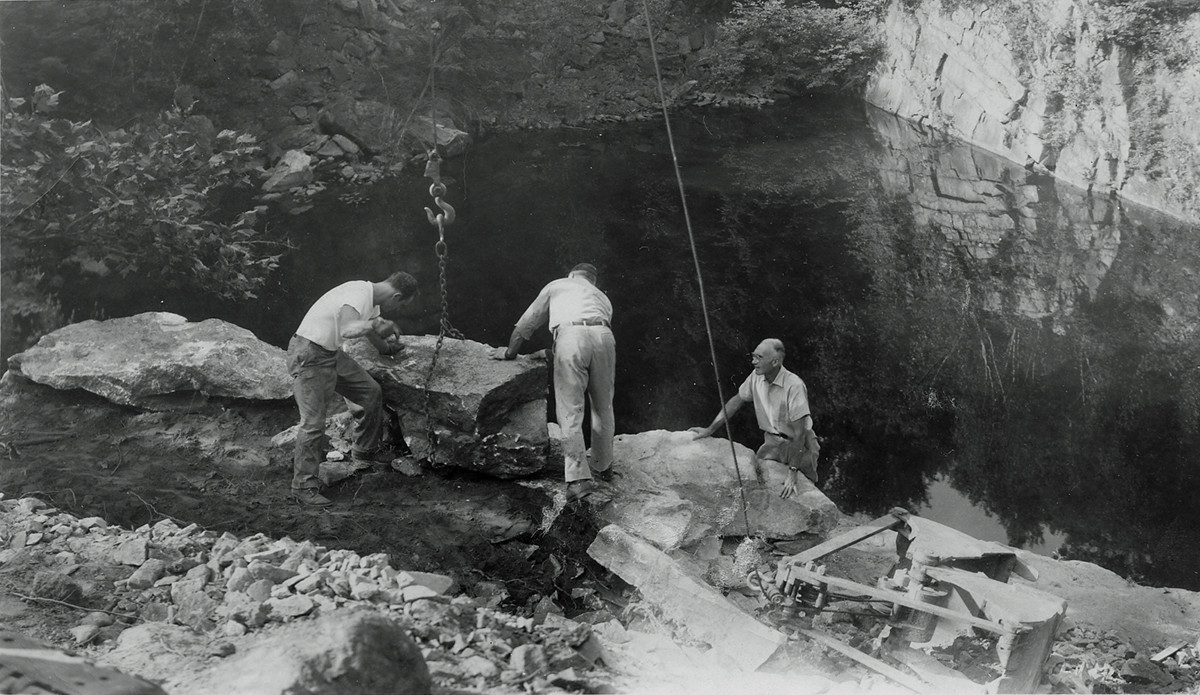
The tenets of Modernism influenced many designers of cultural and academic institutions beginning in the mid- to late twentieth century. Landscape architect Lester Collins and industrial designer Russel Wright concurrently designed estates in the Hudson Valley, embracing Modernist principles. The former, collaborating with Walter and Marion Beck, created the three–dimensional compositions at Innisfree (now Innisfree Garden) informed by Modernist, Chinese, Japanese, and Picturesque styles. Further south, at Manitoga, Wright surgically inserted a Modernist home into a choreographed landscape experience that worked in harmony with native vegetation and stone outcroppings, while also healing a landscape that was disfigured by a century of logging and quarrying.
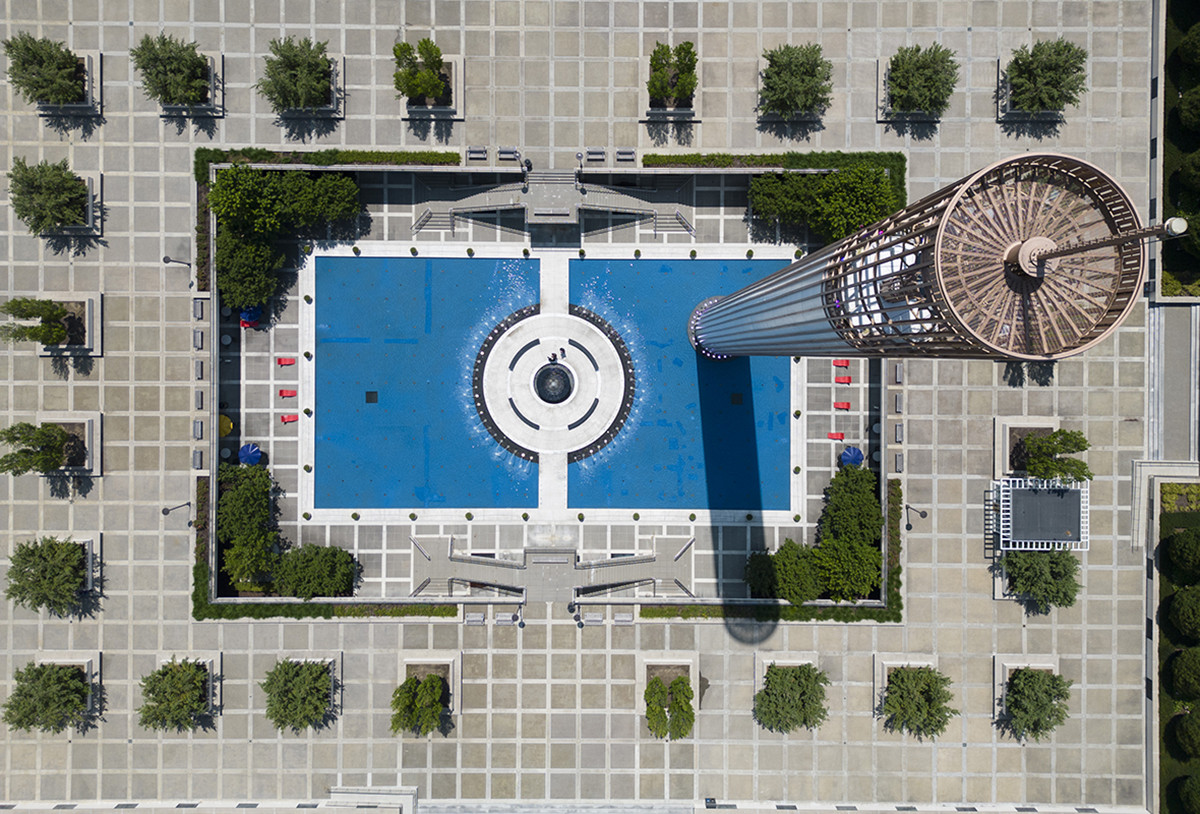
Educational and government institutions in the region after World War II also responded to wider trends in American history and Modernism. Master plans for the expansion of the state’s university system in New York included several campuses. Among them were SUNY Purchase, for which a master plan (1965) was produced by architect Edward Larabee Barnes and landscape architect Peter Rolland, and the University at Albany – Uptown Campus, which was designed by landscape architects Clarke & Rapuano, Edward Stone, Jr.; and architect Edward Durell Stone. Nearby, the Modernist Empire State Plaza was the focus of similar master planning under the purview of architect Wallace Harrison.
Hudson Valley Renaissance
With the proposed construction of a massive 2,000-megawatt pumped-storage hydroelectric plant at Storm King Mountain on the Hudson River in 1962, and the demolition of Pennsylvania Station in New York City the following year, advocates for the Hudson Valley’s natural, scenic and historic resources realized what could be lost; they organized and took action. Perhaps the highest profile case was the Scenic Hudson lawsuit, which ended in a negotiated settlement in December 1980 and fueled public awareness and appreciation for the region’s unrivaled cultural landscape heritage.
During the seventeen-year period that the lawsuit played out, the region echoed the larger historic preservation movement—moving from a primary focus on the preservation and protection of historic structures, and public access to historic homes—to viewshed and open space protection by the 1980s. Such a transition ensured that not only the great historic estates of the region were protected and listed in the National Register of Historic Places or as National Historic Landmarks, but their expansive cultural landscape was researched, interpreted and safeguarded.
There has been a similar effort to maintain and extend the region’s rich tradition of agriculture and culinary arts. In 1972 the Culinary Institute of America relocated from New Haven, Connecticut, to Hyde Park, New York, and has since emerged as one of the premier American culinary schools. The institution not only produces world-renowned chefs but has also fostered a farm-to-table movement, capitalizing on the region’s agricultural riches. Many graduates have remained in the valley, working with agricultural producers. Established in 2004, Stone Barns Center for Food and Agriculture, and its partner restaurant Blue Hill at Stone Barns, have advanced ecological farming practices, bringing together farmers, chefs, diners, and educators.
In recent years sites throughout the region have been shaped by landscape architects (e.g., Reed Hilderbrand at Long Dock Park, Nelson Byrd Woltz at Olana and Studio Zewde at Dia Beacon), artists (e.g., Robert Irwin at Dia Beacon) and architects (e.g., Steven Holl at T Space Reserve). Their contributions to the Hudson Valley’s rich landscape legacy have attracted future generations of designers and heritage travelers, just as the region in the nineteenth and first decades of the twentieth century attracted and inspired a nation.